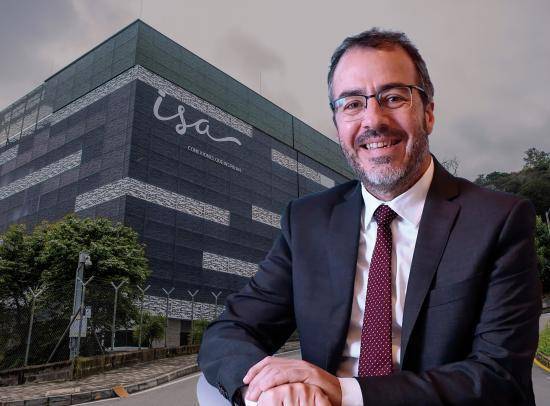
ISA Leadership Shake-up: Olga Castaño Named Interim President
Interconexión Eléctrica (ISA) has appointed Olga Patricia Castaño Díaz as acting president following a Council of State decision to annul the appointment of Jorge Carrillo. The leadership shift arrives amid the departure of acting president Gabriel Melguizo, cited internal government tensions, and a failed bid by Ricardo Roa for the board presidency.
When the line between state policy and corporate governance blurs, the resulting institutional volatility creates a precarious environment for shareholders. The current bloodletting at ISA is not merely a personnel shuffle; it is a symptom of regulatory whiplash that threatens operational continuity. Companies caught in this crossfire typically require the intervention of corporate governance consultants to insulate executive functions from political interference and restore fiduciary stability.
The Council of State’s Hammer and the Executive Vacuum
The catalyst for this current instability was a decisive strike from the Council of State. By annulling the appointment of Jorge Carrillo, the judicial body effectively reset the leadership clock at ISA, leaving a vacuum that the board had to fill with urgency. This administrative annulment serves as a stark reminder of the legal risks inherent in high-stakes energy infrastructure appointments.
Enter Olga Patricia Castaño Díaz. Her appointment as acting president is a strategic pivot toward institutional memory. Having spent 26 years within the organization, Castaño currently serves as the vice president of Strategy. In the eyes of the market, she represents a “safe harbor”—a technocrat who understands the internal machinery of ISA far better than any political appointee.
“The appointment of a 26-year veteran like Castaño is a classic defensive play. When the C-suite becomes a revolving door due to judicial or political pressure, boards pivot to internal stalwarts to signal stability to creditors and international partners.”
The transition was not seamless. Gabriel Melguizo, who previously held the acting presidency, exited the role under a cloud of friction. Reports from Infobae and El Colombiano suggest that Melguizo’s departure was driven by internal decisions and mounting tensions with the government. This suggests a fundamental misalignment between the company’s operational trajectory and the state’s political objectives.
For firms operating in similar high-friction environments, the risk of “political contagion” in the boardroom is high. Mitigating this often requires the expertise of government relations firms that can navigate the delicate boundary between public mandate and private profitability.
The Roa Stalemate and the Independence Mandate
While the presidency saw a shift, the battle for the Board of Directors provided its own set of casualties. Ricardo Roa’s bid for the board presidency failed to materialize. Roa, who remains a member of the Corporate Governance, Sustainability, Technology, and Innovation Committee, eventually desisted from the pursuit of the chair following a session that coincided with the CEO transition.
In contrast, Juan Pablo Zárate Perdomo emerged as the anchor of stability. The board unanimously re-elected Zárate Perdomo as president of the Board of Directors. As an independent member who has held the position since April 2025, Zárate Perdomo’s re-election is a clear signal that the board values independence over political alignment.
This divergence—the failure of Roa and the triumph of Zárate Perdomo—highlights a growing tension within ISA’s governance structure. The market rewards independence. When a board is perceived as a proxy for government interests, the cost of capital typically rises as risk premiums are adjusted upward to account for potential mismanagement or ideological pivots in capital expenditure (CapEx).
“The unanimous re-election of an independent board chair is the only metric that matters for institutional investors right now. It suggests that despite the chaos in the executive office, the fiduciary guardrails remain intact.”
This struggle for control often leads to protracted legal battles. The same legal counsel responsible for overturning Carrillo’s appointment is reportedly preparing further challenges regarding Ricardo Roa’s participation on the board. This suggests that ISA is entering a period of prolonged litigation that could distract management from its core energy transmission goals.
Fiscal Implications and the Path to Recovery
ISA operates at a scale where leadership instability can lead to significant slippage in project timelines. With massive infrastructure assets under management, any hesitation in the executive office translates to delayed procurement and stalled expansion. To understand the magnitude of what is at stake, stakeholders should review the latest filings via the ISA Investor Relations portal, where the company’s exposure to regional energy volatility is detailed.

The immediate fiscal problem is one of confidence. When acting presidents are replaced due to “government tensions,” the market begins to price in a “political risk discount.” This makes it more expensive for the company to issue debt or attract foreign direct investment for new transmission lines.
To stabilize the ship, ISA must move beyond the “acting” designation. The reliance on interim leadership—first Melguizo, now Castaño—creates a strategic drift. Long-term infrastructure planning requires a permanent mandate, not a temporary stewardship. The board must now decide whether to double down on internal promotion or seek an external candidate who can bridge the gap between the state and the shareholders.
As the legal challenges mount and the political dust settles, the need for rigorous, third-party oversight becomes paramount. Companies facing similar governance crises often turn to top-tier corporate law firms to restructure their bylaws and ensure that future appointments are insulated from judicial annulment.
The trajectory for ISA over the next two fiscal quarters will depend entirely on whether Olga Patricia Castaño Díaz can transform her “acting” role into a definitive strategic era. If the company continues to be a playground for political maneuvering, the erosion of shareholder value will be inevitable. For those looking to secure their own corporate structures against such volatility, the World Today News Directory remains the premier resource for connecting with vetted B2B partners in governance and legal risk management.