Irish Synodal Assembly Votes Down Proposal for National Office for Women
Delegates Reject National Office for Women at Irish Synodal Assembly
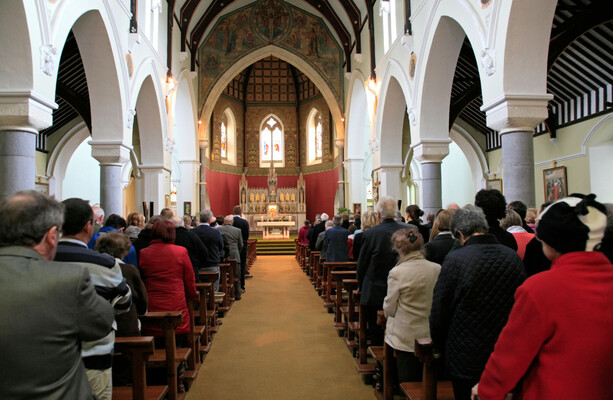
More than half of the delegates at the Irish National Synodal Assembly voted against establishing a national office for women to promote their inclusion in the Catholic Church. Gathered in Gormanston, County Meath, over 300 delegates considered 35 distinct proposals intended to shape the future direction of the institution following a consultation process launched by the country’s bishops in 2021.
Voting Breakdown and Disagreement on Structural Reform
Among all proposals considered at the assembly, the initiative aimed at mainstreaming women’s inclusion through a dedicated national office drew the highest proportion of opposition. Voting results released after the meeting showed that 56% of delegates did not recommend establishing the office. Other reports stated that 55% of delegates chose ‘I do not recommend’ for the same proposal. Fewer than one in five delegates supported the measure. Only 12% highly recommended it, 6% recommended it, and 27% stated the proposal required further discernment.
Contrasting views emerged regarding other measures concerning female participation and ministry. A separate proposal calling for an ongoing exploration of women’s ministry, including the diaconate, received 42% high recommendations and 12% standard recommendations, while 27% opposed it and 19% called for further discernment. Another proposal seeking greater visibility for women in liturgy and public discourse gained a 38% high recommendation alongside 23% standard support. A proposal on women and the domestic church divided the assembly evenly, with 40% expressing support and 40% requesting further consideration.
Healing Priorities and Youth Engagement Measures
While structural proposals regarding women faced significant pushback, delegates strongly agreed on priorities surrounding pastoral care, youth engagement, and institutional healing. Una Allen, convenor of the Synodal Pathway’s working group on healing from the Archdiocese of Tuam, stated that the Church must act concretely to address past harms. Eighty-nine percent of delegates recommended or highly recommended prioritizing healing in future synodal work, and 64% supported establishing a formal commission for healing. Youth initiatives also drew strong backing, with 84% supporting youth coordinators, advisory committees, and national training pathways.

Cardinal Grech Warns Against Managing Decline
Addressing the assembly by video link, Cardinal Mario Grech, Secretary General of the Synod of Bishops, warned against allowing the management of declining religious practice and an aging priesthood to become the operative pastoral paradigm for the Irish Church. Grech urged delegates to look beyond disappearing structures and position the Church for active mission. Eamon Martin, Archbishop of Armagh and President of the Irish Catholic Bishops’ Conference, noted that certain recommendations could be implemented quickly while others would demand extensive planning and resource deployment. Julieann Moran, General Secretary of the Irish Synodal Pathway, characterized the gathering as an extraordinary moment for the community.
Irish Catholic Bishops Review Non-Binding Recommendations
The recommendations adopted at the Gormanston assembly are not binding decisions. They now pass to the Irish Catholic Bishops’ Conference, which scheduled a meeting for the following week to determine which measures will be advanced.
National Synodal Assembly proposals to inform future of Church life in Ireland @Synod_va @synodalpathway To read more about the day, please click ⬇️https://t.co/UNCXWwNioS pic.twitter.com/9C94VgMXgO