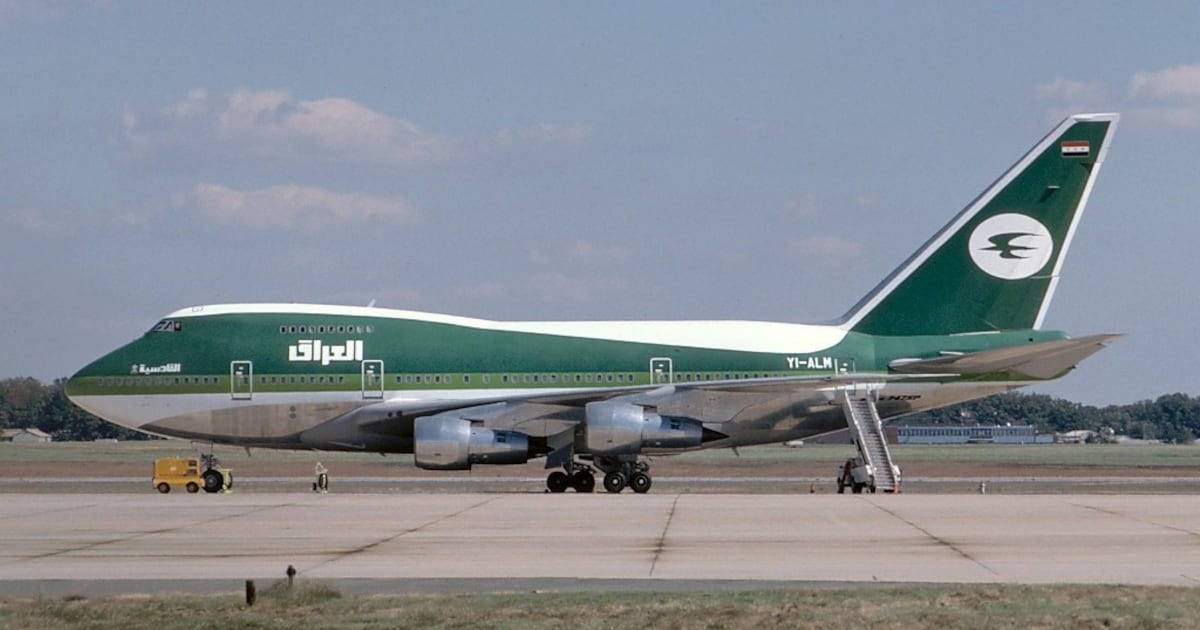
Iraqi Airways Lists Two Abandoned Boeing 747s in Tunisia for $900,000 Each
Iraqi Airways has listed two abandoned Boeing 747s in Tunisia for $900,000 each, up from a $494,000 valuation three decades ago.
Iraqi Airways has listed two Boeing 747 aircraft for sale, both of which have remained abandoned at Tozeur-Nefta International Airport in Tunisia for more than three decades.
- The aircraft arrived in Tunisia on Jan. 1, 1991, to avoid military strikes during the Gulf War.
- One jet is a rare Boeing 747SP, while the second is a Boeing 747-200.
- The current sale process follows an authorization from the Iraqi Prime Minister’s Office issued on February 27, 2025, Business Insider Africa reported.
- Bids are scheduled for review between Dec. 21 and Jan. 5, with the transaction expected to finalize by Jan. 7, 2027.
The more prominent of the two planes, the Boeing 747SP registered as YI-ALM and named Al-Qadissiya, served as a VIP aircraft for Saddam Hussein’s government. It features a private bedroom, a conference room, and a lounge with sleeper seats, CTV News noted. It is one of only 45 such aircraft ever manufactured. The second plane, a Boeing 747-200 registered as YI-AGP, was configured for commercial operations with seating for 330 passengers.
Historical Context and Specifications
Both aircraft were manufactured in 1982 and are equipped with Pratt & Whitney JT9D engines. The jets’ history dates back to the 1991 Gulf War, when Iraq transferred them to Tunisia to protect them from military strikes following the August 1990 invasion of Kuwait. While Iraqi Airways initially dispatched technicians to the site twice a year for maintenance, the planes never returned to Iraq due to a combination of international sanctions, financial disputes, and mounting airport fees.
By 2020, parking charges for the two jets had reportedly exceeded $5 million, though Business Insider Africa said that Baghdad settled approximately $5.4 million in outstanding fees that year. Over time, the white paint covering the jets’ original Iraqi markings has weathered, revealing the green livery underneath.
| Aircraft Model | Registration | Current Asking Price |
|---|---|---|
| Boeing 747SP | YI-ALM | US$900,000 |
| Boeing 747-200 | YI-AGP | US$900,000 |
Fluctuating valuations and previous sales attempts
State-owned Iraqi Airways, which operates under the Ministry of Transport, previously attempted to sell the aircraft in 2023. At that time, each plane was valued at $494,000, a figure considerably lower than the current $900,000 asking price per jet.
This prolonged abandonment has left the jets stationary in the desert for over three decades.
Requirements for prospective aircraft bidders
To participate in the current sale, interested parties must submit documents confirming their legal eligibility alongside a financial guarantee. According to Iraqi Airways, this deposit amounts to $180,000 per plane, or $360,000 for both, representing 20% of the estimated value for each aircraft.

Successful bidders are required to complete the full payment within five days of an accepted offer or risk losing their deposit. The final transaction remains subject to approval by Iraq’s Minister of Transport, which would conclude a 35-year chapter for the airline.
Terms of Sale
The successful bidder must cover a 2% service charge on the purchase price and pay for advertisement expenses. The jets are being sold in their current condition without technical guarantees, and Tunisian authorities have declared both aircraft unairworthy.
Buyers are responsible for ownership transfers, customs clearance, and future parking charges. During the initial ten-day bidding period, officials will accept inquiries between 10 am and 1 pm Tunisian time on working days. If no buyers are secured, Iraqi Airways has indicated the planes may be scrapped.
Iraqi Airways continues to serve as the national carrier of Iraq, operating domestic and regional flights from its main base at Baghdad International Airport. As a state-owned organization under the Ministry of Transport, the airline maintains the institutional authority to manage and dispose of its assets.
This operational status is supported by the company’s ongoing role in the Iraqi aviation sector, which it resumed following a formal restructuring after the 2003 Iraq War to protect the carrier from legal issues associated with the previous regime.