Iraq Reaches Compromise With Kataib Hezbollah for Withdrawal From Jurf al-Sakhar
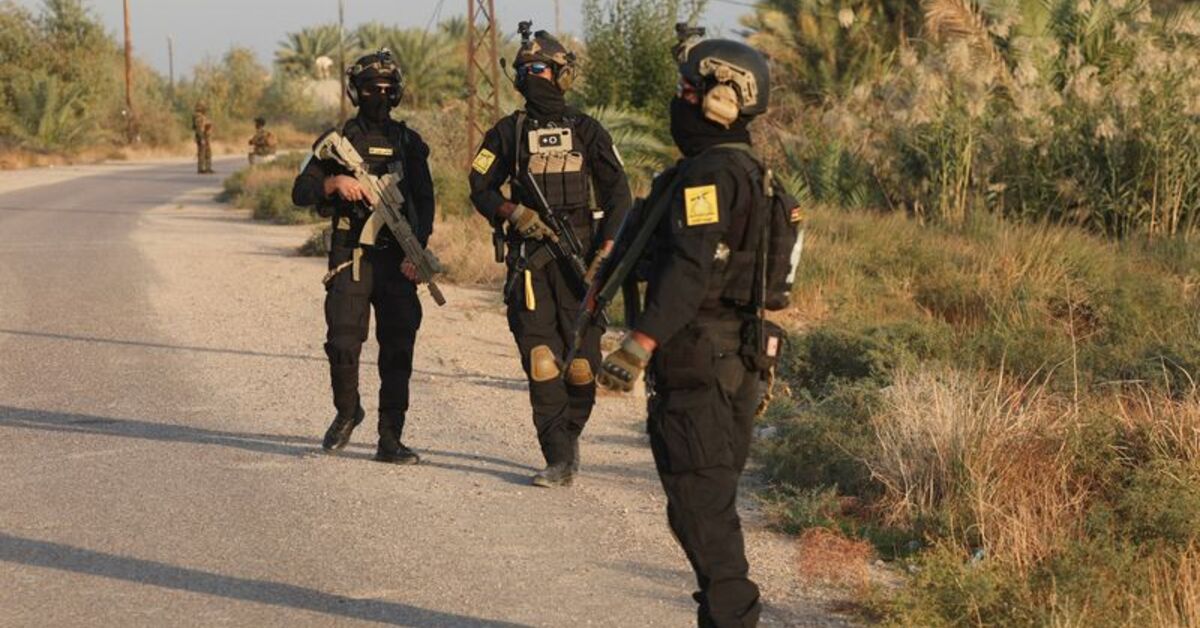
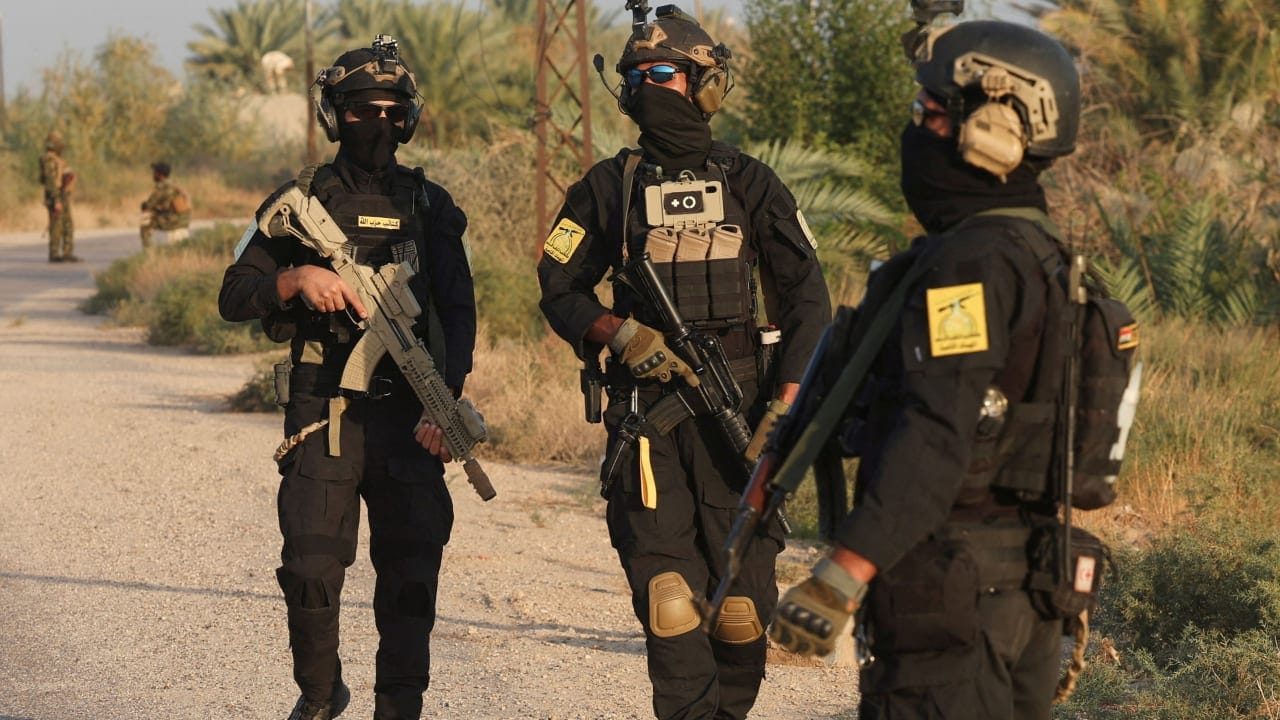
Iraqi security forces have achieved a compromise with Kataib Hezbollah, a powerful Iran-backed militia, according to three senior security officials.
The agreement concludes a volatile period of escalating tensions over allegations of large-scale oil theft and the assertion of state authority by Prime Minister Ali al-Zaidi. Officials reported that the deal was brokered after Zaidi readied government security forces to move against the armed group.
The state’s efforts to assert sovereignty over military groups—often proxies for Tehran—have long faced intense resistance, particularly in regions like Babil Governorate where the militia has exercised control for years.
The Security Crisis over Iraqi Oil Revenue
The government’s drive to confront Kataib Hezbollah stemmed from accusations that the militia was operating a smuggling network. Iraqi officials said that the armed group was siphoning off hundreds of millions of dollars in state-owned oil revenue.
The investigation into the illicit operations focused heavily on Jurf al-Sakhar, an area north of Babil Governorate. Reports indicate that the militia controlled the area since 2014, having seized it following the U.S.-led invasion of 2003 and the subsequent rise of the Islamic State. The area had been closed to state institutions for more than a decade.
An investigative committee ordered by Prime Minister Zaidi confirmed the existence of illegal oil smuggling operations within Jurf al-Sakhar. The committee documented four sites where large tankers, each with a 36,000-liter capacity, repeatedly appeared.
The economic impact is substantial. Iraqi officials and oil officials referenced the theft of hundreds of millions of dollars, with crude potentially siphoned since 2021 amounting to hundreds of millions of dollars, suggesting a long-running financial drain on the Iraqi state.
The pursuit of these funds has been complicated by allegations of corruption, with the investigation noting that smuggling was carried out with accomplices among some security and oil officials.
Mediation and the Shift in Control
To prevent an escalation, high-level mediation took place. Esmail Qaani, the commander of the Revolutionary Guards’ Quds Force, reached an agreement for Kataib Hezbollah to withdraw.
The group’s leadership engaged directly with Qaani. Sources within Iraq’s ruling Coordination Framework reported on the meetings to negotiate a resolution.
The talks appear to have yielded a positive outcome. Participants described the outcome of the talks as positive in a statement issued on Thursday, and Lieutenant General Saad Maan, head of Iraq’s Security Media Cell, confirmed that armed forces entered a state of alert.
The Iraqi army is preparing to enter the town of Jurf al-Nasr in Babil, with a deadline set for the powerful pro-Iran Kataib Hezbollah militia to withdraw from the area, the government spokesperson said Monday, amid a major oil smuggling scandal.https://t.co/5ZacKeHjLx
“The armed forces in their various formations have entered a state of alert C,” Lt. Gen. Saad Maan, head of Iraq's Security Media Cell, told the Iraqi News Agency.
The resolution comes after the Iraqi government made clear its resolve. Zaidi had previously said that “we will enlist the Iraqi people to retake Jurf al-Sakhar if the security forces are unable to confront those involved in stealing and selling oil.”

New Command Headquarters Launches Friday with Multi-Layered Security Structure
The withdrawal of Kataib Hezbollah from Jurf al-Sakhar may not mark the end of state efforts to reclaim full jurisdiction.
Per an executive order disclosed by Sabah Al-Numan, spokesman for the commander-in-chief of the armed forces, the new command headquarters is set to start functioning at 6 a.m. on Friday, Nov. 20, 2026.
This new command will be a multi-layered body. It includes an army brigade, a federal police brigade, two brigades from the Popular Mobilization Forces (PMF)—a security force originally set up to fight Islamic State in 2014 that was subsequently recognised as an official security force—and an Energy Police regiment.
🔴 Iraq Gives Kataib Hezbollah Deadline to Withdraw From Jurf al-Sakhar Amid Oil Smuggling Investigation – The Iraqi government announced on Monday, November 16, that it had given Kataib Hezbollah a deadline to withdraw from Jurf al-Sakhar (Jurf al-Nasr), warning that the…
“The new command headquarters will oversee an army brigade, a federal police brigade, two brigades from the PMF, a state-funded umbrella group of mostly Shiite armed factions, and an Energy Police regiment to protect oil pipelines in the area.”
— Sabah Al-Numan, spokesman for the commander-in-chief of the armed forces.
Hardline factions, specifically Kataib Hezbollah, have consistently denied the smuggling allegations. They maintained that fuel storage tanks and a plant inside the area serve the “security sector,” according to a media operative for the Iraqi Hezbollah.

“There is a large military buildup on our side, and Iraqi Hezbollah is also mobilizing,” Amjad Razzaq and Ali Ghalib, residents of Musayib, told The Media Line.
The long-term goal of asserting state control over armed factions began with Prime Minister Zaidi coming to power six months ago. While some groups have placed their weapons under state authority, Kataib Hezbollah has resisted calls to disarm, defying previous attempts by the government.
Conflict Reflects Prime Minister's Push to Assert State Control over Armed Factions
The conflict over Jurf al-Sakhar is not merely a dispute over oil smuggling; it reflects Prime Minister Ali al-Zaidi’s effort to assert state authority over armed factions operating outside formal command. Pro-Iranian militias enjoy a semi-official status, which critics argue allows them to act with impunity.
#Iraqi government: Armed forces have been ordered to enter Jurf al-Nasr as deadline for Kataib Hezbollah to withdraw has been set
These groups have ignored repeated disarmament demands from both Zaidi and U.S. President Donald Trump, and have carried out attacks on U.S. troops and targets in Saudi Arabia and the United Arab Emirates in solidarity with Tehran since the United States and Israel launched their war against Iran in February.
Kataib Hezbollah, also known as the Hezbollah Brigades, was established in March 2003 through a union of several pro-Iranian groups following the U.S.-led invasion that overthrew Saddam Hussein.
Its first members came from the Badr Organization, and it was founded by Jamal Jafaar al-Ibrahim, better known as Abu Mahdi al-Muhandis, an Iraqi-Iranian dual national and adviser to the Revolutionary Guards’ Quds Force, who commanded the group until he was killed in a U.S. drone attack in 2020.
Considered the most powerful militia in Iraq, the group fought U.S.-led Coalition forces during the Iraq War and gained prominence in 2007 for attacks on American troops, becoming known for posting videos of its strikes online. It later fought the Islamic State in Iraq and Syria, and today staffs the 45th, 46th, and 47th Brigades of the Popular Mobilization Forces, controlling key departments including intelligence, missiles, and anti-armor.
The timeline for this conflict and its resolution includes a series of key dates: in June 2020, then-Prime Minister Mustafa al-Kadhimi ordered the arrest of 14 Kata’ib Hezbollah members; the new command headquarters begins operating on Nov. 20, 2026; and while a compromise has been reached, the push to disarm hardline factions remains ongoing, with the deadline pushed to June 30, 2027 at the earliest.