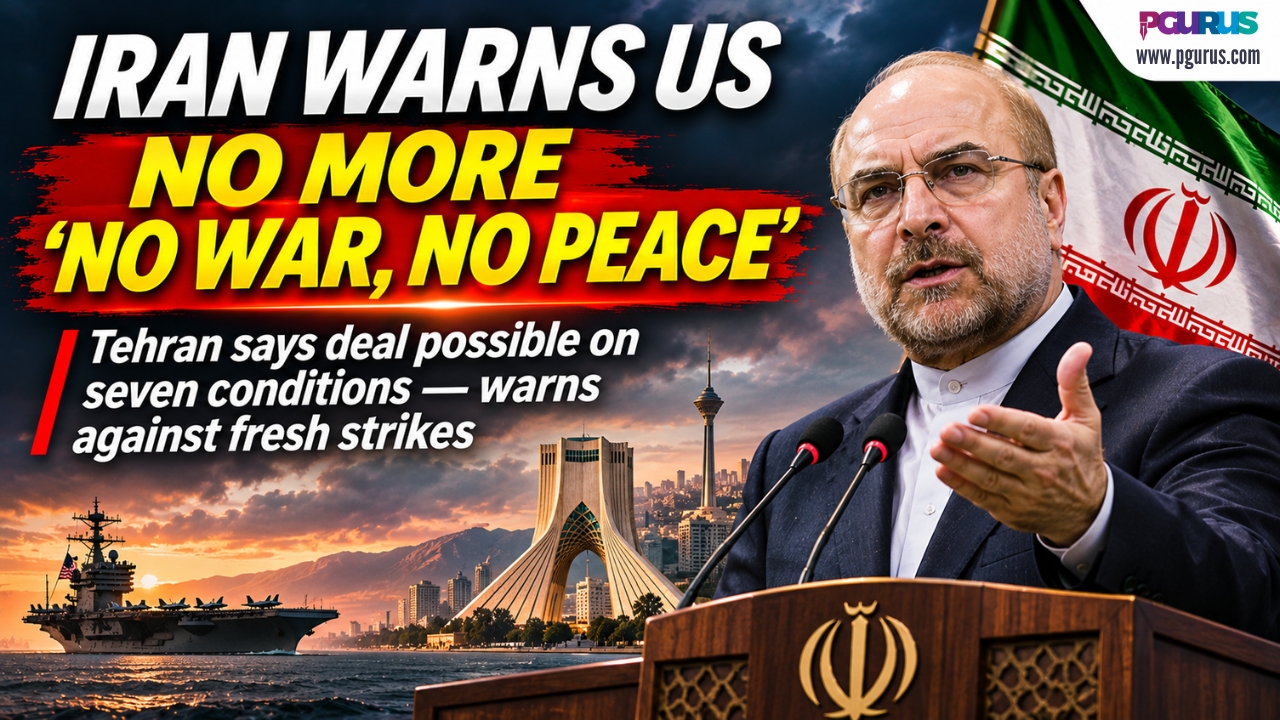
Iran’s Qalibaf Warns Against Stalemate, Calls for Sustainable Deterrence
Iranian Parliament Speaker Mohammad Bagher Qalibaf warned on Monday that Tehran will not accept a prolonged “no war, no peace” stalemate with the United States, arguing that only “sustainable deterrence” can end the threat of conflict, Anadolu reported.
Qalibaf told a meeting of the Coordination Council of the Islamic Consultative Assembly that the current situation “cannot continue” and must be resolved through a “clear and operational” approach rather than political discussions, according to Iran’s semi-official Tasnim news agency.
What Qalibaf said about deterrence
“Sustainable deterrence means strengthening the country,” Qalibaf said, adding that both diplomacy and war are instruments for achieving it. He claimed Iran had already reached a point of military deterrence against its adversaries through the “spirit of martyrdom” of its armed forces and the “rationality, will, and prudence” of the Supreme Leader, Mehr News Agency reported.
🇮🇷 Iranian Parliament Speaker Mohammad Bagher Ghalibaf: “The situation of neither war nor peace cannot continue. The only way to eliminate the threat and lift the shadow of war from our country is to establish SUSTAINABLE DETERRENCE. If we want the current situation to end, we… pic.twitter.com/W1fGjULoeX”
How the US has responded
Qalibaf argued that because Washington cannot launch a direct war, it has shifted its priority toward “disrupting Iran’s internal security, exerting economic pressure, and engineering a collapse from within.” He criticised US Treasury Secretary Scott Bessent over recent remarks, saying his “unethical language” exposed US desperation, PGurus reported.
Trump’s position on negotiations
US President Donald Trump said on November 22 he wanted a permanent agreement but described Iran’s proposed terms as “unacceptable,” according to Gulf News. Trump also criticised Tehran’s negotiating approach, calling Iranian officials “professional tap dancers” who “talk all the time” without tangible progress, Public TV reported.

Iranian commanders declare highest readiness
IRGC Deputy Commander Major General Mostafa Izadi said on Monday that Iran’s armed forces are at their “highest level of readiness,” adding that even American officials acknowledge US bases in eight regional countries have come under attack, Tasnim reported. Izadi claimed the US Army Chief of Staff is looking for a way to exit the war.
Iran’s army commander-in-chief Amir Hatami warned on November 18 that any new attack would draw a “more crushing, harsher response, without geographical limitation,” threatening to strike the US and its allies regardless of location, euronews reported. US Central Command confirmed the arrival of the USS Theodore Roosevelt, bringing the number of US carriers in the region to three.
Strait of Hormuz tensions
Iranian forces said they destroyed a US MQ-9 drone east of the Strait of Hormuz using domestically produced air defence systems, though Washington has not commented. US air strikes hit positions on Qeshm Island on November 19 following Iranian reports of attacks on US military installations. Commercial vessels in the Strait have also been targeted.
Background: from war to stalled talks
The US and Israel launched a war against Iran in February, prompting Iranian attacks on Israeli and US facilities across the region, Anadolu reported. The sides signed a framework agreement in June to end hostilities, but negotiations stalled over disagreements on ensuring safe navigation through the Strait of Hormuz. Fighting has flared intermittently since July.

Iran’s seven conditions
Qalibaf said on Sunday that if the US accepts Iran’s seven conditions — which he described as the result of the nation’s sacrifices — the path to an agreement remains open. “If Washington makes another mistake, Iran’s armed forces will determine the geographic scope of the battlefield,” he said. “The smoke of a new war will affect many others.”
Qalibaf’s trajectory from battlefield commander to parliamentary speaker underpins his current push for “sustainable deterrence.” He led the IRGC’s 5th Nasr Division from 1983 to 1984 during the Iran–Iraq War and commanded the IRGC Air Force from 1997 to 2000, roles that established his military credentials before he entered politics.
As Tehran’s mayor from 2005 to 2017, he managed the capital’s security and infrastructure, experience he now frames as essential for a “clear and operational” strategy rather than political talks.
Since becoming Parliament Speaker in 2020, Qalibaf has positioned the legislature as the primary voice for converting military readiness into lasting strategic leverage.
What happens next
Parliament’s National Security Committee spokesman Hassan Qashqavi said Sunday the enemy will start any war but “Iran will be the one to end it,” adding that Tehran’s response to any new attack “will not be limited or short-lived,” A News reported. Foreign Ministry spokesman Esmail Baghaei said the “best scenario” would be for the US to “take itself and its trouble away from the region,” IranWire reported.