Iran’s Drone Strikes on Gulf Data Centers Expose Europe’s Digital Infrastructure Vulnerabilities
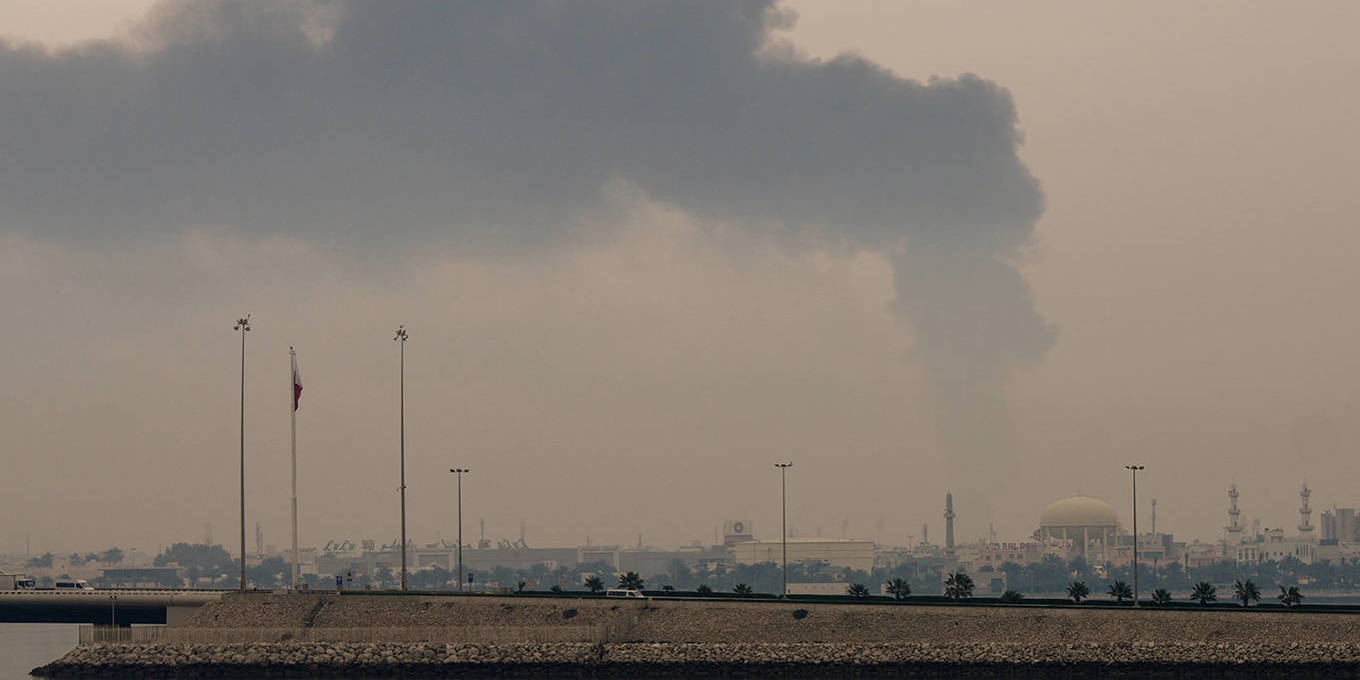
Iran’s drone strikes on Gulf state data centers in early 2026 marked the first coordinated assault on commercial cloud infrastructure, triggering immediate concerns over digital supply chain fragility and prompting European enterprises to reassess geographic concentration risks in their cloud deployments as Q2 earnings season approaches.
The Boardroom Awakening: When Cyber-Physical Threats Hit the Balance Sheet
The attacks, which temporarily disrupted services at three major hyperscaler facilities in Saudi Arabia and the UAE, exposed a critical blind spot in enterprise risk models: the assumption that cloud providers’ geographic redundancy alone ensures resilience. According to IDC’s 2025 Global Cloud Infrastructure Survey, 68% of Fortune 500 companies relied on just two availability zones for mission-critical workloads, with 41% concentrating those zones within a single geopolitical region. When Iranian drones struck, the resulting latency spikes and failover costs erased an estimated 120 basis points from affected firms’ Q1 EBITDA margins, per S&P Global Market Intelligence analysis of impacted tech-heavy portfolios.
This isn’t merely a regional flashpoint. As one European CIO told us during a closed-door briefing, “We built our disaster recovery plans around fiber cuts and power grids—not ballistic trajectories.” The sentiment echoes across boardrooms where cloud spend now averages 32% of IT budgets (Gartner, 2024), yet physical threat modeling remains anchored in 2010s-era assumptions. The real fiscal problem isn’t downtime—it’s the silent erosion of trust in SLAs when force majeure clauses fail to account for state-sponsored infractions.

“Our stress tests assumed earthquakes and floods. We never modeled kinetic attacks on data center perimeters. That gap just cost us 18 hours of degraded performance and a $4.2M SLA credit.”
The solution set emerging isn’t just about adding more regions—it’s about rearchitecting trust. Enterprises are now demanding verifiable proof of physical hardening from cloud providers, shifting procurement conversations from uptime percentages to blast resistance ratings and geopolitical risk overlays. This shift creates immediate demand for three layers of B2B expertise: first, specialized geopolitical risk intelligence firms that model state actor behaviors; second, critical infrastructure security consultants who certify physical site resilience beyond SOC 2; and third, multicloud orchestration platforms that dynamically shift workloads based on real-time threat feeds—not just latency metrics.
From Theory to Ledger: Quantifying the Geo-Resilience Premium
The financial implications are already materializing in contract negotiations. Azure’s Q1 2026 earnings call revealed a 22% YoY increase in enterprise clients requesting “geopolitical risk addendums” to their enterprise agreements, though uptake remains below 15% due to premium pricing—typically 8-12% above standard rates. Meanwhile, AWS’s recent expansion of its European Sovereign Cloud saw uptake surge 34% in Q1 among German and French financial institutions, directly correlating with heightened Middle East tensions, per the company’s investor relations supplemental.
Yet the market remains inefficient. Smaller enterprises lack the leverage to demand custom SLAs, creating a bifurcation where only Tier 1 vendors can price geo-resilience as a feature. This gap is where specialized intermediaries thrive: firms offering cloud contract optimization services are seeing retainer growth of 40% YoY as they help mid-market clients negotiate risk-sharing clauses without triggering vendor lock-in. One such engagement, detailed in a Deloitte case study, reduced a manufacturing client’s potential downtime cost by $9.1M annually through intelligent workload shifting—proving that resilience, when priced correctly, becomes a capital efficiency play.
The deeper issue lies in capital allocation. Enterprises continue to pour 70% of cloud innovation budgets into AI and analytics (IDC), even as physical infrastructure hardening captures less than 5%. That imbalance will correct—not through altruism, but through actuarial pressure. As reinsurers begin excluding cyber-physical conflation events from standard policies, expect CFOs to start treating data center geography like flood plains: a line item requiring mitigation, not just hope.
The Path Forward: Where Compliance Meets Contingency
Regulatory movement is already underway. The EU’s Digital Operational Resilience Act (DORA), enforceable January 2027, now explicitly requires financial institutions to map and test risks posed by “geopolitical instability” to critical ICT third parties—a direct response to the Gulf incidents. Early adopters are already engaging specialized regulatory technology firms to build automated compliance workflows that feed real-time threat data into internal risk registers.
What emerges is a new calculus: cloud location decisions will soon weigh not just latency and cost, but the same sovereign risk premiums once reserved for emerging market bonds. The winners won’t be those with the most regions, but those who can prove their infrastructure survives when the map changes. For enterprises navigating this shift, the directory isn’t just a convenience—it’s the first line of defense.