
Iran War: Strait of Hormuz Toll Fears as Conflict Set to Last Weeks
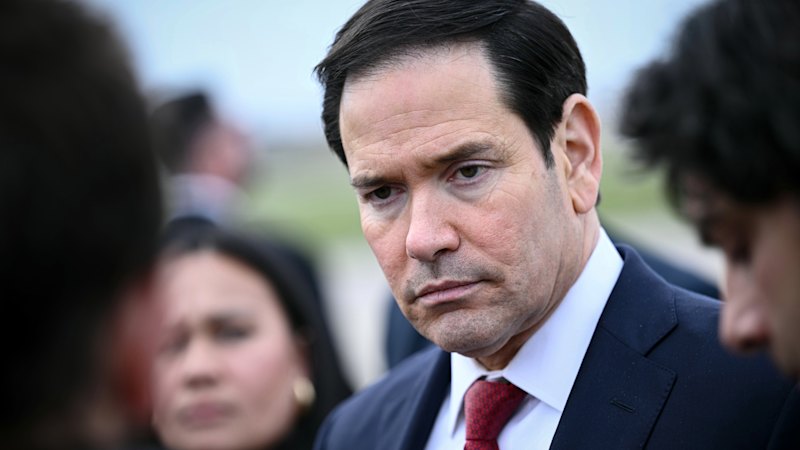
US Secretary of State Marco Rubio declared the Iran conflict will conclude within weeks, warning of a potential Iranian “tolling” scheme in the Strait of Hormuz. Speaking in Paris, Rubio urged G7 and Asian nations to secure the waterway, as oil prices surged past $114 and global markets reacted to the threat of prolonged disruption.
The air in Paris was thick with more than just the usual diplomatic tension. When US Secretary of State Marco Rubio stepped away from the G7 foreign ministers’ meeting on Friday, he wasn’t just delivering a timeline; he was issuing a warning shot to the global economy. The war in Iran, he insisted, would wrap up in a matter of weeks, not months. But the real story wasn’t the end of the fighting—it was what comes after.
Rubio outlined a chilling scenario: a defeated but defiant Iran attempting to monetize its geographic leverage by setting up a “tolling system” in the Strait of Hormuz. This isn’t just a blockade; it’s a state-sanctioned shakedown of the world’s most critical oil artery. For the international community, the problem is immediate. Who pays? Who enforces the law? And how do businesses survive the interim?
The “Toll” That Could Break the Global Economy
The concept of “tolling” a strategic waterway is legally precarious and economically devastating. Under the United Nations Convention on the Law of the Sea (UNCLOS), the Strait of Hormuz is an international strait where all ships enjoy the right of transit passage. Any attempt by Iran to charge fees for passage would be a violation of international law, effectively acting as state-sponsored piracy.
However, the reality on the water often diverges from the law in the books. During the “Tanker War” of the 1980s, the region saw similar volatility, but a systematic tolling mechanism would be unprecedented in the modern era. It would force shipping companies into an impossible choice: pay the illicit fee and legitimize the act, or risk their vessels and crews by refusing.
“The legal precedent for a state unilaterally taxing transit passage in an international strait is non-existent. If Iran attempts this, it shifts the conflict from a military engagement to a global legal and logistical crisis that requires immediate intervention from maritime law specialists.”
This shift from kinetic warfare to economic coercion changes the risk profile for every corporation moving goods through the Middle East. The uncertainty creates a vacuum that international maritime law firms are already preparing to fill. Companies with assets in the region are no longer just worried about missile strikes; they are worried about the legal ramifications of complying with illegal demands from a sanctioned regime.
Weeks, Not Months: The Diplomatic Tightrope
Rubio’s timeline—”weeks, not months”—was an attempt to calm jittery markets. The Nasdaq had already shed 2.15 percent, and Brent crude had skyrocketed to $114 a barrel. But the timeline is contentious. With the war already in its fifth week, Rubio’s estimate of two to four additional weeks pushes the conflict toward the two-month mark, contradicting earlier Pentagon assurances of a swift resolution.
The friction was visible in Paris. Although the US pushed for a coalition to protect the strait, allies like the UK were hesitant. British Prime Minister Keir Starmer made it clear: London would defend its interests but refused to be “dragged into the war.” This reluctance highlights a growing fracture in the Western alliance. The US is asking its partners to clean up a geopolitical mess that stems largely from Washington’s own strategic decisions.
Meanwhile, backchannel negotiations are reportedly underway. Steve Witkoff, the US special envoy, hinted at talks with Iranian officials, noting that ships were still passing through—a “very good sign.” Yet, data tells a different story. Two Chinese container ships turned back on Friday, and the status of ten oil tankers allegedly allowed through as a “goodwill gesture” remains murky.
The Indo-Pacific Stake
Rubio explicitly called on Indo-Pacific nations, including Australia, to take the helm on protecting the shipping passage. This is a strategic pivot. The US, now less dependent on Middle Eastern oil than in previous decades, is signaling that the primary beneficiaries of a free Strait are Asia and Europe.

For nations like Japan and South Korea, which rely heavily on Hormuz for energy imports, the threat is existential. A closure or a tolling system would cripple their manufacturing sectors. This geopolitical reality forces these nations to reconsider their defense postures. This proves no longer just about trade routes; it is about national security infrastructure.
As the risk of disruption solidifies, the private sector is scrambling. Supply chain managers are activating contingency plans that were gathering dust. The demand for crisis logistics and supply chain consultants has likely already spiked. Businesses need to grasp not just how to route around the Strait, but how to insure cargo against “war risks” that standard policies might exclude.
Navigating the Legal Minefield
The potential for a “toll” introduces a complex layer of compliance risk. If a shipping company pays the toll to ensure safe passage, are they violating US sanctions? Are they funding a terrorist organization? These are not hypothetical questions for general counsel; they are immediate liabilities.
The International Atomic Energy Agency (IAEA) has likewise raised the stakes, reporting strikes near the Bushehr Nuclear Power Plant. While no radiation has been released, the proximity of military activity to nuclear infrastructure raises the specter of an environmental catastrophe that would dwarf the economic impact of an oil spike.
As the situation evolves from active combat to a tense standoff over navigation rights, the role of professional guidance becomes paramount. Governments are issuing statements, but businesses need actionable advice. Whether it is securing maritime security escorts or navigating the sanctions landscape, the directory of verified professionals is the only reliable map through this fog.
The war may end in weeks, as Rubio promises. But the aftermath—the legal battles over illegal tolls, the rerouted supply chains, and the fractured alliances—will last for years. The Strait of Hormuz is more than a choke point; it is a mirror reflecting the fragility of our global interdependence. As we watch the USS George H.W. Bush carrier group move into position, the question isn’t just who will win the war, but who will be left to pick up the pieces of the global economy.
For those navigating this uncertainty, the path forward requires more than just news updates; it requires verified expertise. The World Today News Directory remains committed to connecting you with the legal, logistical, and security professionals capable of steering you through these turbulent waters.