
Iran War Drives Up Airfare & Preview of Economic Pain to Come
As the conflict in Iran drives jet fuel prices up by 58%, the global entertainment industry faces a logistical crisis. From the Cannes Film Festival to international concert tours, skyrocketing airfare and canceled flights are threatening the 2026 cultural calendar. Studios and agencies must now pivot to crisis logistics and remote production strategies to maintain brand equity.
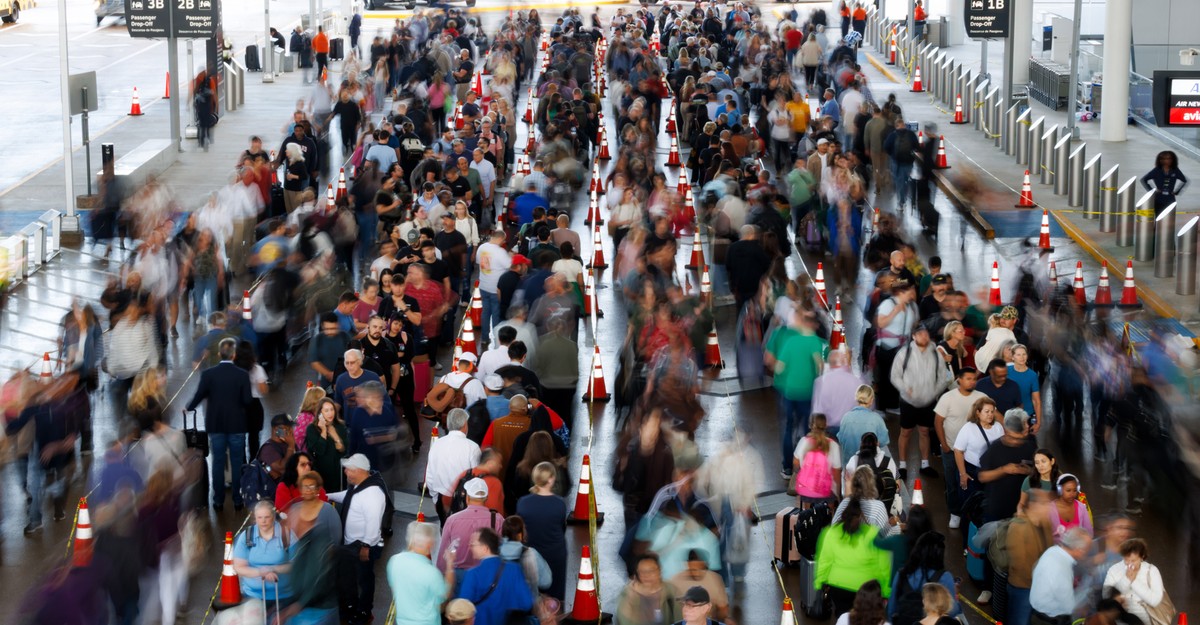
Walk into LAX or Heathrow today, and the chaos is palpable. Security lines snake past baggage claim, and the intercoms are a cacophony of delays. But for the entertainment industry, this isn’t just a travel inconvenience; We see a direct threat to the bottom line. The war in Iran has effectively closed the Strait of Hormuz, pinching the world’s oil supply and sending the average price of jet fuel spiking more than 58 percent in the first week of hostilities. For an industry built on the movement of people, equipment, and IP across borders, this energy shock is a production killer.
The immediate casualty is the festival circuit. We are mere weeks away from the spring festival gauntlet, where the industry converges to trade intellectual property and secure syndication deals. The traditional model relies on the physical presence of A-list talent to drive brand equity for indie acquisitions. However, with trans-Atlantic routes surging in cost by over 500 percent and Middle Eastern airspace closed, the logistics of moving a cast from Los Angeles to Cannes or Venice have become a nightmare of force majeure clauses and insurance nightmares.
According to data from Alton Aviation Consultancy, the Hong Kong–London route is now 560 percent more expensive than it was last month. For a studio marketing a tentpole release, this variance destroys the ROI of a traditional press junket. The solution? A rapid shift toward virtual red carpets and localized press tours, a pivot that requires immediate intervention from specialized event logistics and production vendors capable of managing hybrid physical-digital experiences.
The Three Pillars of Entertainment Disruption
The ripple effects of this geopolitical instability extend far beyond the airport terminal. We are looking at a fundamental restructuring of how entertainment is consumed and produced in 2026. Based on current market analytics, here is how the crisis is reshaping the sector:
- The Touring Recession: Live music is the most fuel-sensitive sector of entertainment. With diesel costs rising and air freight becoming prohibitive, the “global stadium tour” model is under siege. Promoters are already modeling scenarios where international legs are scrapped in favor of domestic residencies. As one senior tour manager noted in a leaked industry memo, “We can’t absorb a 40 percent increase in transport costs without raising ticket prices to a point where the fan base fractures.” This creates a massive opening for talent agencies and management firms to renegotiate contracts and restructure touring riders to mitigate financial exposure.
- Location Shooting Freeze: Productions slated for Europe and the Middle East are facing immediate shutdowns. The cost of moving a crew of 200, along with tons of camera and lighting gear, has become untenable. We are seeing a “flight to safety” in location scouting, with producers rushing to lock down stages in Georgia and New Mexico. This sudden demand spike is straining local infrastructure, necessitating the expertise of film production services that specialize in rapid location procurement and crew scaling.
- Supply Chain IP Delays: It isn’t just people moving; it’s the physical media. From 35mm film prints (still used by arthouse cinemas) to high-conclude server racks for dailies, the supply chain is clogged. The shortage of helium—critical for cooling the superconducting magnets in MRI machines and, crucially, semiconductor manufacturing—threatens the hardware pipeline for VFX rendering farms. A delay in chip production means a delay in post-production, pushing release dates into the uncertain future.
The narrative coming out of the major studios is one of cautious optimism, but the internal memos share a different story. United Airlines CEO Scott Kirby recently stated that if oil prices hold, the carrier would need to raise ticket prices another 20 percent just to break even. For the entertainment executive, this math is brutal. A marketing budget that allocated $2 million for talent travel now requires $3 million for the same result, eating directly into the P&A (Prints and Advertising) spend.
“Airfares are certainly the canary in the coal mine. No other major consumer good or service I can feel of is as sensitive to energy costs. When the logistics break, the culture stalls.”
This sentiment, echoed by economic policy analysts, underscores the fragility of the modern media ecosystem. We are seeing a divergence between the creative zeitgeist and the ruthless business metrics required to sustain it. The brands that survive this quarter will be those that can decouple their cultural impact from physical presence.
Consider the recent hacking incident involving FBI Director Kash Patel, attributed to an Iranian-linked group. While primarily a national security issue, it highlights the volatility of the digital landscape. Entertainment brands operating in this zone must be vigilant. The intersection of geopolitical conflict and digital infrastructure means that cybersecurity is now as vital as copyright infringement protection. Studios are increasingly turning to crisis communication firms and reputation managers not just to handle scandals, but to navigate the PR fallout of canceled events and stranded talent.
The “Evening Read” section of today’s news cycle highlights a different kind of introspection deficit among tech oligarchs, but in Hollywood, introspection is a luxury we can’t afford right now. The focus must be on adaptation. The war in Iran may end in weeks, as Secretary of State Marco Rubio suggested, but the economic aftershocks will linger for months. Production schedules are being rewritten in real-time.
For the industry professional, the takeaway is clear: The old playbook is obsolete. You cannot rely on standard supply chains or traditional travel corridors. The winners of the 2026 fiscal year will be the entities that have diversified their logistics partners and secured flexible backend gross agreements that account for macro-economic volatility. Whether it is securing alternative freight routes for festival screenings or negotiating force majeure clauses for touring artists, the demand for specialized B2B services has never been higher.
As we move deeper into this crisis, the separation between the “haves” and “have-nots” in entertainment will be defined by logistical agility. The studios with the deepest pockets will charter private solutions, while the independents will need to rely on the collective power of the directory’s network to find cost-effective, secure alternatives. The curtain hasn’t fallen on global entertainment, but the stage has certainly shifted.
Disclaimer: The views and cultural analyses presented in this article are for informational and entertainment purposes only. Information regarding legal disputes or financial data is based on available public records.