
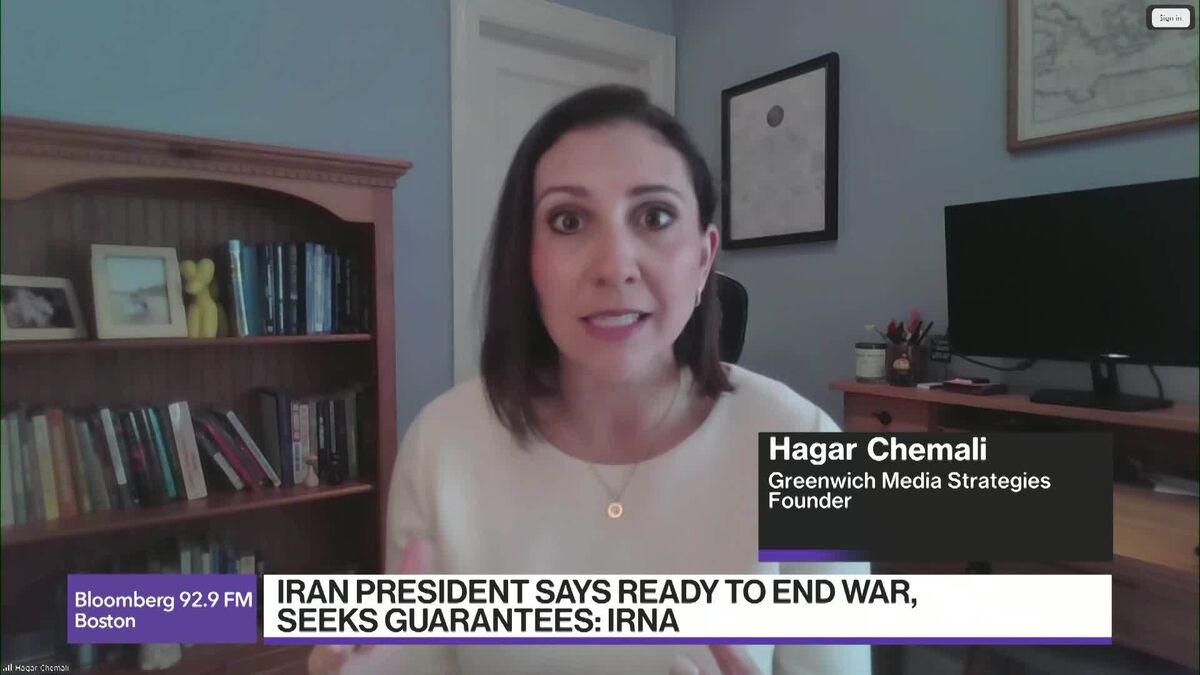
Iran Strait of Hormuz Control Unlikely: Ex-NSC Director Chemali | Bloomberg
Iranian President Masoud Pezeshkian doubled down on pre-conditions for de-escalation Tuesday, demanding a complete cessation of attacks by the US and Israel, reparations for damages, guarantees against future aggression, and recognition of Iranian control over the Strait of Hormuz. This escalation intensifies geopolitical risk, disrupting global energy markets and forcing businesses to reassess supply chain vulnerabilities. The situation demands robust risk mitigation strategies, particularly for firms reliant on Middle Eastern trade routes.
The Strait of Hormuz: A Chokepoint Under Pressure
The core of Iran’s demands – sovereign authority over the Strait of Hormuz – is the most immediately destabilizing. This vital waterway handles roughly 20% of global oil supply, and any disruption would trigger a significant price shock. Already, Brent crude futures are exhibiting increased volatility, trading at $87.23 per barrel as of today’s close, a 3.5% increase week-over-week. Bloomberg’s energy market data shows a clear correlation between escalating tensions and price fluctuations. The potential for a blockade, even a temporary one, is forcing shipping companies to explore alternative, and significantly more expensive, routes around Africa. This adds substantial costs and delays, impacting everything from manufacturing to consumer goods.
Hagar Chemali, CEO of Greenwich Media Strategies and former Director for Syria and Lebanon at the National Security Council, succinctly stated her assessment: “I don’t envision a result where Iran retains control of the Strait of Hormuz.” This assessment, while not guaranteeing a peaceful resolution, underscores the high stakes involved and the likelihood of continued pressure on global supply chains. The question isn’t *if* disruption will occur, but *when* and *how severe*.
Financial Implications: Beyond Energy
The impact extends far beyond the energy sector. Insurance premiums for vessels transiting the region are skyrocketing. Lloyd’s of London is reportedly increasing war risk insurance rates by as much as 25%, according to sources within the maritime insurance industry. Lloyd’s of London, as a leading provider of maritime insurance, is a key indicator of perceived risk. This directly impacts shipping costs, which are then passed on to consumers. The uncertainty is dampening investment in the Middle East, particularly in infrastructure projects. Companies are delaying capital expenditures, fearing further escalation.

The demand for reparations presents another significant financial hurdle. While the exact amount is unspecified, estimates range from tens to hundreds of billions of dollars. Even if a settlement is reached, the payment schedule and method will be contentious. This could involve asset seizures or the freezing of Iranian funds held in international accounts. Such actions would further complicate international financial transactions and potentially trigger retaliatory measures.
“The geopolitical risk premium is now baked into the market. Investors are demanding a higher return on assets exposed to the Middle East, and that’s not going to change until there’s a clear path to de-escalation.”
— Dr. Anya Sharma, Portfolio Manager, BlackRock, speaking at the Global Investment Summit, March 28, 2026.
The B2B Imperative: Navigating the Novel Risk Landscape
This crisis isn’t simply a geopolitical event; it’s a catalyst for significant business disruption. Companies with exposure to the region – and increasingly, those with global supply chains – necessitate to proactively mitigate risk. This requires a multi-faceted approach, including diversifying supply sources, strengthening cybersecurity defenses, and securing robust insurance coverage. Many firms are turning to specialized risk management consulting firms to assess their vulnerabilities and develop tailored mitigation strategies. The need for comprehensive risk assessments has never been greater.
Legal Ramifications and Contractual Review
The escalating tensions also have significant legal implications. Companies with contracts in the region are reviewing force majeure clauses to determine their options in the event of disruption. International law firms specializing in trade and sanctions are experiencing a surge in demand as businesses seek guidance on navigating the complex legal landscape. Understanding the implications of sanctions and potential asset seizures is crucial for protecting business interests. The potential for contract disputes and litigation is high, making expert legal counsel essential.
Quantifying the Impact: A Sector-by-Sector Breakdown
The impact isn’t uniform across all sectors. The aerospace and defense industry is seeing a boost in demand for military equipment, while the tourism sector in the Middle East is facing cancellations and declining bookings. The automotive industry, heavily reliant on just-in-time supply chains, is particularly vulnerable to disruptions in the flow of components. According to a recent report by McKinsey, McKinsey & Company estimates that a prolonged disruption in the Strait of Hormuz could reduce global GDP by 0.5% in the next fiscal year.
Here’s a simplified overview of the potential impact across key sectors:
- Energy: Increased price volatility, supply chain disruptions, higher insurance costs.
- Shipping: Rerouting of vessels, increased transit times, higher freight rates.
- Manufacturing: Supply chain bottlenecks, increased input costs, production delays.
- Automotive: Shortages of critical components, production halts, reduced sales.
- Insurance: Increased claims, higher premiums, potential for insolvency.
The Future Outlook: A Prolonged Period of Uncertainty
The situation remains highly fluid and unpredictable. Even if a ceasefire is achieved, the underlying tensions are likely to persist. Iran’s demands are substantial, and the US and Israel are unlikely to concede on key issues. The coming fiscal quarters will be characterized by heightened geopolitical risk and increased market volatility. Businesses must prepare for a prolonged period of uncertainty and prioritize risk mitigation.
“We’re advising our clients to stress-test their supply chains against a worst-case scenario – a complete closure of the Strait of Hormuz for an extended period. This isn’t just about contingency planning; it’s about building resilience.”
— Jameson Holt, Managing Director, Alvarez & Marsal, in a private briefing to clients, March 29, 2026.
Navigating this complex landscape requires expertise and foresight. The World Today News Directory provides access to a vetted network of B2B providers – from supply chain management specialists to international legal counsel – to facilitate your organization mitigate risk and capitalize on emerging opportunities. Don’t wait for the crisis to escalate; proactively secure the resources you need to protect your bottom line.