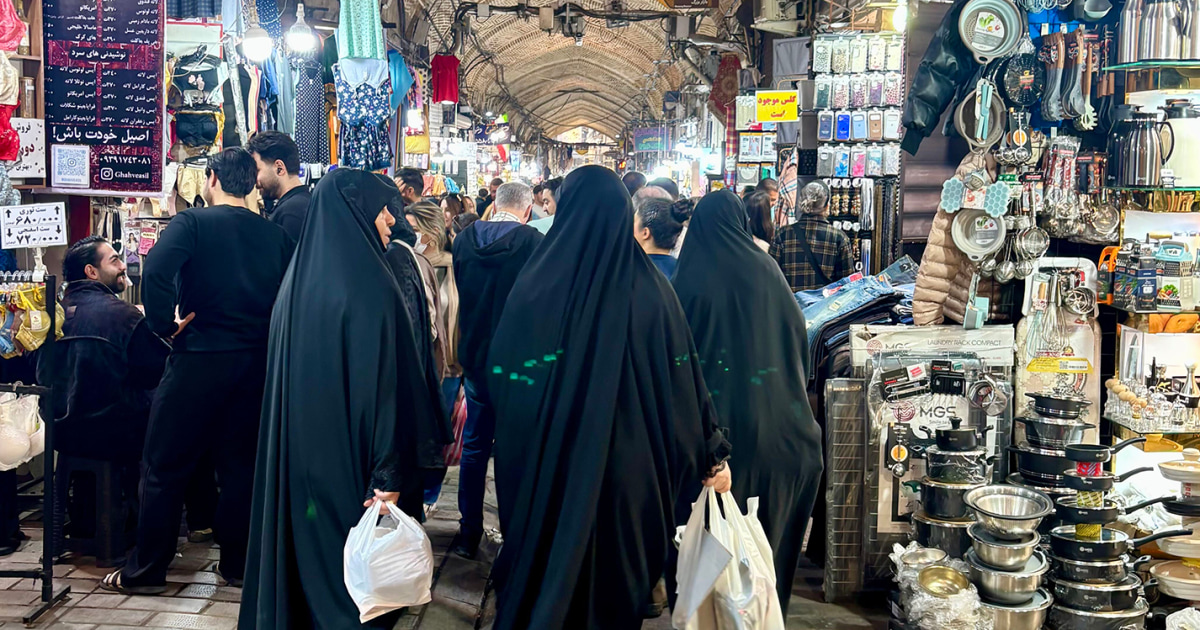
Iran President Says “We Have No Money” as US Blockade Strains Economy
“We have no money,” Iranian President Masoud Pezeshkian said on state television on November 20, acknowledging that U.S. economic warfare has severely strained the country.
Iran is reeling from what officials describe as a “silent war” driven by a tightening American blockade that is causing economic damage far surpassing the physical destruction of military strikes, NBC News reported. The restrictions have severely reduced oil exports, plunged the national currency to record lows, and forced the government to cut subsidies on food and electricity.
President Pezeshkian told investors and producers in Tehran on November 21 that the country faces an economic battle far more difficult than a war of missiles, according to Iran’s state-run news agency IRNA. Government statistics indicate that annual food and beverage inflation has climbed past 110%, while the Iranian rial has plummeted to 2.9 million per U.S. dollar, compared with roughly 32,000 rials when the 2015 nuclear agreement was signed.
The U.S. naval blockade, enforced since the collapse of a temporary ceasefire in July, has cut Iran’s monthly revenue by $3 billion to $4 billion, according to BigGo Finance. International consultancy Kpler reported that Iranian crude output dropped below 2 million barrels per day in late October, falling more than 40% from 3.45 million barrels per day in January.

Energy Shortages and Subsidy Cuts
State power company Tavanir has implemented rolling blackouts lasting up to two hours daily, and officials warn that winter shortages could worsen. President Pezeshkian told the nation on November 22 that the country would face severe difficulties during the winter months.
To cope with the financial strain, authorities have reduced low-cost flour and bread allocations across seven of the country’s 31 provinces and removed millions from national food voucher rolls. Iranian legislator Nasrallah Pejmanfar said that electricity shortages have already caused 600,000 job losses over the past six months, according to the National Security Journal.
“Inflation has caused their wages to be insufficient to cover their living expenses,” Ali Zeinivand, deputy interior minister, told a semiofficial news agency. Government spokesperson Fatemeh Mohajerani added during a press conference in Tehran that wartime conditions have driven up production costs, leading to widespread inflation and economic stagnation.
Sanctions and International Pressure
Washington has continued expanding its economic measures by targeting flights, land trade, and financial intermediaries. The U.S. Treasury Department announced new sanctions on November 23 aimed at disrupting networks used to circumvent restrictions.

“Iran’s economy is underwater, and its leaders are panicking,” U.S. Treasury Secretary Scott Bessent said in a statement after the sanctions were announced.
Despite the severe pressures, President Pezeshkian asserted that diplomacy remains an option, telling a conference in Tehran that Iran is pursuing talks but will not bow to aggression, as reported by ISNA News Agency. He also maintained that the U.S. cannot topple the Islamic Republic unless the government alienates the public, according to the presidency’s website cited by Yahoo.
| Economic Indicator | Current Figure |
|---|---|
| Food and beverage inflation | More than 110% year-on-year |
| Rial exchange rate | 2.95 million per U.S. dollar |
| Monthly revenue loss | $3 billion to $4 billion |
| Crude output (late October) | Below 2 million barrels per day |
Ali Vaez, an Iranian affairs expert at the International Crisis Group, told The Wall Street Journal that Iran has lived on “borrowed economic time” for months, noting that delaying the current reckoning has been a remarkable feat.
The national electricity company Tavanir announced distribution restrictions amid severe fuel supply constraints that leave the grid unable to meet peak demand. Although Iran possesses abundant oil and natural gas reserves, chronic infrastructure gaps, subsidies, inefficiencies, and fragmented governance have long undermined the energy system.
These structural weaknesses have been severely exacerbated by decades of sanctions, a naval blockade, and war damage—including February attacks that knocked out 4,200 megawatts of power generation capacity and triggered massive natural gas deficits.
“We are in a silent war, which is much more difficult than a war in which missiles are launched and destruction is carried out,” Pezeshkian said.