
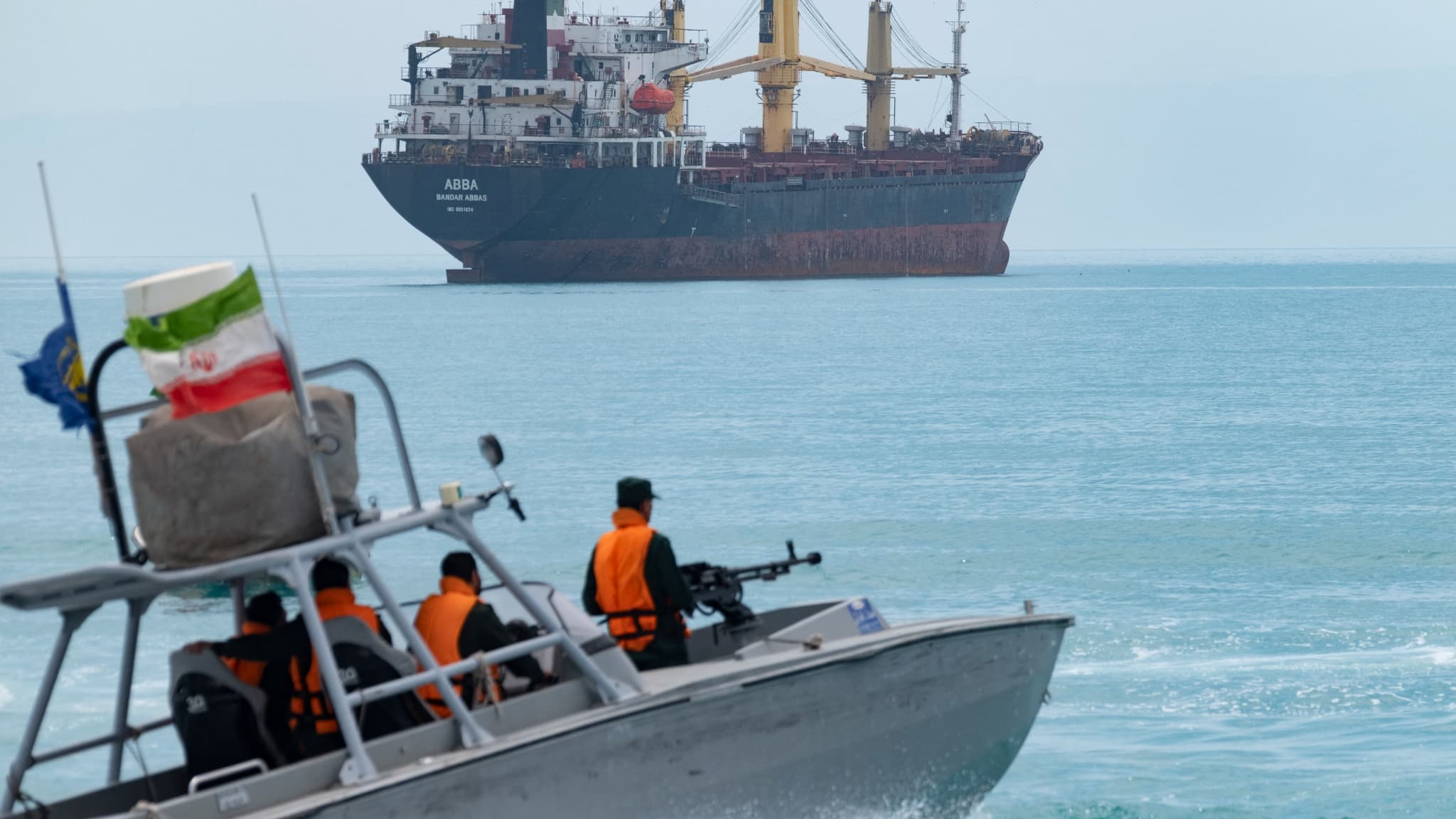
Iran Offers to Open Strait of Hormuz if Attacks Cease
Iranian Foreign Minister Abbas Araghchi has announced that Tehran will reopen the Strait of Hormuz for a two-week window, provided Israeli-American airstrikes cease. This conditional truce aims to establish a safe maritime corridor while the United States and Iran negotiate a long-term peace agreement to resolve the current conflict in the Middle East.
The Strait of Hormuz is not merely a geographical passage; it is the world’s most critical energy chokepoint. For months, the threat of its closure has acted as a geopolitical sword of Damocles hanging over global oil markets. Now, the leverage has shifted. By weaponizing the waterway, Tehran has found a strategic tool that, in the immediate term, carries more weight than its own nuclear program.
This is a high-stakes gamble. The world is effectively being held hostage by the geography of the Persian Gulf.
The Terms of the Reciprocal Truce
The current diplomatic breakthrough is fragile, built on a foundation of conditional concessions. Abbas Araghchi, communicating via his X account, explicitly linked the reopening of the strait to the immediate cessation of military aggression. The Iranian position is clear: if the strikes against Iran stop, the Iranian armed forces will cease their defensive operations.
Though, the definition of “open” remains a point of contention. Araghchi specified that “safe passage” would be possible, but noted this would be done “in coordination with the Iranian armed forces” and would be subject to “technical limitations.” This suggests that Iran intends to maintain a level of surveillance and control over who enters and exits the strait, rather than granting unrestricted international access.
This nuances the demand from Washington. President Donald Trump, posting on Truth Social, has demanded that the strait be opened “completely” as a prerequisite for a reciprocal ceasefire. While Trump claims the U.S. Has “already reached and exceeded” its military objectives since the strikes began on February 28, the gap between “safe passage with limitations” and “completely open” is where the next two weeks of negotiations will likely stall.
For global shipping firms and energy conglomerates, these “technical limitations” create a logistical nightmare. Navigating these ambiguities requires more than just a captain; it requires the expertise of international maritime attorneys to ensure that vessels are not inadvertently violating the shifting terms of a conditional ceasefire.
A Strategic Pivot: From Nuclear Totems to Maritime Leverage
For decades, the international community focused on Iran’s nuclear program as the regime’s primary source of leverage. That has changed. The current crisis proves that the ability to throttle the global oil supply is a more immediate and potent weapon than the long-term threat of a nuclear warhead.

The Islamic Revolutionary Guard Corps (IRGC) has demonstrated its capacity to project power in the Gulf, utilizing fast boats and maritime assets to enforce its will. This shift in strategy forces the West to negotiate not just over centrifuges and uranium enrichment, but over the incredibly flow of global commerce.
The economic ripple effects are immense. Every hour the strait remains contested, insurance premiums for tankers skyrocket. Companies are now scrambling to secure global risk assessment firms to determine if the two-week window is a genuine opening or a tactical lure designed to draw Western assets deeper into Iranian-controlled waters.
“If the attacks against Iran cease, our powerful armed forces will cease their defensive operations.” — Abbas Araghchi, Foreign Minister of Iran
The Path Toward a Long-Term Settlement
The two-week truce is intended to be a bridge to something more permanent. President Trump has indicated that discussions are “very advanced” regarding a long-term peace agreement. The cornerstone of these talks is a “10-point proposal” submitted by Tehran, which the U.S. Administration has characterized as a “viable basis for negotiation.”
While the specific details of these ten points remain confidential, the focus is clearly on a comprehensive restructuring of the regional security architecture. The goal is to transition from a state of active bombardment to a stable, long-term diplomatic framework.
The stakes are too high for a failed negotiation. A collapse of this truce would likely lead to a total closure of the strait, triggering an energy crisis that would dwarf previous market shocks. To mitigate this, regional hubs are increasingly relying on supply chain specialists to diversify routes and find alternatives to the Hormuz bottleneck, though few viable alternatives exist for the volume of oil currently in transit.
Timeline of Escalation and Negotiation
To understand the current fragility of the ceasefire, one must gaze at the rapid acceleration of events over the last two months:
| Date | Event | Strategic Impact |
|---|---|---|
| February 28 | Launch of US-Israeli strikes | Initiation of direct military conflict against Iranian targets. |
| March – Early April | Strait of Hormuz tensions | Iran utilizes maritime control as a counter-leverage to nuclear threats. |
| April 7-8 | The “10-Point Proposal” | Tehran provides a framework for long-term peace. |
| April 8 | Conditional Truce Announced | Agreement to negotiate for two weeks; conditional reopening of the Strait. |
The transition from the February 28 strikes to today’s conditional truce shows a move toward pragmatic diplomacy. Both sides have realized that total victory is elusive: the U.S. Has met its military objectives, but Iran holds the key to the world’s energy supply.
The upcoming two weeks will determine if this is a genuine pivot toward peace or a strategic pause to allow both nations to re-arm. For the international community, the “safe passage” promised by Araghchi is a precarious lifeline. The reality is that the Strait of Hormuz remains a geopolitical trigger, and the finger is still on the button. As the world watches the 10-point proposal be dissected in Washington and Tehran, the only certainty is that the global economy remains tethered to the whims of a few miles of water. Those seeking to protect their interests in this volatile climate must find verified professionals through the World Today News Directory to navigate the legal and logistical minefield of the Middle East.