
Iran Missile Strikes Israel: Dozens Wounded in Arad & Dimona
Iranian ballistic missile strikes wounded approximately 100 people across southern Israel on Saturday, targeting the cities of Arad and Dimona, after Israeli air defence systems failed to intercept at least two projectiles. The attacks prompted mass casualty declarations and raised questions about the effectiveness of Israel’s air defence network.
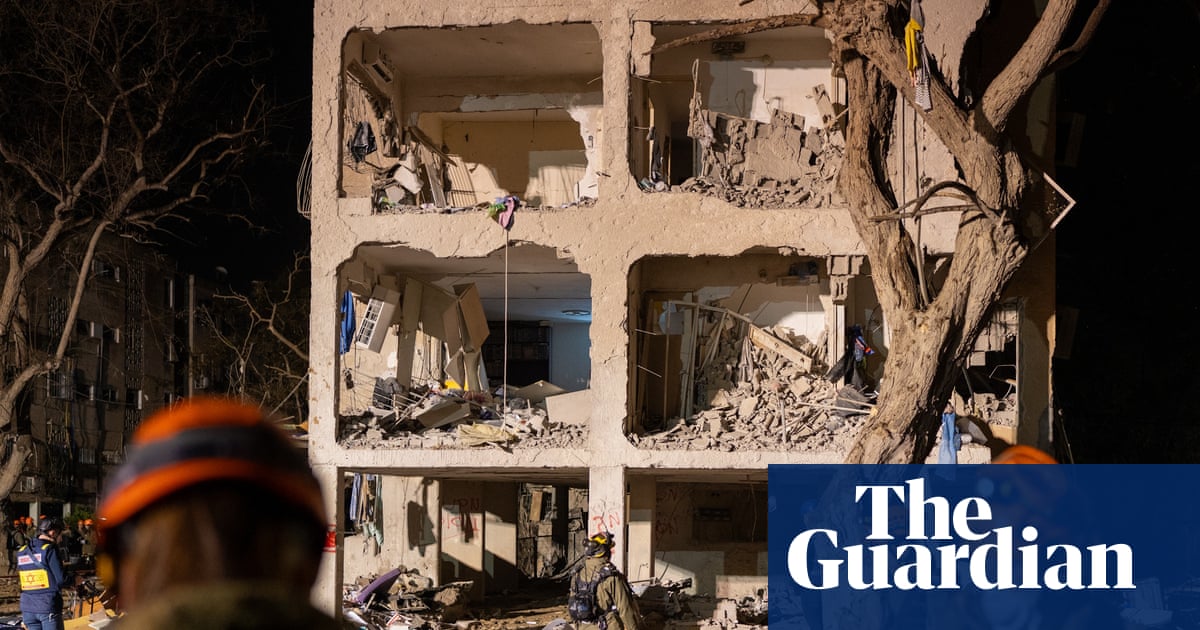
At least 68 people were injured in Arad, including 10 in serious condition and 14 moderately hurt, according to Israeli officials. Emergency responders reported concerns about individuals potentially trapped in damaged buildings. In Dimona, at least 27 people were wounded, including a teenager who sustained severe injuries from shrapnel. Soroka hospital in Beersheba declared a mass-casualty incident as it responded to multiple impact sites.
Eli Bin, chief executive of Magen David Adom, Israel’s emergency rescue service, described the scene in Arad as “an event of enormous magnitude,” adding that some people remained unaccounted for. Preliminary assessments suggest one missile, reportedly carrying a conventional warhead weighing several hundred kilograms, struck between residential buildings, causing structural damage and igniting fires.
Footage circulating online appeared to show the missile impacting Arad shortly after warning sirens were activated, though independent verification of the timing was not immediately available. The Israeli air force announced an investigation into the apparent failure to intercept the missile that struck the city. Brig. Gen. Effie Defrin, an IDF spokesperson, stated on X (formerly Twitter), “The air defence systems operated but did not intercept the missile. We will investigate the incident and learn from it. This is not a special or unfamiliar type of munition.”
The strikes on Dimona, a city in the Negev desert and home to the Shimon Peres Negev Nuclear Research Center, prompted heightened concern. Iranian state-linked media claimed the Dimona strikes were retaliation for alleged attacks by the US and Israel on nuclear facilities in Bushehr and Natanz. Israel has denied responsibility for any strike on Natanz.
The International Atomic Energy Agency (IAEA) stated it was aware of reports of a projectile striking Dimona but had received no indication of damage to the nuclear facility. The agency reported no abnormal radiation levels and said it was continuing to monitor the situation. The Natanz facility, which hosts underground centrifuges for uranium enrichment, was previously damaged in an incident last year.
UN nuclear watchdog chief Rafael Grossi reiterated a “call for military restraint to avoid any risk of a nuclear accident” following the strike near Natanz.
Israeli Prime Minister Benjamin Netanyahu issued a statement describing the evening as “very difficult in the campaign for our future.” He vowed to continue striking “our enemies on all fronts with determination.” Air raid sirens were triggered multiple times in Dimona overnight, underscoring the ongoing threat.
Earlier this week, Israel’s Home Front Command had eased some wartime restrictions in parts of the country, including Dimona, allowing schools and other educational institutions to reopen.