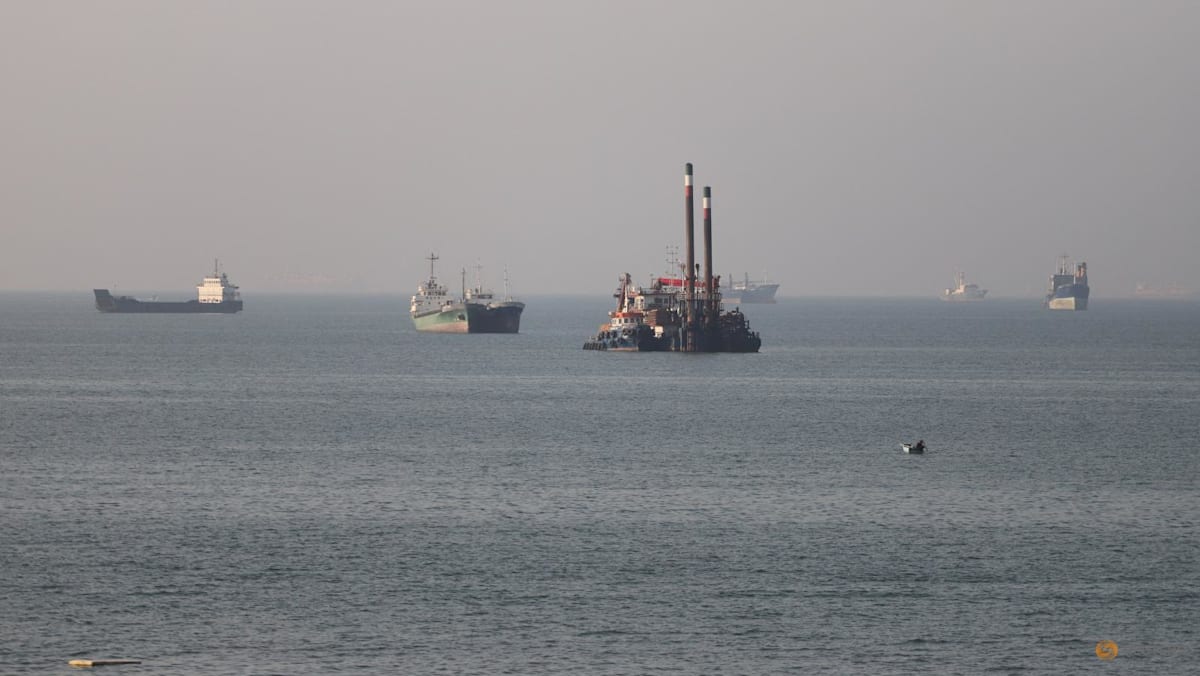
Iran Launches Retaliatory Strikes on US Bases in Middle East
Iran Launches Retaliatory Strikes on U.S. Bases in Jordan and Gulf, Escalating Regional Tensions
Iran targeted U.S. military installations in Jordan, Bahrain, and Kuwait on June 10, 2026, following President Donald Trump’s order to strike Iranian assets near the Strait of Hormuz, according to CNA and Al Jazeera. The attacks mark a significant escalation in Middle East hostilities, with U.S. officials confirming infrastructure damage but no casualties. The incident underscores deepening geopolitical rifts and raises questions about regional stability.

What Happened and Why It Matters
Iran’s military conducted coordinated strikes on U.S. bases in Jordan and the Gulf on June 10, 2026, in response to U.S. air strikes near the Strait of Hormuz ordered by former President Donald Trump, per CNA. The attacks, which hit facilities in Bahrain, Kuwait, and Jordan, disrupted communications and damaged critical infrastructure but did not result in U.S. casualties, according to Pentagon reports. This development escalates tensions in a region already strained by decades of conflict, with implications for energy security, military alliances, and global trade routes.

Historical parallels reveal a pattern of retaliatory strikes by Iran following U.S. military actions. In 2020, the U.S. killed Iranian General Qasem Soleimani, prompting Iranian attacks on U.S. bases in Iraq. The 2026 strikes suggest a similar cycle of escalation, with regional powers like Saudi Arabia and Israel now facing heightened risks of collateral involvement, according to Dr. Lina Al-Malki, a Middle East geopolitical analyst at the Gulf Studies Center. “This isn’t just a bilateral issue anymore. The Gulf Cooperation Council states must now reassess their security partnerships,” she said.
Regional Impacts and Economic Consequences
The attacks have immediate consequences for the Gulf’s infrastructure. In Kuwait, the strike on a U.S. logistics hub disrupted fuel shipments, causing temporary shortages in the country’s eastern ports, according to the Kuwaiti Ministry of Energy. Bahrain’s military base, a key U.S. operations hub, reported damaged radar systems, complicating regional air traffic monitoring. These disruptions risk delaying oil exports, a critical revenue source for Gulf states, as global markets watch for price volatility.
Macroeconomic analysts warn of broader ripple effects. “The Strait of Hormuz, a chokepoint for 20% of global oil trade, is now a flashpoint again,” said Dr. Amir Hassan, an economist at the World Energy Institute. “Even minor interruptions could spike prices, impacting economies from Europe to Southeast Asia.” The U.S. Department of Energy has already begun coordinating with Gulf allies to secure alternative supply routes, though officials acknowledge the challenge of maintaining stability in a volatile environment.
Expert Analysis: Legal and Strategic Implications
The strikes have triggered legal and strategic debates about international law and military response. “Iran’s actions violate the 1972 Vienna Convention on Diplomatic Relations, which prohibits attacks on foreign military installations,” said Professor Rachel Nguyen, an international law expert at Harvard Law School. “However, the U.S. response will depend on whether it frames this as a direct attack or a regional conflict.”
Local officials in Jordan have called for de-escalation. “We urge all parties to avoid further violence and prioritize diplomacy,” said Jordanian Foreign Minister Samir Al-Khatib in a statement. Meanwhile, U.S. Secretary of Defense Lloyd Austin has convened emergency talks with NATO allies, emphasizing the need for a “unified response” to Iran’s aggression. The Pentagon has also begun reinforcing its Gulf presence, deploying additional F-35 fighter jets to Qatar, according to Reuters.
Directory Bridge: Solutions and Resources
The crisis highlights the urgent need for specialized legal and security services. [International Law Firms] are advising Gulf states on navigating the legal complexities of cross-border military actions, while [Crisis Management Services] are helping businesses mitigate supply chain risks. [Diplomatic Consulting Agencies] are also in high demand, as governments seek to stabilize regional alliances. For those navigating the fallout, [Legal Aid Organizations] offer free resources to address potential disputes arising from the conflict.

The Path Forward: A Fragile Balance
As the U.S. and Iran continue to clash, the region’s future hinges on a fragile balance of power. “This isn’t just about retaliation—it’s about deterrence,” said Dr. Al-Malki. “If either side missteps, the consequences could be catastrophic.” The coming weeks will test the resilience of Gulf alliances and the effectiveness of international diplomacy. For now, the world watches, hoping for a resolution that avoids further bloodshed. [Global Conflict Resolution Centers] remain at the forefront of efforts to de-escalate tensions
- Bruce Blakeman Links Kathy Hochul to Zohran Mamdani in New Campaign Mailers
- Lucy Letby Inquiry Blasts Hospital Management Over Failure to Protect Babies
- Oil Prices Spike and Stocks Slide Following US Strikes on Iran (archyde.com)
- Oil Prices Today: WTI, Brent and Middle East Market Updates (newsy-today.com)