
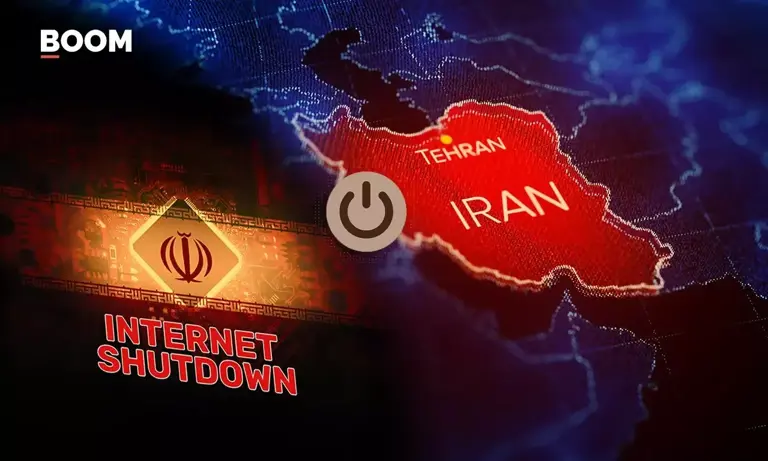
Iran Internet Shutdown: Longest Nationwide Blackout Since Arab Spring
Iran is currently running a masterclass in digital authoritarianism, attempting to maintain a nationwide blackout that would build the early 2010s Arab Spring gaze like a minor routing glitch. But as the regime tightens its grip on the terrestrial fiber backbone, the battle has shifted to the LEO (Low Earth Orbit) layer. Starlink isn’t just providing “internet”; it’s introducing a massive architectural bypass to the state’s centralized kill-switch.
The Tech TL;DR:
- Hardware Bypass: Starlink LEO satellites circumvent the Iranian government’s centralized Internet Exchange Points (IXPs), rendering traditional DNS poisoning and IP blocking ineffective.
- The Cat-and-Mouse Game: The regime is pivoting from software-level censorship to physical signal jamming and “hardware hunting” to locate unauthorized terminals.
- Latency Advantage: With round-trip times (RTT) significantly lower than legacy geostationary satellites, Starlink enables real-time encrypted communication and VoIP, critical for wartime coordination.
For the uninitiated, the Iranian “National Information Network” (NIN) is designed as a digital walled garden. By routing all domestic traffic through a handful of state-controlled gateways, the government can implement a total blackout by simply dropping BGP (Border Gateway Protocol) advertisements. Still, Starlink’s phased-array antennas communicate directly with a constellation of satellites, bypassing the physical infrastructure the regime controls. This creates a critical IT bottleneck for the state: they can no longer control the packet flow at the edge; they have to fight the physics of the radio frequency (RF) spectrum.
From a security standpoint, this isn’t a plug-and-play victory. Users are operating in a high-threat environment where the mere act of emitting a signal is a beacon for SIGINT (Signals Intelligence) teams. This is where the intersection of hardware and obfuscation becomes a life-or-death requirement. Organizations managing these remote deployments are increasingly relying on specialized cybersecurity auditors and penetration testers to ensure that the traffic leaving the terminal doesn’t leak metadata that could compromise the user’s identity.
The Cybersecurity Threat Report: Signal Leakage and RF Triangulation
The primary vulnerability isn’t the encryption—Starlink utilizes proprietary protocols and robust AES-standard encryption for its backhaul—but the physical layer. The regime is deploying mobile RF scanners to detect the specific frequency signatures of Starlink terminals. Once a signal is detected, the “blast radius” is narrowed down to a specific building or room.

“The shift from logical censorship to physical signal hunting marks a transition in electronic warfare. When you can’t block the protocol, you target the emitter. We are seeing a surge in the use of tactical jamming equipment designed to create localized ‘dead zones’ around suspected satellite uplinks.” — Dr. Arash Sadeghi, Lead Researcher at the Open Observatory of Network Interference (OONI).
To mitigate this, advanced users are employing “burst transmissions” and strategic shielding. However, the inherent nature of the phased-array antenna means it must maintain a relatively clear line of sight to the sky, making it difficult to hide. This technical reality has forced a surge in demand for Managed Service Providers (MSPs) capable of configuring complex VPN tunnels and obfuscation layers (like ShadowSocks or V2Ray) over the satellite link to hide the nature of the traffic from any potential man-in-the-middle (MITM) attacks at the ground station level.
The Implementation Mandate: Testing Connectivity and Latency
For developers and network engineers monitoring the stability of these “black market” uplinks, standard ping tests are insufficient. To analyze the actual throughput and identify if the regime is employing deep packet inspection (DPI) on the satellite return path, engineers utilize mtr (My Traceroute) to identify where packet loss is occurring in the LEO hop.
# Analyzing packet loss and latency across the Starlink gateway # Install mtr via: sudo apt-get install mtr-tiny mtr -rw 8.8.8.8 # Expected output for LEO: # Loss% | Snt | Lost | Sent | Last | Avg | Best | Wrst # 0.0% | 100 | 0 | 100 | 32.1 | 35.4| 28.2 | 110.5 # (High variance in 'Wrst' indicates potential RF interference or jamming) According to the IEEE whitepapers on satellite communications, the transition to LEO reduces latency from 600ms+ (GEO) to roughly 25-50ms. This allows for the deployment of containerized applications and Kubernetes clusters that require tight synchronization—something previously impossible under the regime’s throttled infrastructure.
The Hardware/Spec Breakdown: LEO vs. Terrestrial vs. GEO
To understand why Starlink is the only viable option during a total blackout, we have to look at the hardware constraints. The Iranian regime controls the “Last Mile” of terrestrial fiber. Traditional satellite internet (GEO) was too unhurried for modern encrypted tunnels, which often timeout during high-latency handshakes.
| Metric | Terrestrial (State-Controlled) | Legacy GEO Satellite | Starlink (LEO) |
|---|---|---|---|
| Control Point | Centralized IXPs / BGP | Single Satellite / Ground Station | Distributed Constellation |
| Avg. Latency | 10-100ms (if not blocked) | 600ms – 800ms | 25ms – 50ms |
| Censorship Method | DNS/IP Blocking & DPI | Ground Station Filtering | RF Jamming / Physical Seizure |
| Resilience | Zero (Single point of failure) | Moderate (High Latency) | High (Mesh Network) |
The deployment of these terminals is not without risk. As enterprise adoption of LEO technology scales, we are seeing a rise in “shadow IT” within sanctioned regions. This creates a massive compliance headache for global firms. Companies are now turning to IT consultants to implement Zero Trust Network Access (ZTNA) and SOC 2 compliant frameworks that can secure endpoints connecting via non-traditional, high-risk satellite gateways.
The technical battle in Iran is a canary in the coal mine for the rest of the world. As the “Sovereign Internet” model gains traction in other autocratic regimes, the reliance on LEO constellations will only increase. However, the vulnerability remains the physical terminal. Until we see the widespread adoption of stealth-mode phased arrays or integrated NPU-driven signal obfuscation, the hardware remains the weakest link in the security chain.
The trajectory is clear: the future of internet freedom isn’t found in software patches or better VPNs, but in the orbital layer. For CTOs and network architects, the lesson is simple: diversify your transport layer. If your entire infrastructure relies on a single terrestrial provider, you aren’t managing a network—you’re managing a liability.
Disclaimer: The technical analyses and security protocols detailed in this article are for informational purposes only. Always consult with certified IT and cybersecurity professionals before altering enterprise networks or handling sensitive data.