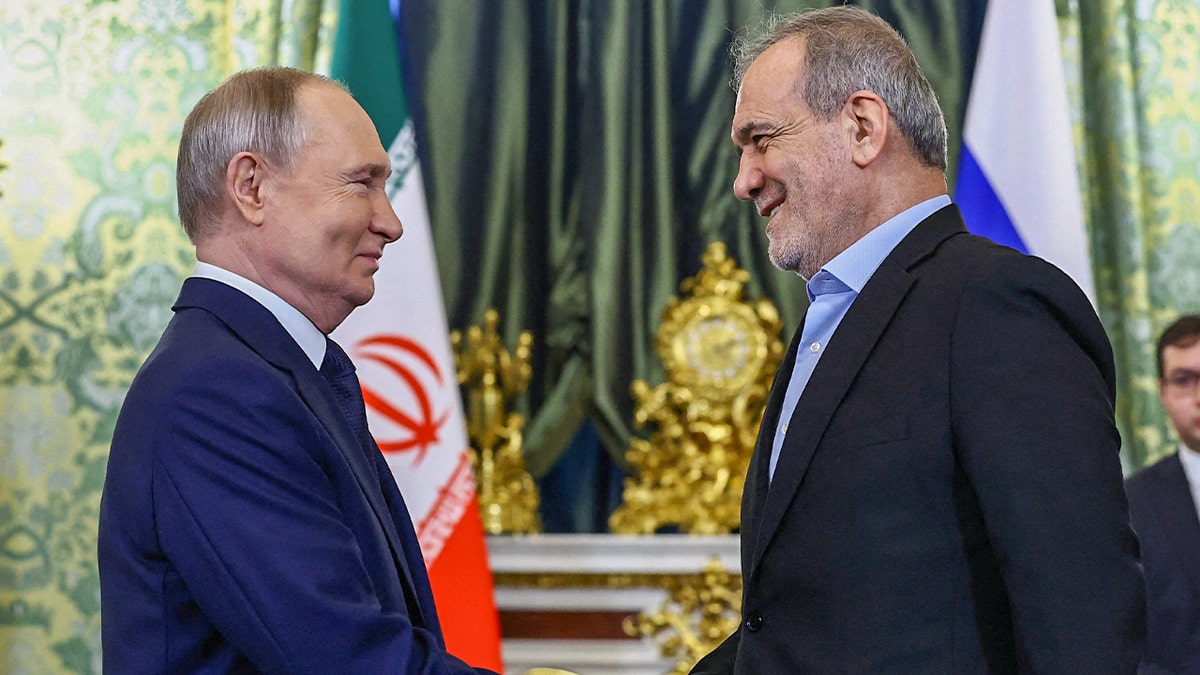
Iran foreign minister meets Putin in St Petersburg amid regional talks
St. Petersburg—The meeting between Abbas Araghchi and Vladimir Putin in the Boris Yeltsin Presidential Library marked a notable moment in Iran’s diplomatic efforts. According to Russian state media, the encounter included discussions that underscored the growing ties between the two nations.
During the meeting, Putin referenced a message from Iran’s Supreme Leader, Ayatollah Khamenei, though details of its contents were not disclosed. Russian state news agency Tass reported that Putin described the Iranian people as demonstrating resilience in the face of external pressures, aligning with Moscow’s broader narrative of opposing Western influence in the region.
The Diplomatic Sprint That Skipped Washington
Araghchi’s visit to Russia followed a series of high-level meetings in Islamabad and Muscat, where Iranian officials engaged with regional counterparts on issues of mutual concern. These discussions occurred against the backdrop of heightened tensions in the Strait of Hormuz, a critical waterway for global energy supplies that has seen reduced traffic due to ongoing disputes.
Earlier this month, the U.S. administration had announced plans to send a delegation to Pakistan for discussions involving Iranian officials. However, by the time the delegation was scheduled to arrive, Araghchi had already concluded his visit to Islamabad, and the U.S. trip was subsequently canceled without public explanation. Observers noted that Iran’s engagements in the region appeared to prioritize dialogue with neighboring states over direct negotiations with Washington.
Araghchi’s stop in Oman further highlighted Iran’s focus on regional partnerships. Oman, which has historically played a mediating role between Iran and Western nations, acknowledged the urgency of addressing the situation in the Strait of Hormuz. Omani Foreign Minister Badr Albusaidi emphasized the shared responsibility of coastal states in a social media post, noting the humanitarian need to secure the release of detained seafarers. Araghchi echoed this sentiment, framing the issue as one of mutual benefit for neighboring countries and the broader international community.
Russia’s Role: More Than Just Rhetoric
The meeting between Putin and Araghchi underscored the deepening relationship between Iran and Russia. Russian officials have previously indicated support for Iran in international forums, and the two countries have collaborated on various economic and military initiatives. During the St. Petersburg meeting, Putin’s remarks reinforced this partnership, though specific details of any new agreements or commitments remained undisclosed.
For more on this story, see Title: Putin to Meet Iranian Foreign Minister Abbas Araghchi in Moscow Amid Rising Tensions.
Reports from Tass and Iran’s Fars news agency indicated that Putin received a message from Khamenei, but neither source provided further information about its substance. Analysts suggested that the message could have included requests for economic or military cooperation, though no evidence of such specifics was made public. What emerged from the meeting was a clear signal of solidarity, with Russia positioning itself as a key partner for Iran amid its ongoing challenges with Western nations.
The alignment between Iran and Russia serves the interests of both countries. For Iran, Russia’s support offers a counterbalance to Western sanctions and potential access to economic and military resources. For Russia, a strengthened partnership with Iran enhances its influence in the Middle East, particularly as global attention remains focused on the conflict in Ukraine and its broader geopolitical implications.
The Strait of Hormuz: A Pressure Point, Not a Solution
The Strait of Hormuz remains a critical flashpoint in the current standoff. Before the recent disruptions, the waterway facilitated the transit of a significant portion of the world’s oil and natural gas supplies. The reduction in traffic has contributed to an ongoing energy crisis, with global markets feeling the impact of constrained supplies.
Araghchi’s discussions in Oman suggested that Iran is exploring regional solutions to the impasse, with an emphasis on cooperation among coastal states. His remarks highlighted the importance of shared responsibility in addressing the crisis, a framing that contrasts with the U.S. approach of maintaining a naval presence in the region. Albusaidi’s acknowledgment of the humanitarian situation underscored Oman’s potential role as a mediator, though the path to resolving the dispute remains uncertain.
This follows our earlier report, Hope Rises for US-Iran Ceasefire as Pakistan PM Urges Compliance Amid Trump’s Uncertainty and Regional Tensions.
The U.S. has not publicly detailed its response to Iran’s recent diplomatic activities, but the cancellation of the planned delegation to Pakistan indicates a shift in approach. Whether this reflects a broader strategy of disengagement or a recalibration of pressure tactics remains unclear. What is evident is that Iran is actively pursuing alternative diplomatic channels, with a focus on regional alliances and partnerships beyond the U.S.
What to Watch Next
The coming weeks may reveal further developments in several key areas. First, the nature of Russia’s response to Iran’s outreach will be closely observed. Will Moscow provide tangible economic or military support, or will its backing remain largely symbolic? Second, Oman’s potential role as a mediator could shape efforts to address the Strait of Hormuz crisis. Can Muscat facilitate a resolution that reopens the waterway without direct U.S.-Iran negotiations? Finally, the U.S. posture toward Iran will be critical. Will the administration seek to reengage with Tehran, or will it maintain its current approach?
For now, the meeting in St. Petersburg serves as a marker of Iran’s diplomatic priorities. It reflects a strategy that emphasizes regional partnerships and engagement with allies like Russia, while navigating the complexities of its relationship with the United States.