Iran Closes Strait of Hormuz Amid Reports of Ship Attacks
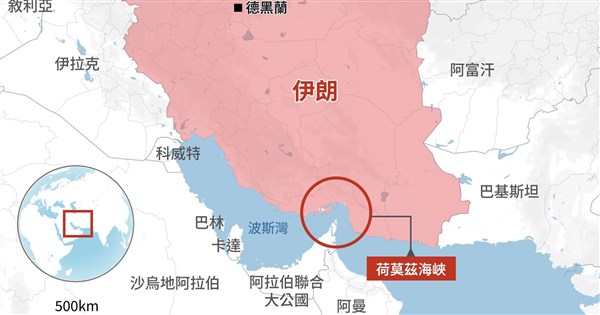
On April 18, 2026, Iran’s naval forces temporarily closed the Strait of Hormuz after reporting two vessels came under gunfire, disrupting one-fifth of global liquefied natural gas trade and reigniting fears of a broader Gulf conflict that could spike oil prices and fracture already fragile supply chains.
The Strait of Hormuz, a 21-mile-wide chokepoint between Oman and Iran, remains the world’s most critical energy transit corridor, with approximately 20.6 million barrels of oil per day passing through in 2024 according to the U.S. Energy Information Administration. Iran’s intermittent closures—often framed as “strict regulation” or military drills—are not new. they echo the 1980s Tanker War and the 2019 limpet mine attacks that preceded the Abraham Accords. What distinguishes the current escalation is its timing: occurring amid stalled Vienna nuclear talks, renewed U.S. Congressional pressure for secondary sanctions on Iranian oil buyers, and India’s quiet expansion of strategic petroleum reserves in anticipation of prolonged volatility.
While Iranian officials cited “unauthorized vessel incursions” as justification for the April 18 incident, maritime tracking data from Lloyd’s List Intelligence shows that at least eight oil tankers successfully transited the strait earlier that day under the pre-established International Maritime Organization (IMO)-endorsed Traffic Separation Scheme. The contradiction suggests internal friction within Iran’s Islamic Revolutionary Guard Corps Navy (IRGCN) between hardline factions seeking to leverage hydrocarbon volatility for diplomatic gain and pragmatic elements wary of triggering a U.S. Fifth Fleet response.
“Iran’s use of the Strait as a pressure valve is calculated, not chaotic. Each closure tests the world’s threshold for intervention while avoiding direct casus belli—This represents asymmetric coercion honed over four decades.”
The macroeconomic ripple extends beyond energy markets. Containerized trade through the Gulf of Oman—feeder routes to Jebel Ali and Hamad Port—faces cascading delays as shipping lines reroute vessels around the Cape of Good Hope, adding 10–14 days to Asia-Europe transit times. According to a March 2026 World Bank logistics index, such detours increase freight costs by 18–22% for manufactured goods originating in Vietnam and bound for Rotterdam, directly impacting just-in-time manufacturing in Germany’s automotive sector and Taiwan’s semiconductor supply chain.
Financial exposure is equally pronounced. Sovereign wealth funds from Abu Dhabi to Singapore have increased allocations to maritime war risk insurance, with Lloyd’s of London reporting a 31% year-on-year surge in Gulf-bound cargo premiums since January 2026. Simultaneously, commodity traders are recalibrating Basis swaps for Brent crude, anticipating backwardation spikes should Hormuz closures exceed 72 hours—a scenario last seen during the 2022 Ukraine invasion aftermath.
For multinational corporations navigating this volatility, the imperative is clear: static risk assessments are obsolete. Firms require dynamic, real-time maritime intelligence fused with scenario-based financial modeling to adjust hedging strategies and reroute logistics. This is where specialized consultancies prove indispensable—not as reactive vendors, but as embedded strategic partners.
Importers facing delayed Just-in-Time (JIT) deliveries from Southeast Asian manufacturing hubs are increasingly turning to vetted global logistics consultants who maintain proprietary vessel-tracking algorithms and port congestion forecasts. These firms enable dynamic rerouting through alternative corridors like the Northern Sea Route—now ice-free for 90 days annually—or multimodal hubs in Central Asia, reducing single-point-of-failure exposure.
Simultaneously, energy traders and refining complexes exposed to Brent-WTI spread volatility are engaging energy risk advisors versed in OPEC+ spare capacity mechanics and strategic petroleum release protocols. These advisors structure layered hedges using ICE Brent futures, call options on refining margins, and physical storage contracts in Cushing and Kharg Island to mitigate asymmetric price shocks.
Finally, corporations with direct foreign direct investment (FDI) in Gulf petrochemicals or desalination infrastructure are consulting international trade lawyers specializing in force majeure clauses under INCOTERMS 2020 and BIT (Bilateral Investment Treaty) dispute mechanisms. Their expertise ensures contractual continuity when port closures trigger sovereign-level interruptions, preserving investor-state protections under frameworks like the Egypt-U.S. BIT or the UAE-India CEPA.
The Strait of Hormuz will remain a flashpoint not due to the fact that of Iran’s naval capacity alone, but because it embodies the collision of three irreversible trends: the decline of Western naval hegemony in the Indo-Pacific, the rise of asymmetric energy coercion as a statecraft tool, and the global economy’s dangerous dependence on narrow geographic chokepoints. Until diversified supply chains and alternative energy corridors mature—whether through green hydrogen corridors from Namibia to Rotterdam or LNG terminals in East Africa—every fluctuation in Hormuz will send tremors through boardrooms from Houston to Hyderabad.