
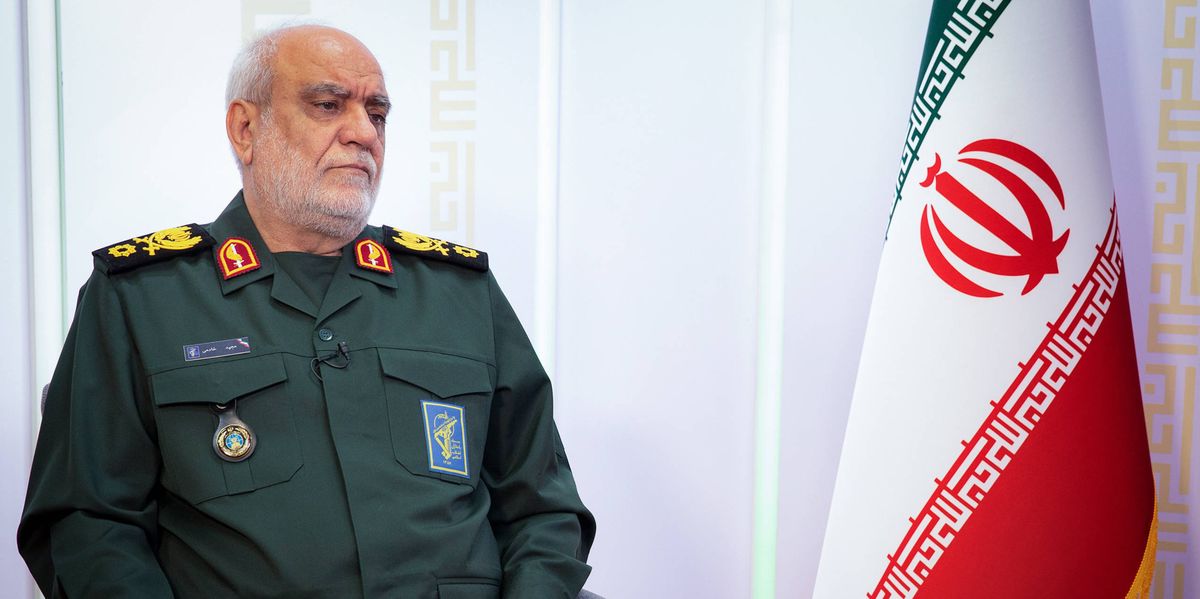
Iran Announces Death of Intelligence Chief Majid Khademi
Iran has confirmed the death of intelligence chief Majid Khademi, a pivotal figure in Tehran’s regional operations. This loss triggers an immediate power vacuum within the Islamic Republic’s security apparatus, escalating tensions across the Middle East and threatening the stability of critical maritime trade corridors and diplomatic channels.
The death of a high-ranking intelligence asset is rarely a mere administrative transition; in the context of the Iranian security state, it is a signal of systemic vulnerability. Khademi was not just a bureaucrat; he was a primary architect of the “Axis of Resistance,” managing the intricate web of proxies from Hezbollah in Lebanon to the Houthis in Yemen. When the head of the intelligence apparatus is removed—whether by internal purge or external kinetic action—the immediate result is “intelligence entropy.” Information silos break down and the risk of miscalculation by regional actors skyrockets.
This represents a macro-security crisis. For the global markets, the volatility isn’t just about the news cycle; it is about the predictability of the Strait of Hormuz. If the Iranian leadership reacts impulsively to fill this void, the risk of “gray zone” warfare—sabotage, cyber-attacks, and maritime harassment—increases exponentially.
Multinational firms operating in the Gulf are already feeling the tremor. Corporate entities are now urgently engaging global risk consultants to audit their regional exposure and develop contingency plans for sudden escalation.
The Intelligence Vacuum and the Proxy Ripple Effect
Khademi’s role was the connective tissue between Tehran’s strategic intent and tactical execution. His removal disrupts the flow of funding, weaponry, and directives to non-state actors. Historically, such transitions lead to a “hardening” of the regime’s posture as they attempt to project strength to mask internal instability. We saw similar patterns during the 2020 assassination of Qasem Soleimani, where the immediate aftermath was characterized by a cycle of retaliatory strikes that nearly ignited a full-scale regional war.
“The death of a figure like Khademi creates a dangerous window of unpredictability. In the intelligence world, the gap between the death of a strategist and the ascent of a successor is where the most catastrophic diplomatic errors occur.” — Dr. Arash Valaei, Senior Fellow at the Middle East Institute
The geopolitical fallout extends beyond the borders of Iran. The relationship between Iran and its allies is transactional. Without Khademi’s specific diplomatic touch, these alliances may fray, or conversely, proxies may act independently to prove their utility to the new leadership. This unpredictability directly impacts the global energy markets, as any perceived instability in the Persian Gulf leads to an immediate “fear premium” on Brent crude prices.
Because this instability manifests as physical and digital threats, energy conglomerates are rapidly onboarding global cybersecurity consultants to protect critical infrastructure from state-sponsored retaliatory hacks.
Macro-Economic Friction: Trade, Sanctions, and FDI
The death of an intelligence chief often precedes a shift in domestic policy or a pivot in foreign engagement. If the new leadership opts for a more aggressive posture, we can expect a tightening of the “shadow economy” that Iran uses to bypass international sanctions. This creates a ripple effect for international trade lawyers and compliance officers who must ensure that their clients are not inadvertently touching “tainted” funds or entities during this transition.
The economic stakes are summarized by the following pressure points:
- Maritime Insurance: War-risk premiums for tankers traversing the Gulf of Oman are likely to spike, increasing the landed cost of oil and chemicals.
- Foreign Direct Investment (FDI): Long-term infrastructure projects in Iraq and Syria, which rely on Iranian security guarantees, are now viewed as high-risk assets.
- Currency Volatility: The Iranian Rial’s instability often correlates with security shocks, affecting regional trade balances and the global commodity pricing for minerals.
As the legal landscape shifts in response to potential new sanctions or retaliatory measures, transnational corporations are scrambling to restructure their regional footprints. They are increasingly relying on international trade lawyers to navigate the precarious overlap between US Treasury (OFAC) regulations and regional operational needs.
The Strategic Chessboard: NATO and the Eurasian Pivot
The removal of Khademi does not happen in a vacuum. It occurs as Iran continues to deepen its strategic partnership with Russia and China, moving toward a multipolar security architecture that challenges Western hegemony. The “Eurasian Pivot” is not just about trade; it is about creating a security bloc that is immune to Western financial pressure. If the Iranian security apparatus feels besieged, it will lean harder into the Shanghai Cooperation Organisation (SCO) framework for intelligence sharing and military cooperation.

One sentence: The West is losing its visibility into Tehran.
When a key intelligence node like Khademi is removed, the “black box” of Iranian decision-making becomes even more opaque. For NATO, this means a higher reliance on signal intelligence (SIGINT) and a lower reliance on human intelligence (HUMINT), which often leads to a slower reaction time during a crisis. The relationship between the US Central Command (CENTCOM) and regional partners like Saudi Arabia and the UAE will be tested as they calibrate their response to the new Iranian leadership’s signals.
The volatility of this moment is a reminder that geography is destiny. The proximity of the Iranian plateau to the world’s most vital energy arteries means that a single death in Tehran can trigger a board-room crisis in London, Singapore, or New York.
The death of Majid Khademi is more than a headline; it is a structural shift in the Middle East’s power dynamics. As the Islamic Republic navigates this transition, the global community must prepare for a period of heightened friction and strategic ambiguity. For the corporate world, the lesson is clear: geopolitical risk is no longer an external variable—it is a core operational reality. Whether you are securing a supply chain or managing a sovereign wealth fund, the ability to find vetted international legal, financial, and consulting partners through the World Today News Directory is the difference between surviving a crisis and being consumed by it.