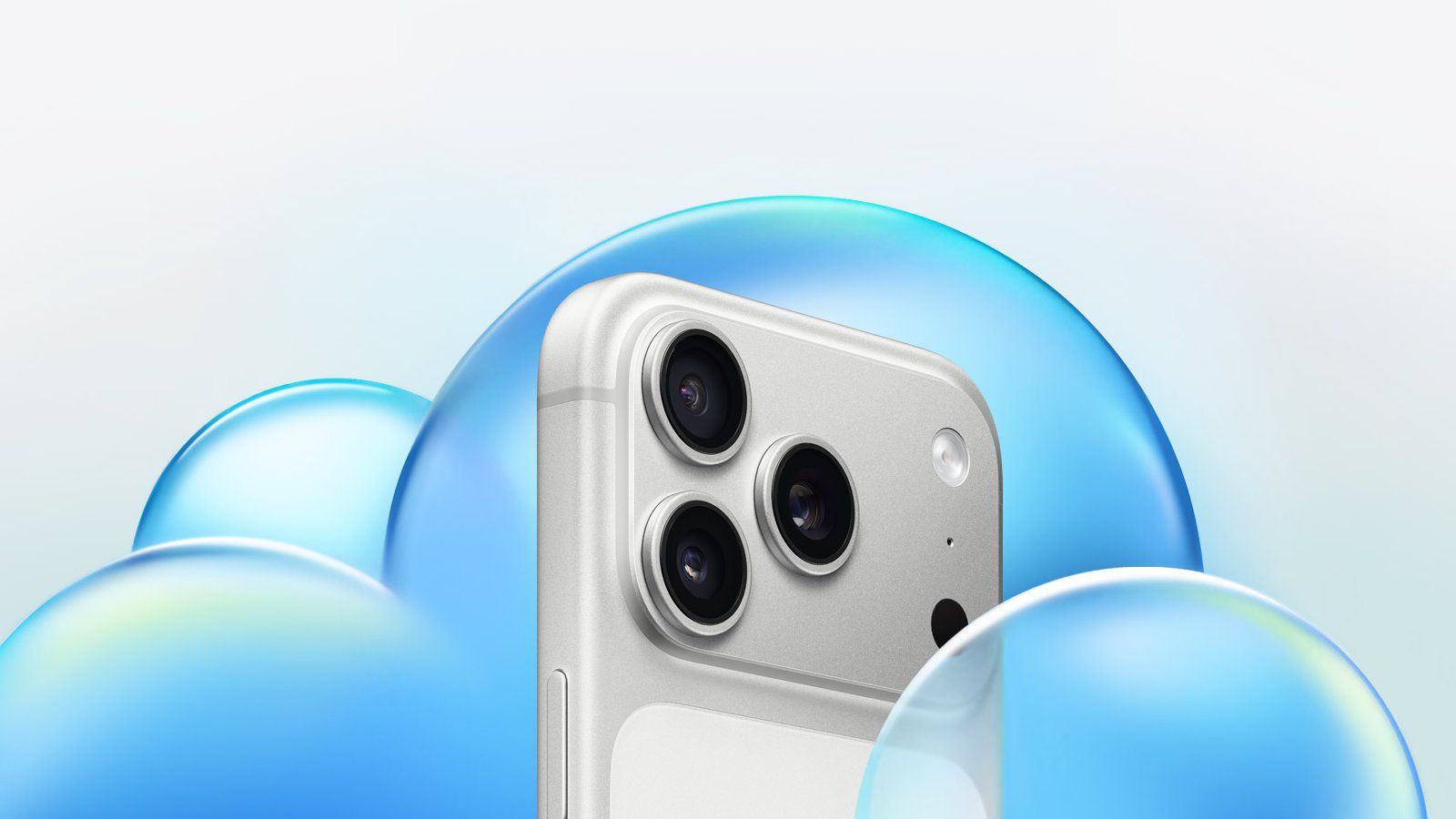
iPhone 17 Pro: New iCloud AI Features for HomeKit Secure Video
Apple is introducing a $9.99 monthly subscription for specific AI-driven features in iOS 27, according to reporting from MacRumors. The paywall targets advanced HomeKit Secure Video capabilities, including AI-generated descriptions of footage and semantic search for camera clips, specifically for users of the iPhone 17 Pro and compatible hardware.
- The Cost: $9.99/month for “premium” AI HomeKit tools.
- The Features: AI-generated video descriptions and natural language search for security clips.
- The Hardware: Optimized for the Neural Engine (NPU) in the iPhone 17 Pro series.
This move signals a shift from Apple’s traditional “hardware-first” monetization toward a recurring SaaS model for on-device intelligence. By gating these features, Apple is likely offsetting the compute costs associated with the large language models (LLMs) required to index video metadata. For enterprise users and high-net-worth individuals managing complex smart-home ecosystems, this adds a layer of operational expenditure to their security stack.
From an architectural standpoint, the ability to “search through camera clips” requires a sophisticated pipeline of vector embeddings. The system must convert visual data into a searchable mathematical representation, often processed via the NPU (Neural Processing Unit) to maintain privacy. If these processes are offloaded to Apple’s private cloud compute, the $9.99 fee covers the server-side inference costs. For those managing large-scale residential deployments, this shift may prompt a move toward local-first alternatives. Organizations are increasingly relying on [Managed Service Providers] to audit their IoT footprints and determine if proprietary subscriptions offer better ROI than open-source VMS (Video Management Systems).
The SaaS Pivot: AI HomeKit vs. Standard iCloud+
Apple’s decision to separate these AI features from the standard iCloud+ tiers suggests a distinction between storage and compute. While iCloud+ manages the persistence of data, the new iOS 27 subscription manages the analysis of that data. This mirrors the industry trend seen in Google’s Gemini Advanced or OpenAI’s ChatGPT Plus, where the cost of GPU cycles for complex reasoning is passed to the consumer.

| Feature | Standard iCloud+ | iOS 27 AI Tier ($9.99/mo) |
|---|---|---|
| Storage | Tiered (50GB to 12TB) | Included/Tiered |
| Secure Video Recording | Basic Event Detection | AI-Generated Descriptions |
| Clip Retrieval | Timeline-based | Semantic/Natural Language Search |
| Processing | Basic NPU | Advanced Cloud/Local Inference |
For developers, the integration of these features likely relies on a refined version of the HomeKit framework. To interact with similar metadata in a custom environment, a developer might use a cURL request to a local HomeKit bridge or a simulated API endpoint to test event triggers based on AI labels:
curl -X POST https://home-bridge.local/api/events
-H "Content-Type: application/json"
-d '{
  "event_type": "ai_description_match",
  "query": "person carrying a package",
  "threshold": 0.85,
  "action": "notify_admin"
}'
Latency, Privacy, and the NPU Bottleneck
The core technical challenge here is the trade-off between latency and privacy. Local processing on the iPhone 17 Pro’s A-series chip minimizes data egress, but complex semantic searches across terabytes of video footage can lead to thermal throttling. According to Ars Technica‘s historical analysis of Apple’s silicon, the NPU’s efficiency is critical for maintaining “instant” search results without draining the battery.
Security researchers have long warned about the “blast radius” of centralized AI hubs. By moving these descriptions into a subscription-based cloud model, Apple introduces a potential point of failure or interception, despite their claims of end-to-end encryption. This is why corporate security officers are deploying [Cybersecurity Auditors] to ensure that smart-home integrations in executive residences do not create backdoors into corporate networks via compromised IoT devices.
The implementation of these features likely utilizes a “hybrid-inference” model. Small, fast models run on the device for immediate detection, while larger, more capable models in the cloud handle the complex “description” generation. This architecture is similar to the one described in GitHub‘s documentation for various edge-AI deployments, where the “heavy lifting” is deferred to a remote cluster to preserve device longevity.
Alternative Tech Stacks for AI Surveillance
For those unwilling to pay the monthly “AI tax,” the alternative is a self-hosted stack. The open-source community has already built robust alternatives to Apple’s gated features. Frigate NVR, for instance, uses Google Coral TPUs to provide local object detection and semantic labeling without a subscription fee. This allows users to maintain full SOC 2 compliance and data sovereignty, which is often a requirement for high-security environments.
Comparing the Apple ecosystem to a self-hosted stack reveals a stark contrast in philosophy:
- Apple: High convenience, proprietary “black box” AI, recurring cost, integrated UX.
- Self-Hosted (Frigate/Home Assistant): High initial setup complexity, transparent logic, zero monthly fees, total data control.
As the cost of “intelligence” becomes a recurring line item, the friction for users to migrate to decentralized systems decreases. This trend is driving a surge in demand for [Software Development Agencies] that specialize in custom IoT integrations and the migration of proprietary data to local-first architectures.
The trajectory of iOS 27 suggests that Apple is no longer selling just a device, but a “capability lease.” As NPU performance continues to scale, the question remains whether these features will eventually be “grandfathered” into the base OS or if the subscription model will expand to include other core system functions. For now, the $9.99 fee is the price of admission for those who value the seamless integration of AI into their physical security perimeter.
Disclaimer: The technical analyses and security protocols detailed in this article are for informational purposes only. Always consult with certified IT and cybersecurity professionals before altering enterprise networks or handling sensitive data.