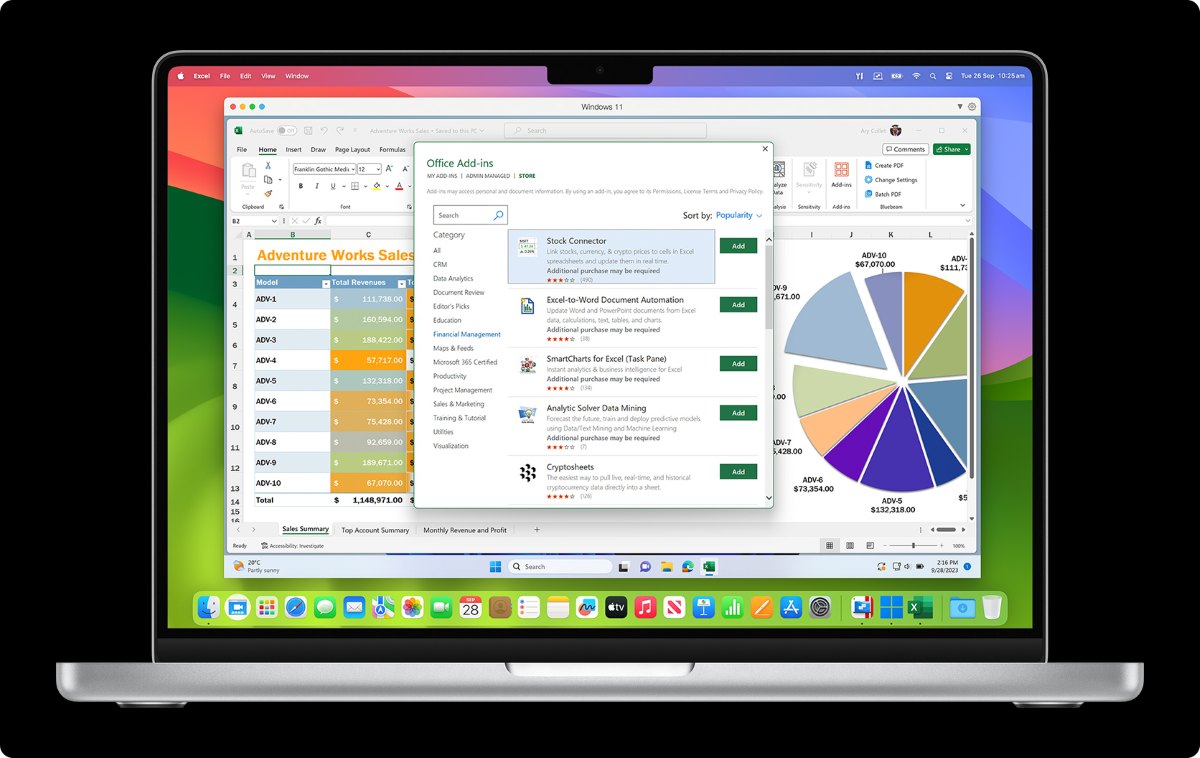
Apple’s modern $599 MacBook Neo, powered by the A18 Pro chip originally found in the iPhone 16 Pro, is capable of running Windows 11 via virtualization software, Parallels Desktop, the companies confirmed this week.
The confirmation addresses a key question surrounding the budget-focused laptop: whether its mobile-derived processor could support a full desktop operating system. Parallels Engineering Team completed initial testing and confirmed that Parallels Desktop installs and virtual machines operate stably on the MacBook Neo, according to an updated knowledge base article. However, full validation and performance testing is ongoing, with further compatibility statements expected.
While the A18 Pro chip’s ARM architecture is compatible with virtualization software like Parallels, the MacBook Neo’s limited 8GB of RAM presents a significant constraint. A Windows 11 virtual machine requires a minimum of 4GB of RAM, leaving only 4GB for macOS and other applications. Parallels cautions that the MacBook Neo is best suited for “light, occasional Windows use,” such as legacy business tools or Windows-only utilities. CPU- or GPU-intensive applications are not recommended.
“For light, occasional Windows use, like a legacy business tool, or a Windows-only utility, MacBook Neo may provide an acceptable experience. For CPU- or GPU-intensive Windows applications, this computer is not the right choice,” Parallels stated.
Testing has revealed a potential issue with sustained workloads. The MacBook Neo utilizes passive cooling, relying on the aluminum chassis to dissipate heat, unlike laptops with active cooling systems. The A18 Pro, designed for the thermal constraints of a smartphone, is prone to throttling – reducing clock speeds to prevent overheating – under prolonged CPU and GPU load. This throttling impacts performance when running Windows 11 in a virtual environment.
Despite these limitations, Parallels suggests the experience on the MacBook Neo could be comparable to, or even exceed, that of some entry-level Windows laptops. The company cites potential performance gains over a Dell Pro 14 with an Intel Core Ultra 5 235U processor for tasks like office productivity, education, and basic multimedia.
The ability to run Windows 11 on the MacBook Neo opens up several potential use cases, including access to Windows-exclusive applications, compatibility with Windows-only environments, and the ability to multitask between macOS and Windows. However, users considering this option should be aware of the performance limitations imposed by the 8GB RAM configuration.
Parallels recommends configurations with more memory whenever possible, noting that Apple’s $1,099 MacBook Air with an M5 chip, offering a minimum of 16GB of RAM with upgrade options, would be a more suitable choice for demanding Windows workloads.
Leave a Reply