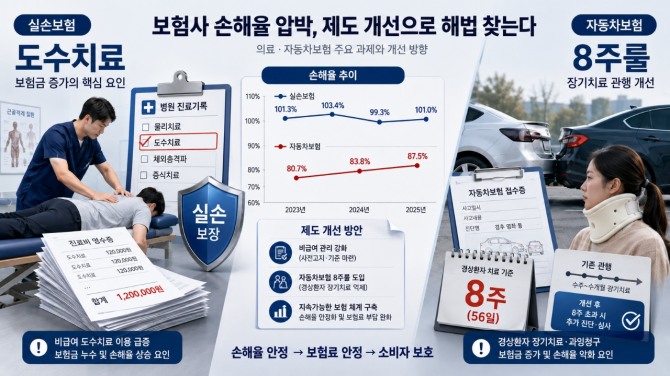
Insurance Industry’s Two Major Loss Rate Burdens: Medical and Car Insurance Reforms Key in Second Half
South Korean non-life insurers face a critical fiscal pivot in the second half of 2026 as regulators tighten oversight on loss ratios for indemnity and automobile policies. Effective July 2026, the Financial Supervisory Service (FSS) will implement stricter documentation requirements for manual therapy claims, while the industry pushes for a standardized “eight-week rule” to curb prolonged hospitalization and diagnostic overutilization in auto insurance settlements.
The Indemnity Insurance Margin Squeeze
The core of the current profitability challenge lies in the rising loss ratios of private medical insurance, driven largely by non-reimbursable treatments. According to the Financial Supervisory Service (FSS), the loss ratio for indemnity products has consistently hovered above the break-even point, pressured by a sharp rise in manual therapy claims. Industry data suggests that a small percentage of high-utilization clinics are responsible for a disproportionate share of claims payouts, creating a volatility trap for major underwriters.
To mitigate this, insurers are shifting toward data-driven claim validation. Firms are now integrating advanced data analytics platforms to identify billing anomalies in real-time. By deploying predictive modeling, insurers can flag suspicious manual therapy patterns before they reach the reimbursement threshold, effectively protecting EBITDA margins against systemic fraud.
“The era of passive claim processing is over. Insurers who fail to automate the audit trail for manual therapy will see their loss ratios balloon as medical inflation outpaces premium adjustments,” says a senior analyst at a Seoul-based institutional investment firm.
Automobile Insurance and the Eight-Week Threshold
Automobile insurance profitability remains tethered to the “eight-week rule”—a proposed industry standard designed to limit the duration of soft-tissue injury claims that do not require surgical intervention. Currently, the lack of a standardized diagnostic cutoff incentivizes long-term outpatient care, which inflates the average cost per claim. Per the Korea Insurance Development Institute (KIDI), auto insurance combined ratios remain sensitive to these “minor injury” claims, which account for over 60% of total bodily injury payouts.
The push for a hard cap at eight weeks represents a significant shift in corporate risk management. Insurers are currently engaging with specialized corporate legal firms to ensure that these new internal guidelines comply with evolving consumer protection statutes. Failure to align these policies with judicial precedent risks expensive litigation, which could erode the capital buffers insurers have built over the last fiscal year.
Financial Performance Metrics: A Comparative Outlook
The following table outlines the pressure points currently impacting the non-life insurance sector’s ability to maintain a stable combined ratio.

| Risk Factor | Primary Driver | Fiscal Impact |
|---|---|---|
| Manual Therapy | Over-utilization/Provider Billing | High volatility in Loss Ratio |
| Auto Bodily Injury | Extended “Minor” Treatment | Increased claim settlement duration |
| Regulatory Oversight | FSS Documentation Mandates | Rising operational compliance cost |
Operational Resilience in a High-Scrutiny Market
Operational efficiency is no longer optional. As the FSS increases its diagnostic scrutiny, insurers must invest in robust infrastructure to handle the influx of mandated medical documentation. This transition requires significant investment in enterprise software solutions capable of seamless integration with hospital electronic medical record (EMR) systems. Without this digital bridge, the manual verification process will create a bottleneck, increasing administrative expenses and lowering the overall return on equity (ROE).
The market trajectory suggests that insurers who successfully navigate these two hurdles—indemnity over-utilization and auto insurance duration—will likely see a compression in their combined ratios by Q4 2026. Conversely, laggards will face increased pressure from shareholders to justify stagnating margins in an environment of rising interest rates and tighter capital requirements.
As the industry moves toward these stricter standards, the ability to manage medical-legal risk will separate the market leaders from the rest of the pack. Firms looking to optimize their portfolio management and risk mitigation strategies should consult with vetted experts found in the World Today News Directory to ensure their operational framework remains compliant and profitable throughout the coming fiscal quarters.
- Rising Rental Rates Increase Housing Insecurity for Children
- Northmarq Arranges Permanent Financing for Three LA Flex Industrial Properties
- California Wine Industry Hit by Renewed Canadian Boycotts (archyde.com)
- Why Snapchat Messages Took Three Years To Uncover In Family Insurance Case (newsdirectory3.com)