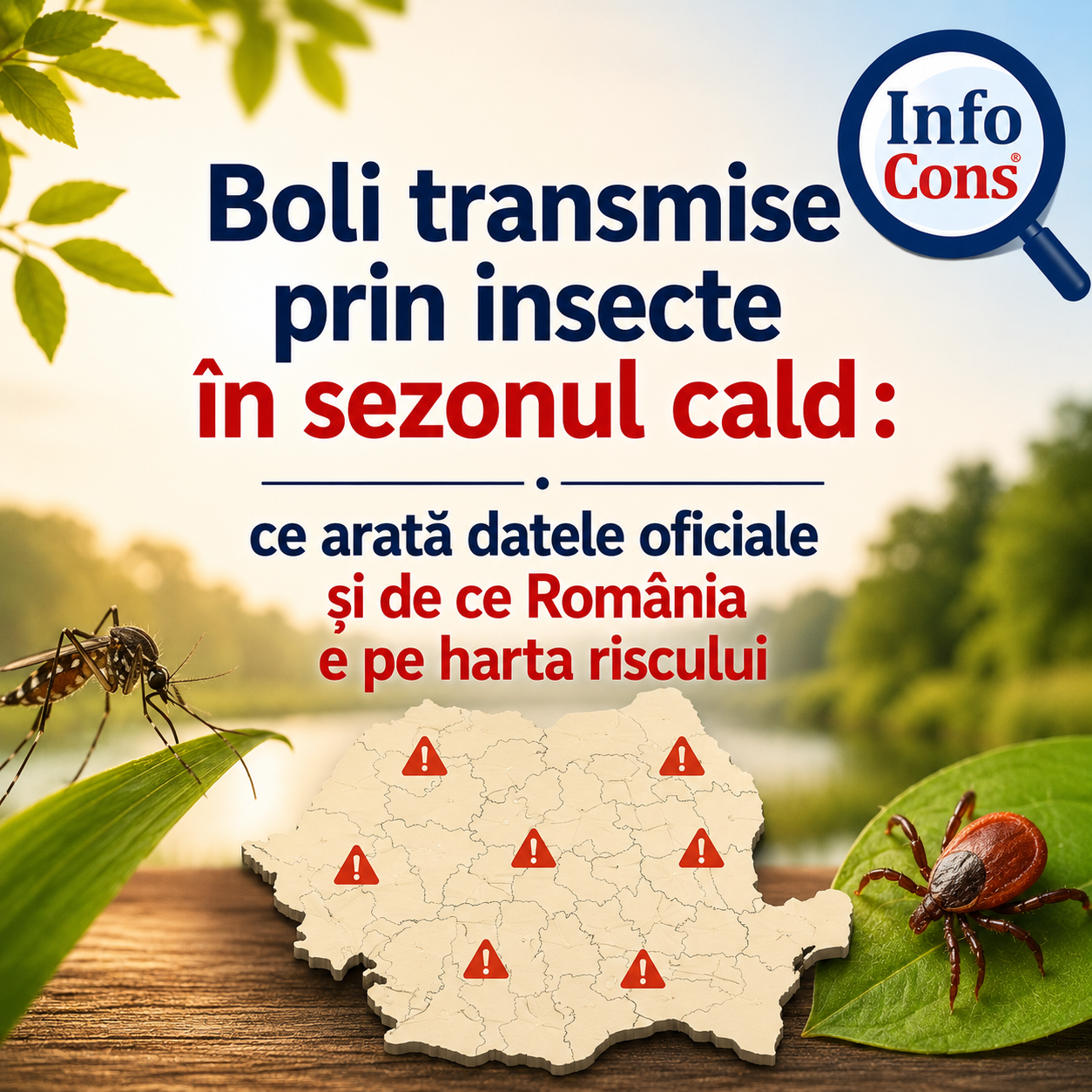
Insect-Borne Diseases in Summer: Romania’s Risk and Official Data
As summer temperatures climb across Europe, public health data highlights an escalating risk of vector-borne illnesses, placing nations like Romania firmly on the epidemiological risk map for diseases transmitted by mosquitoes and ticks. Recent analyses from consumer protection and public health entities, including InfoCons, underscore that rising ambient temperatures and shifting climate patterns significantly expand the habitat range and active seasons of disease vectors such as the Asian tiger mosquito (Aedes albopictus) and various tick species. Understanding the biological mechanisms and geographical vulnerabilities associated with these pathogens is essential for effective clinical management and personal protection.
Key Clinical Takeaways:
- Rising summer temperatures extend the active breeding and feeding windows for vector species like Aedes albopictus across Central and Eastern Europe.
- Vector-borne pathogens pose diagnostic challenges due to overlapping early-stage symptoms such as fever, fatigue, and myalgia, necessitating careful differential diagnosis.
- Public health monitoring requires strict adherence to environmental controls, personal barrier protection, and early clinical consultation when symptoms arise post-exposure.
Epidemiological Risk Factors and Vector Distribution in Eastern Europe
The convergence of higher average seasonal temperatures and increased urban humidity creates optimal breeding conditions for disease vectors. According to surveillance reports highlighted by organizations like InfoCons, Romania’s geographical and climatic profile makes it increasingly susceptible to vector-borne transmissions, including West Nile virus and Lyme disease. Pathogenesis typically occurs when an infected arthropod introduces viral particles or bacteria directly into the human cutaneous microvasculature during a blood meal. The incubation period varies significantly depending on the specific pathogen, ranging from two days to two weeks, which often obscures the initial exposure timeline for patients presenting in clinical settings.
Clinical Presentation and Differential Diagnosis Challenges
Early clinical manifestations of vector-borne infections frequently mimic common viral syndromes, complicating rapid diagnosis. Patients often present with acute febrile illness, severe headache, arthralgia, and maculopapular rashes. In the case of tick-borne pathogens, the presence of an expanding erythematous lesion, or erythema migrans, serves as a hallmark diagnostic indicator, though its absence does not rule out infection. Healthcare providers must conduct thorough epidemiological histories, noting recent outdoor exposure, travel to endemic rural or urban green spaces, and potential insect bites. For patients presenting with persistent neurological or musculoskeletal symptoms following suspected bites, prompt evaluation by vetted specialists is crucial. It is highly recommended to consult with [Relevant Infectious Disease Specialist / Diagnostic Clinic] to rule out systemic complications and establish an evidence-based management protocol.
Preventative Strategies and Public Health Interventions
Mitigating the morbidity associated with summer insect vectors relies heavily on multi-layered preventative measures. Standard of care recommendations emphasize the application of Environmental Protection Agency-registered repellents containing DEET, picaridin, or oil of lemon eucalyptus, alongside the use of permethrin-treated clothing. Community-level interventions focus on eliminating standing water reservoirs in domestic and municipal environments to disrupt the larval lifecycle of mosquitoes. Municipal health authorities also advocate for regular landscape maintenance to reduce tick habitats in high-traffic recreational zones. When navigating complex diagnostic pathways or implementing institutional vector control programs, consulting with [Healthcare Compliance and Public Health Advisory Services] ensures adherence to regional health directives and optimizes risk mitigation strategies.
As vector ranges continue to shift in response to broader environmental changes, continuous surveillance and rapid clinical recognition remain the primary defenses against seasonal outbreaks. Bridging the gap between official public health data and individual patient care requires vigilant monitoring and proactive clinical engagement. To explore specialized testing protocols or coordinate comprehensive patient evaluations, patients and providers should connect with [Specialized Diagnostic Laboratory or Regional Medical Center].
*Disclaimer: The information provided in this article is for educational and scientific communication purposes only and does not constitute medical advice. Always consult with a qualified healthcare provider regarding any medical condition, diagnosis, or treatment plan.*