
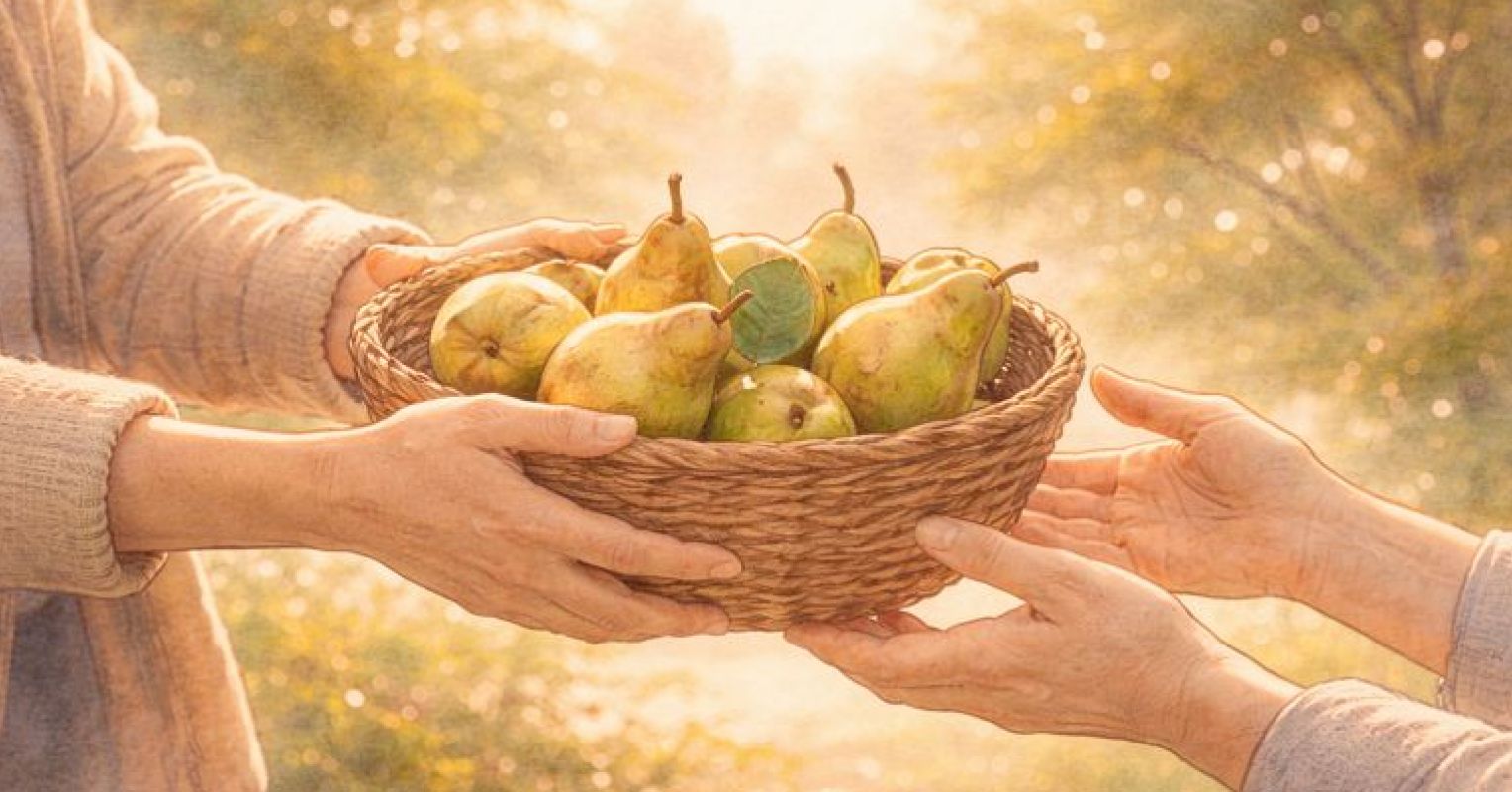
Inner Wealth: How Giving, Not Receiving, Fills Us
In the vast literature on human fulfillment, few questions prove as persistent—or as persistently misunderstood—as the source of what we might call inner wealth. Why do some people radiate a certain fullness of being while others, often despite immense external success, describe themselves as empty or impoverished in some essential way?
The conventional answer, deeply embedded in our modern therapeutic culture, suggests that inner poverty stems from insufficient reception: We weren’t loved enough, recognized enough, or validated enough. We are taught that to feel “full,” we must be “filled” by others.
However, those who have stood at the threshold of life—those who have undergone near-death experiences (NDEs)—frequently tell us something strikingly different. When they undergo a life review, they don’t evaluate their journey by how much they received or how frequently enough they felt “good.” They don’t ask if they were sufficiently validated. Instead, they ask a much more piercing question: “Was I good for something? What was I good for?”
They measure the weight of their lives by what they shared and sent out into the world—even things that seemed infinitesimally small at the time: a kind word to a stranger, a listening ear during a friend’s crisis, or a moment of patience when it was least expected. They look at what they gave, not what they took. this shift in viewpoint is more than just a poignant observation; it is a fundamental psychological law that viktor Frankl, the father of Logotherapy, articulated decades ago.
The wisdom of a Ninety-Year-Old
I had the great fortune, as a student, to hear Viktor Frankl’s final two lectures at the Vienna Medical School. He was nearly ninety years old at the time and almost blind—yet he was vibrating with life, possessed by a fierce will to pass something vital to the next generation.
His message stood in stark contrast to the prevailing psychological theories of the time, which often focused on our dependence on what we receive from our habitat. Frankl spoke rather of a great freedom—and a profound liberation—that occurs when we stop looking at what we are “owed” and start looking at what we can contribute to a situation and, ultimately, to our own biography. He suggested that our inner wealth is not built by what we demand from life,but by what we ar