Indonesia’s Papua Film Ban Sparks Free Speech Concerns & Legal Debates
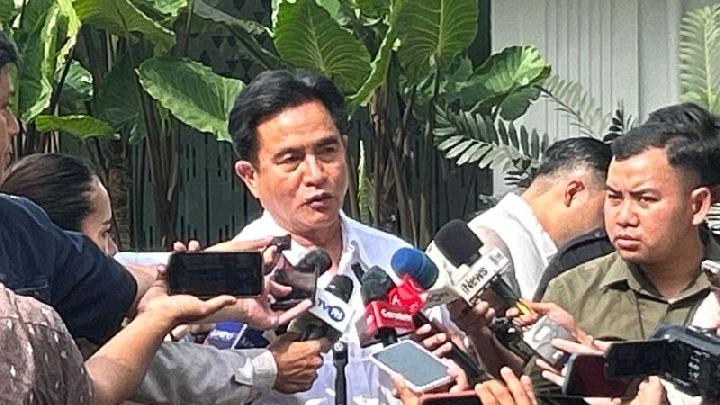
Indonesia’s Human Rights Minister, Yasonna Laoly, has explicitly rejected claims that the government has imposed a ban on screenings of the documentary Pesta Babi, which examines deforestation and indigenous rights abuses in Papua. Speaking to reporters in Jakarta on Thursday, Laoly stated that “there is no official prohibition on the film’s screenings,” clarifying that any disruptions must be addressed through legal channels rather than administrative restrictions.
The documentary, produced by WatchDoc in collaboration with environmental and legal advocacy groups, has become a focal point in a broader debate over free expression in Indonesia. Since its release, screenings across the archipelago—including in Jakarta, Surabaya, and Yogyakarta—have faced repeated interruptions, with some events canceled under pressure from local authorities or security forces. In Papua, where the film’s subject matter is most sensitive, organizers report intimidation tactics, including threats of legal action and physical obstruction by military personnel.
Laoly’s remarks come amid growing concern among civil society groups, who argue that the crackdown reflects a pattern of state overreach in response to criticism of government policies in Papua. The Alliance of Independent Journalists (AJI) Indonesia condemned the disruptions as “a deliberate effort to silence dissent,” while the Indonesian Legal Aid Foundation (LBH) has urged authorities to investigate allegations of military involvement in the shutdowns. “If there is no legal basis for these actions, they constitute a violation of constitutional rights,” said Muhammad Fadli, a spokesperson for LBH, in a statement to The Jakarta Post.
The military’s role in the controversy has drawn particular scrutiny. While the National Police have denied orchestrating the disruptions, local reports from Papua suggest that regional military commands have pressured organizers to halt screenings. In a rare public acknowledgment, a spokesperson for the Indonesian National Armed Forces (TNI) told ucanews.com that “security concerns” justified monitoring of public events, though no specific threats were cited. Critics contend that the vague invocation of security risks serves as a pretext to suppress discussions about human rights in the restive province.
Adding to the tension, the Ministry of Law and Human Rights has reiterated that any legal challenges to the film must proceed through the courts. In a statement released on Wednesday, Minister Laoly emphasized that “the ban on Pesta Babi must be decided by a judge, not by administrative decree.” This position aligns with a broader legal framework in Indonesia, where film censorship is prohibited under the Law on Film and Television, though enforcement has historically been inconsistent, particularly in regions with heightened military presence.
Meanwhile, the documentary’s producers and supporters have vowed to continue screenings, framing the pushback as a test of Indonesia’s commitment to press freedom. “We will not be intimidated,” said Arswendi Nasution, a director at WatchDoc, in an interview with VOI.id. “The film is based on public records and eyewitness accounts—it is not seditious material.” Nasution’s remarks underscore the stakes for Indonesia’s civil society, where advocacy groups have increasingly faced legal and extrajudicial pressure under the current administration.
The situation in Papua remains particularly volatile. The region has been the site of long-standing conflicts between indigenous communities, security forces, and mining corporations, with deforestation and land disputes driving much of the unrest. While the Indonesian government has framed its presence in Papua as a counterterrorism and development effort, international observers—including the United Nations Special Rapporteur on Human Rights Defenders—have documented persistent abuses, including arbitrary detentions and restrictions on media access. The crackdown on Pesta Babi risks further isolating Jakarta on the world stage, as human rights organizations prepare to escalate their calls for an independent investigation.
As of Thursday evening, no further screenings had been officially canceled, though organizers in Papua reported heightened surveillance. The next screening is scheduled for next week in Jayapura, with local activists warning that preparations are being conducted under heightened security protocols. Whether the government will intervene remains unclear, but Laoly’s insistence on judicial oversight suggests a calculated effort to avoid outright prohibition—even as the climate for dissent in Indonesia continues to harden.