
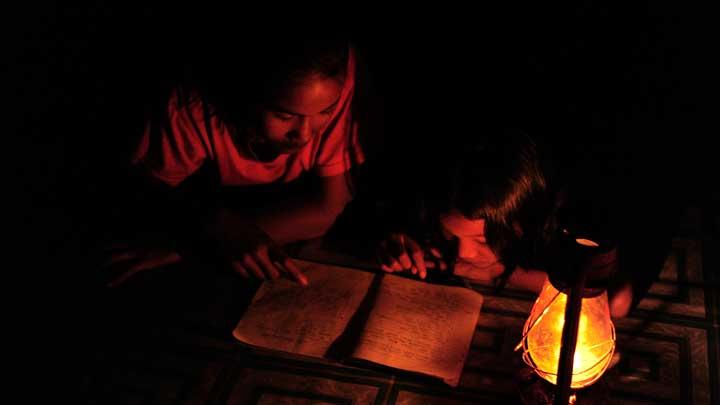
Indonesia Aims to Electrify Thousands of Isolated Areas
The Indonesian government is making a major push to bring electricity to over 10,000 remote locations throughout the archipelago, an initiative requiring billions in investment and promising significant impacts on the lives of those currently without power.
Ambitious Infrastructure Plans
The Ministry of Energy and Mineral Resources is spearheading a project to provide electricity access to more than 10,000 isolated locales scattered across Indonesia. This project is the cornerstone of the national electricity roadmap. This comprehensive plan will need a substantial financial commitment, potentially reaching Rp50 trillion.
Jisman Hutajulusa, the Director General of Electricity, stated that the state electricity company, PLN, has pinpointed 10,068 sites nationwide that lack electricity or have limited supply. These locations will be the basis for setting up distribution networks, substations, and village power plants. The blueprint is highly detailed, specifying the types of cables, transformers, and poles needed for each site.
…original tweet embed code…
“This roadmap is highly detailed, covering the types of cables, transformers, and poles needed in each location,”
—Jisman Hutajulusa, Director General of Electricity
The electricity roadmap is adaptable, with possible changes based on real-world developments. The government is open to funding from various sources, including the state budget, corporate social responsibility funds, and the private sector. According to the World Bank, roughly 1.8 million Indonesians still lack access to electricity as of 2024 (World Bank).
Investment and Expansion Details
Achieving the 100 percent national electricity goal requires Rp50 trillion in investments, with Rp42.26 trillion allocated for building infrastructure in isolated villages. Another Rp5.5 trillion is set aside to improve service quality in 420 locations that currently have less than 24 hours of electricity per day.
In addition, the New Electricity Installation Assistance (BPBL) program is focused on assisting disadvantaged communities in the most remote regions. This initiative will require roughly Rp2.25 trillion to cover installation and initial token charging costs. Some areas of Java, like West Java, Banten, and Yogyakarta, still face electricity access issues, while Jakarta and Bali are largely connected to the grid.
The project aims to expedite the national electricity ratio and ensure that all Indonesians, particularly those in remote and underdeveloped regions, receive fair energy access. This widespread electrification effort has the potential to dramatically improve living conditions and foster economic development in underserved areas.
