
Indonesia’s Investment Growth Falters, Prompting Government Concern
Indonesia's investment growth is weak, raising concerns. Finance Minister Sri Mulyani urges action to boost investor confidence and meet economic targets.">
jakarta, Indonesia – Finance Minister Sri Mulyani Indrawati has issued a warning regarding the sluggish growth of Gross fixed Capital Formation (GFCF), a key indicator of investment, in Indonesia during the first quarter of 2025. The recorded growth of just 2.12 percent is significantly lower than the 5.03 percent seen in the previous quarter, raising concerns about the nation’s ability to meet its economic targets.
Investment Growth Below Target
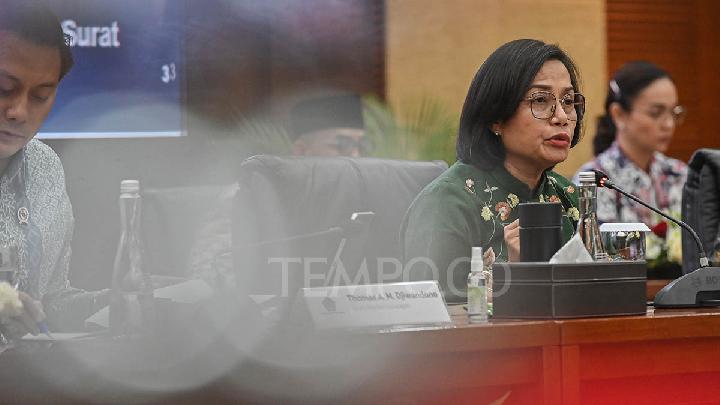
during a working meeting with House Commission XI on July 3, 2025, Minister Indrawati emphasized the critical role of investment in achieving Indonesia’s economic goals. “If we are aiming for 5 percent economic growth, investments usually must also grow by 5 percent, because investments contribute to 28 percent of our gross domestic product,” she stated.
The Indonesian government has set ambitious growth targets of 5.2 to 5.8 percent for 2026. To achieve this, investment growth needs to significantly accelerate. The current investment target is 4.5 to 4.7 percent for 2025 and 6.5 to 6.8 percent for the following year.
Did You Know? Investment in Indonesia’s infrastructure sector is projected to reach $75 billion by 2030, driven by the need for improved transportation, energy, and dialog networks.
Danantara’s Crucial Role
Minister Indrawati highlighted the importance of Danantara,Indonesia’s sovereign wealth fund,in stimulating investment.she stressed that “Danantara could become a catalyst if it’s able to attract the private sector,” cautioning that the fund could have a negative impact if it leads to crowding-out of private investment.
Government Initiatives to Boost Investment
The government is actively working to improve conditions for investment through various measures, including fiscal incentives and efforts to expedite foreign direct investment in priority sectors.Deregulation is also a key focus, as exemplified by the relaxed policies on subsidized fertilizer distribution.
Pro Tip: Investors should closely monitor policy changes and deregulation efforts in Indonesia, as these can significantly impact the investment climate.
Economic Uncertainty and Policy Concerns
Amalia Adininggar Widyasanti, head of Statistics Indonesia (BPS), attributed the low investment figures in part to global economic uncertainty. “GFCF slowed down because there is a possibility that investors chose to wait and see amid global uncertainty,” she said during a press conference on May 5, 2025.
Shinta Kamdani, chair of the indonesian Employers’ Association (Apindo), pointed to domestic factors, including inconsistent policies and slow deregulation implementation, as contributing to weak investor demand. These issues make businesses hesitant to take risks.
| Metric | Q4 2024 | Q1 2025 | 2025 Target | 2026 Target |
|---|---|---|---|---|
| GFCF Growth | 5.03% | 2.12% | 4.5-4.7% | 6.5-6.8% |
| GDP Contribution (Investment) | 28% | |||
| Economic Growth Target | N/A | N/A | 5.2-5.8% | |
Understanding Gross Fixed Capital Formation (GFCF)
Gross Fixed Capital Formation (GFCF) represents the net increase in fixed assets (such as buildings, machinery, and equipment) less disposals during a specific period. It is a crucial component of GDP and reflects the level of investment in an economy. A higher GFCF generally indicates greater business confidence and future economic growth potential.
Historical Trends in Indonesian Investment
Indonesia has historically relied on strong investment to drive economic growth. Tho, fluctuations in global commodity prices, policy changes, and political stability have influenced investment levels. The government has implemented various reforms over the years to attract foreign investment and improve the business environment.
frequently Asked Questions About Investment in Indonesia
- What are the key sectors attracting investment in Indonesia?
- Key sectors include infrastructure, manufacturing, digital economy, and renewable energy. The Indonesian government is actively promoting investment in these areas through incentives and policy support.
- How does Indonesia compare to other Southeast Asian countries in terms of investment attractiveness?
- Indonesia is a major investment destination in southeast Asia, offering a large domestic market, abundant natural resources, and a growing middle class. However,it faces competition from other countries in the region with more streamlined regulations and lower labor costs.
- What are the main challenges for foreign investors in Indonesia?
- Challenges include bureaucratic hurdles, land acquisition issues, regulatory uncertainty, and infrastructure gaps. The government is working to address these challenges to improve the investment climate.
What steps do you think Indonesia should take to boost investor confidence? how can the government balance attracting foreign investment with supporting domestic businesses?
Share your thoughts in the comments below and help us shape the discussion!
