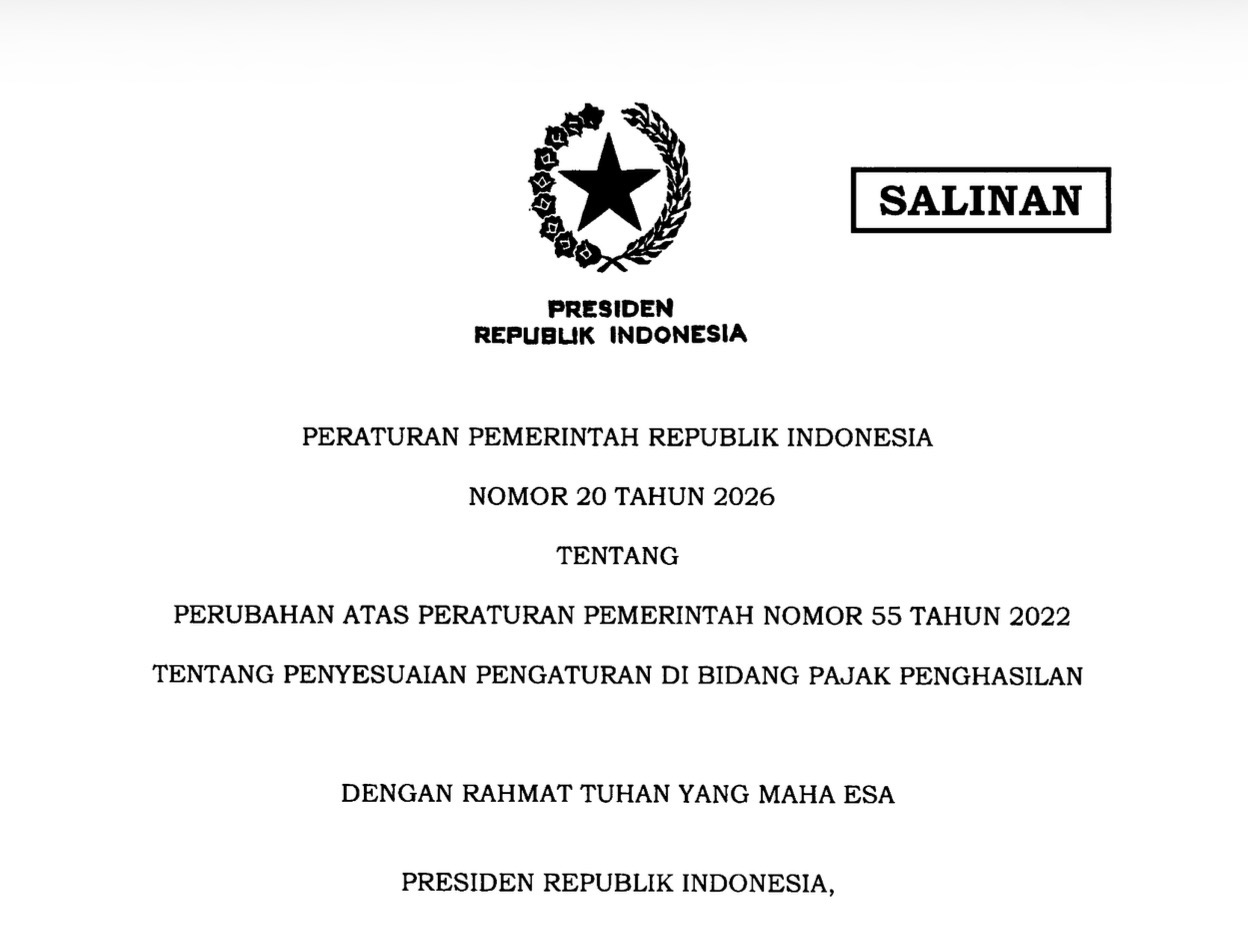
Indonesia Extends Final Tax (PPh) Benefits for MSMEs: Key Updates & New Rules
Indonesia’s government has officially extended the final withholding tax (PPh final) facility for micro, small, and medium enterprises (UMKM) through revisions to Government Regulation (PP) 55, targeting sole proprietorships (OP), individual limited liability companies (PT Perorangan), and cooperatives. Effective June 2026, the move aims to boost tax compliance among UMKM—currently at under 20% nationwide—by simplifying tax obligations while maintaining fiscal revenue targets. The decision, announced by Finance Minister Ahmad Purbaya, follows delays in finalizing the regulation, sparking uncertainty among tax consultants and business owners.
Why This Matters: The UMKM Tax Compliance Crisis
Indonesia’s 64 million UMKM—contributing 60% of national employment and 30% of GDP—have long operated in a tax gray zone. The PPh final facility, originally set at 0.5% for qualifying businesses, was designed to ease administrative burdens while incentivizing formal registration. Yet, only 15% of UMKM currently pay taxes, per the Indonesian Central Bureau of Statistics (BPS). The revision to PP 55 now restricts eligibility to OP, PT Perorangan, and cooperatives, excluding larger PTs and CVs, in a bid to focus resources where they’re most needed.
“This isn’t just about collecting more taxes—it’s about saving small businesses from the bureaucratic nightmare of compliance. The 0.5% PPh final was a lifeline; extending it ensures they stay afloat while we build better systems.”
The Problem: A Patchwork of Regional Challenges
Indonesia’s decentralized tax administration creates a fragmented landscape. In Jakarta, where 1.2 million UMKM operate, the city’s Tax Office reports that 30% of eligible businesses still lack digital tax IDs—a prerequisite for the PPh final facility. Meanwhile, in Surabaya, East Java’s UMKM hub, local officials cite limited tax officer training as a barrier to enforcement. The revision to PP 55, while nationally uniform, will play out differently across regions:
- Java and Bali: Higher compliance rates expected due to existing digital infrastructure (e.g., SIPN tax portal).
- Sumatra and Sulawesi: Delays likely in rural areas with lower internet penetration, requiring mobile tax offices.
- Papua and Maluku: Cultural resistance to tax registration persists, necessitating community outreach.
Expert Analysis: What the Revision Actually Changes
The revised PP 55 introduces three key shifts:
| Previous Rule (Pre-2026) | Revised Rule (June 2026 Onward) | Impact |
|---|---|---|
| PPh final 0.5% applied to all UMKM (PT, CV, OP) | Restricted to OP, PT Perorangan, and cooperatives | Excludes 40% of UMKM (larger PTs/CVs), narrowing focus to informal and micro-entities. |
| No digital ID requirement | Mandatory SIPN registration for eligibility | Forces 1.5 million unregistered UMKM to formalize or lose the tax break. |
| Local tax offices set compliance deadlines | National deadline: June 30, 2026, with regional extensions permitted | Reduces local discretion but risks overloading central systems. |
“The exclusion of PTs and CVs is a strategic move. These entities often have alternative tax schemes. The real test will be whether local tax offices can handle the surge in OP registrations—many lack the staff for this.”
Directory Bridge: Who Helps UMKM Navigate the Changes?
The revision creates both opportunities and pitfalls for UMKM. Here’s how professionals in our directory can step in:
- Tax Consultants: With 80% of UMKM lacking tax advisors, demand for affordable tax consultants specializing in OP and cooperative structures will surge. IKPI estimates a 30% increase in queries post-June 2026.
- Digital Registration Services: UMKM in remote areas will need mobile SIPN registration providers to bridge the digital divide. Companies like SIPN’s official partners are already positioning for this.
- Legal Aid for Cooperatives: The revision’s cooperative eligibility introduces complexities for 3 million rural cooperatives. Pro bono legal clinics focused on agrarian and cooperative law will see higher caseloads.
The Human Cost: Stories from the Ground
In Bandung, West Java, Lestari, a 42-year-old sole proprietor running a batik workshop, exemplifies the dilemma. Her monthly revenue of IDR 80 million (USD $5,300) would qualify for the 0.5% PPh final—but only if she registers digitally. “I’ve been doing this for 15 years without taxes,” she says. “Now they say I have to pay? What if I can’t afford the ID?”
Her plight highlights a broader issue: 70% of UMKM in Bandung operate in cash-based economies, per a 2025 study by Bappenas. The PPh final extension, while well-intentioned, risks pushing informal businesses further underground if digital access remains uneven.
Looking Ahead: The 80% Compliance Target
Finance Minister Purbaya’s goal of 80% UMKM tax compliance by 2027 hinges on three pillars:
- Digital Infrastructure: Expanding SIPN kiosks to 5,000 rural locations by 2027 (currently 1,200).
- Tax Amnesty Lite: A proposed 0.25% PPh final for late registrants in 2027 to incentivize participation.
- Regional Incentives: Cities meeting compliance targets (e.g., Yogyakarta) could receive IDR 500 billion in fiscal transfers.
Yet, skepticism remains. The BPS projects that only 45% of UMKM will register by June 2026, leaving a compliance gap of 35 percentage points. The revision to PP 55, while a step forward, may not be enough without concurrent investments in community tax education programs.
The Kicker: A Tax System Built for the Future—or the Past?
Indonesia’s UMKM tax overhaul is a microcosm of a larger question: Can a developing economy balance fiscal needs with the survival of its backbone businesses? The PPh final extension is a band-aid on a systemic issue—one that demands more than regulatory tweaks. It requires trusted tax advisors, accessible digital tools, and localized enforcement.
For UMKM owners like Lestari, the choice is stark: adapt to the new rules or risk invisibility. The professionals in our tax directory and legal network are already preparing to guide them through the transition. The question is whether the government’s timeline—and the 80% compliance target—will outpace the reality on the ground.