
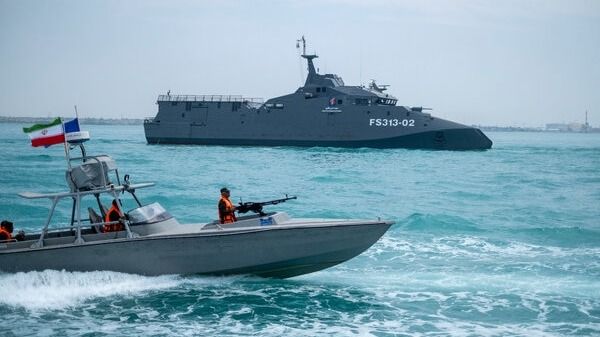
Indian Seafarer Detained as Iran Seizes Vessel in Strait of Hormuz — Government Expresses Concern Over Safety and Global Trade Impact
On April 23, 2026, Indian seafarers aboard the merchant vessel MV Al Zubara were detained by Iran’s Islamic Revolutionary Guard Corps (IRGC) in the Strait of Hormuz, escalating tensions over maritime security in a critical global energy chokepoint through which 20% of the world’s oil supply flows. The incident follows a pattern of IRGC seizures targeting vessels linked to Western-aligned nations, prompting New Delhi to activate diplomatic channels although raising alarms among global shipping insurers and energy traders about the fragility of maritime trade routes amid U.S.-Iran strategic rivalry.
The detention occurred as the MV Al Zubara, flying the Panamanian flag but operated with an Indian crew transiting from the United Arab Emirates to India, entered Iranian-claimed waters near Qeshm Island. While Iran claims the vessel violated its territorial boundaries during a routine patrol, maritime tracking data from Lloyd’s List Intelligence indicates the ship was within internationally recognized sea lanes governed by the United Nations Convention on the Law of the Sea (UNCLOS), to which both Iran and India are signatories. This marks the third such detention of an Indian-manned vessel in the Hormuz corridor since 2023, underscoring a deliberate tactic by Tehran to leverage maritime incidents as bargaining chips in stalled nuclear negotiations with the P5+1 framework.
How Hormuz Disruptions Reverberate Through Global Energy Markets
The Strait of Hormuz remains the single most vulnerable point in global energy logistics, with approximately 17 million barrels of crude oil and condensate passing through daily—equivalent to roughly one-fifth of worldwide consumption. Any credible threat of closure or intermittent disruption triggers immediate volatility in Brent crude futures, as seen in the 2.3% price spike recorded on ICE following the April 23 detention. For India, which imports over 80% of its crude oil requirements—much of it sourced from Saudi Arabia, Iraq, and the UAE via Hormuz—such incidents directly impact energy security calculus and refining margins at facilities like Jamnagar and Paradip.

Beyond crude, the strait is vital for liquefied natural gas (LNG) shipments from Qatar, the world’s largest supplier, accounting for 30% of global LNG trade. Prolonged instability risks cascading effects on Asian spot markets, where Japan, South Korea, and India collectively absorb over 60% of Qatari exports. Historical precedent shows that even the perception of risk—such as during the 2019–2020 tanker attacks—led to a 15% increase in war risk premiums charged by London-based insurers, directly inflating operational costs for shipping giants like Maersk and MSC.
“Iran’s use of maritime seizures is less about territorial enforcement and more about creating calibrated uncertainty—a low-cost, high-visibility tool to extract concessions without triggering full-scale confrontation.”
— Dr. Ellie Geranmayeh, Senior Fellow, Middle East and North Africa Programme, European Council on Foreign Relations
The Directory Bridge: Who Solves the Problems Created by Hormuz Volatility
When state actors weaponize chokepoints, the burden falls on private-sector actors to absorb risk and maintain continuity. Shipping companies facing delayed transits or rerouting costs urgently require logistics risk consultants to model alternative routes around the Cape of Good Hope or through the Suez Canal—options that add 10–14 days to voyage times and increase fuel consumption by up to 20%. Simultaneously, energy traders and refiners exposed to supply shocks turn to commodity hedging specialists to lock in prices via futures and options on ICE and NYMEX, mitigating margin erosion during periods of geopolitical turbulence.
Legally, detentions raise complex questions under UNCLOS Article 92 (flag state jurisdiction) and Article 110 (right of visit), particularly when vessels operate under flags of convenience like Panama or Liberia. Corporations caught in these crosscurrents increasingly engage international maritime law firms to assert diplomatic protection through their flag states and seek redress via the International Tribunal for the Law of the Sea (ITLOS). In 2024, ITLOS adjudicated M/V Saiga 2-style claims involving disputed detentions, setting precedents for compensation claims that now inform corporate risk protocols.
Macro Implications: Alliances, Alternatives, and the Erosion of Maritime Order
The recurring Hormuz incidents signal a broader shift in how regional powers contest maritime governance. Iran’s actions align with its strategy of asymmetric deterrence—mining threats, drone surveillance, and periodic seizures—to counter U.S. Naval presence without inviting direct retaliation. This dynamic complicates efforts by the Combined Maritime Forces (CMF), a U.S.-led coalition of 42 nations including India, to maintain security patrols. India’s participation in CMF’s Operation Prosperity Guardian reflects a balancing act: contributing to regional stability while avoiding overt alignment with Washington’s maximum pressure campaign against Tehran.
Meanwhile, the event accelerates interest in alternative energy corridors. Projects like the Israel-UAE-Europe green hydrogen pipeline and the proposed Indo-Middle East gas grid gain strategic relevance as nations seek to diversify away from Hormuz-dependent routes. The World Bank estimates that reducing reliance on the strait by just 10% through regional grid integration could save Asian importers $12 billion annually in risk-adjusted logistics costs—a figure that will only grow as climate policies reshape energy flows.
As global trade becomes increasingly susceptible to geopolitical friction points, the need for sophisticated risk navigation tools has never been greater. For corporations operating across emerging markets, the directory remains the essential first step in identifying vetted partners who specialize in turning volatility into manageable exposure—whether through legal advocacy, supply chain redesign, or financial hedging.