India to Launch First Large-Scale Private Gold Mine in Andhra Pradesh
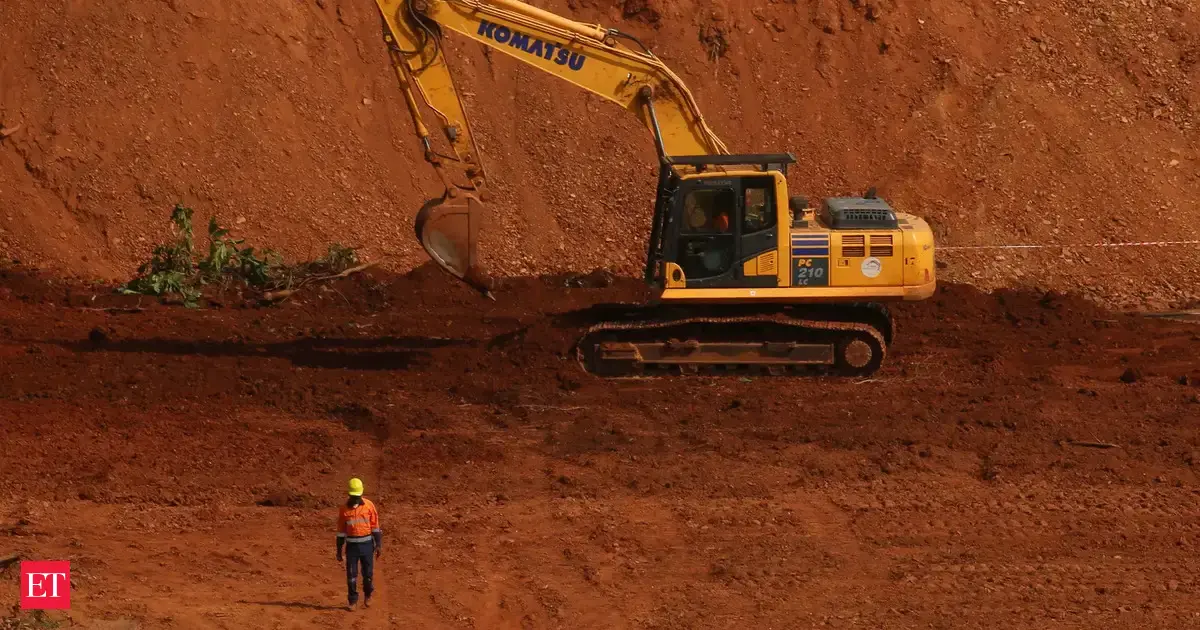
On April 19, 2026, India launched its first large-scale private gold mine, the Jonnagiri project in Andhra Pradesh’s Kurnool district, marking a strategic pivot to reduce the nation’s $40 billion annual gold import bill and revitalize a mining sector long stifled by regulatory uncertainty and community opposition.
The Jonnagiri mine, operated by Deccan Gold Mines Limited under a 20-year lease granted by the Andhra Pradesh Mineral Development Corporation (APMDC), is projected to yield 3.2 tonnes of gold annually over its lifespan—enough to offset roughly 8% of India’s yearly gold imports. This output arrives as global gold prices hover near $2,400 per ounce, amplifying the economic incentive to substitute foreign bullion with domestic reserves. For decades, India has relied on imports to satisfy over 90% of its gold demand, driven by cultural consumption in weddings, festivals, and investment, making it the world’s second-largest gold consumer after China. The shift toward domestic production is not merely economic. This proves a geopolitical play to lessen vulnerability to supply chain disruptions and foreign exchange volatility.
Historically, gold mining in India has been hampered by archaic laws, opaque permitting, and fierce resistance from tribal communities. The Mines and Minerals (Development and Regulation) Act, 1957, long centralized control with state governments but lacked clear timelines for environmental clearances, leading to decades of stalled projects. Jonnagiri’s approval followed a rare alignment: the state government’s proactive mineral policy of 2020, which fast-tracked private investment in under-explored belts, combined with a technically robust mining plan that addressed earlier concerns over water usage and land rehabilitation. The project sits atop the Jonnagiri greenstone belt, a geologically rich zone stretching across Kurnool and Anantapur districts, where artisanal mining has occurred for centuries but never at industrial scale.
“This isn’t just about extracting metal—it’s about building trust. We spent three years in participatory mapping with 12 villages, agreeing on water-sharing protocols and allocating 15% of net profits to a community trust for healthcare and education.”
The local impact is already visible. In the mandals of Jonnagiri and Peapully, where the mine’s infrastructure—including a 500-tonne-per-day processing plant and tailings dam—is under construction, migrant labor from Odisha and Jharkhand has increased demand for temporary housing and medical clinics. Andhra Pradesh’s Directorate of Mines and Geology reports that ancillary services have seen a 22% rise in registrations since 2023, from drilling contractors to environmental auditors. Yet challenges persist: groundwater monitoring data from the Central Ground Water Board shows elevated sulfate levels near the mine’s periphery, prompting the Andhra Pradesh Pollution Control Board to mandate quarterly audits and real-time sensor installations—a cost now borne by the operator under stricter post-2023 mining amendments.
For businesses navigating this evolving landscape, the need for specialized expertise is acute. Companies seeking to partner with or supply the Jonnagiri operation must contend with complex land acquisition norms under the Right to Fair Compensation and Transparency in Land Acquisition, Rehabilitation and Resettlement Act, 2013, which requires consent from 80% of affected families for private projects. Legal missteps here can trigger delays or litigation, as seen in the 2021 suspension of a tungsten mine in Madhya Pradesh over inadequate tribal consultation. Simultaneously, environmental compliance demands rigorous adherence to the Forest Conservation Act, 1980, and the Water (Prevention and Control of Pollution) Act, 1974—statutes that frequently intersect in mineral-rich zones where forests and aquifers overlap.
This is where verified professionals grow indispensable. Firms specializing in mineral rights attorneys are critical for structuring joint ventures that satisfy both state royalty expectations and central environmental norms. Likewise, environmental impact assessment consultants with experience in Deccan Plateau geology are increasingly sought after to model long-term hydrological effects and design closure plans that meet international standards like the Cyanide Code. Even industrial safety trainers see rising demand as the workforce scales, particularly for certification in confined space entry and chemical handling under the Factories Act, 1948.
The broader implication extends beyond Andhra Pradesh. If Jonnagiri meets its targets, it could catalyze similar projects in Karnataka’s Kolar gold fields—once the world’s deepest mine—and Jharkhand’s Sonapat valley, where reserves remain untapped due to Naxalite-related security concerns. The Ministry of Mines has already signaled intent to auction 100 mineral blocks by 2028, with gold-bearing zones prioritized. Success hinges not just on geology, but on whether states can replicate Andhra’s model of early community engagement and transparent benefit-sharing—a stark contrast to the adversarial approaches that have doomed past ventures.
As India seeks to rewrite its import dependency, the true measure of Jonnagiri’s legacy will be whether it proves that resource extraction can coexist with ecological stewardship and social license—a balance that, if achieved, could redefine mining’s role in India’s industrial future. For those tasked with navigating this transition, the World Today News Directory remains the essential conduit to verified experts who turn regulatory complexity into operational clarity.