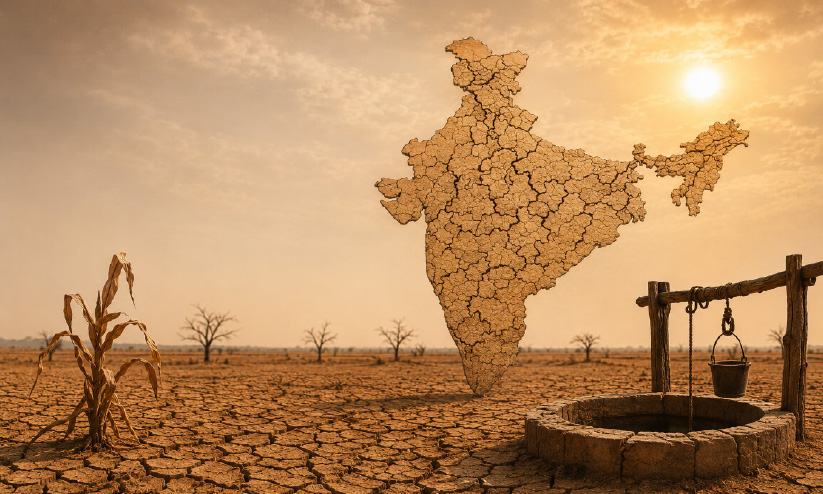
India Faces Severe Monsoon Shortage and Drought Threats
India is facing a widening agricultural crisis as 315 districts report severe drought-like conditions, with 111 districts identified by central authorities as high-risk zones. The shortfall, exacerbated by a weak monsoon and El Niño patterns, threatens national GDP and food security, prompting urgent calls for systemic resource management.
The Scope of the Climate-Induced Deficit
Current meteorological data indicates a 28% deficit in monsoon rainfall across several Indian states, creating a precarious landscape for the upcoming harvest season. While the national average remains a concern, specific pockets, particularly in the southern and western regions, are reporting near-total precipitation failure. According to the India Meteorological Department (IMD), these localized anomalies are consistent with the broader El Niño influence, which historically disrupts typical atmospheric circulation over the subcontinent.
The economic implications of this shortfall are significant. Agricultural sectors, which provide the backbone for rural employment, are bracing for a sharp decline in output. Economists warn that a weakened monsoon acts as a “super villain” to domestic growth, potentially triggering inflationary pressure on essential commodities. When food supply chains contract, the resulting price volatility disproportionately affects low-income households and smallholder farmers.
Infrastructure and the Risk to Regional Stability
The impact is not limited to rural farming; urban centers are also feeling the strain. As water tables drop to critical levels, municipal infrastructure in affected districts is being pushed to its breaking point. In areas where groundwater extraction is the primary source of potable water, the current drought conditions necessitate immediate intervention from professional water management and engineering firms to prevent total supply collapse.

“The current weather pattern is not merely a seasonal fluctuation; it is a structural challenge to our existing water distribution framework. Without immediate, data-driven mitigation, we are looking at a sustained period of scarcity that will define the next three fiscal quarters.” — Dr. Arjun Menon, Senior Fellow at the Center for Policy Research
Policy Responses and Mitigation Strategies
Central government agencies have begun coordinating with state-level disaster management authorities to allocate emergency funds. However, the sheer scale of the 315-district crisis suggests that state-led funding alone will be insufficient. There is a growing consensus among regional officials that public-private partnerships are essential to stabilize local water reserves and provide technical support to farmers who lack access to modern irrigation technology.
For large-scale agricultural enterprises and industrial landowners, the legal and operational environment is becoming increasingly complex. Navigating the regulatory landscape during a declared drought requires precise compliance with state water acts. Many firms are now turning to specialized legal counsel to ensure their operations remain within the shifting bounds of water-use mandates.
The Economic Outlook and Long-Term Resilience
The volatility in the monsoon cycle is often compared to the 2015-2016 drought, which saw similar regional disparities. The key difference in 2026 is the acceleration of agricultural technology adoption. While the current 28% rainfall deficit is severe, the long-term impact on GDP depends largely on how quickly regional administrations can pivot toward drought-resistant crop varieties and efficient irrigation practices.

According to the NITI Aayog, the transition toward “smart irrigation” is no longer optional. The agency has repeatedly emphasized that the integration of satellite-based monitoring and local data collection is the only way to insulate the national economy from future climate shocks. Failure to modernize these systems risks leaving regional economies vulnerable to every shift in the El Niño cycle.
Preparing for a Future of Climate Uncertainty
As the monsoon season progresses, the focus must shift from reactive crisis management to proactive infrastructure hardening. The current situation demands that municipalities and private stakeholders alike audit their water-retention capabilities and supply-chain dependencies. Relying on traditional, outdated methods of rainfall collection in an era of climate instability is a risk that few can afford to take.
For those managing assets in high-risk zones, the priority should be the engagement of vetted emergency restoration and resource management consultants. Securing these professional services now—before the peak of the drought—is the only way to ensure that critical operations remain functional during the coming months of uncertainty. The data is clear: the climate is shifting, and the organizations that survive will be those that have planned for the dry seasons ahead.
Keep reading