
India-EU Deal & Middle East Conflict: Reshaping the New Silk Road & Challenging China’s BRI
A landmark free trade agreement between India and the European Union, encompassing 25% of global GDP, was finalized in New Delhi on January 27, 2026. Just four days later, on January 28th, a joint U.S.-Israeli operation reportedly eliminated a key figure within the Iranian leadership, an event multiple research institutions are now analyzing as interconnected elements within a broader geopolitical strategy.
While seemingly disparate, analysts at the Hudson Institute, Special Eurasia, and The Soufan Center view these events as components of a single equation: U.S.-led supply chain restructuring and the strategic containment of China’s economic influence. At the heart of this dynamic lies the India-Middle East-Europe Economic Corridor (IMEC), a project spearheaded by the United States as a counterweight to China’s Belt and Road Initiative (BRI). The FTA provides a crucial institutional framework for IMEC, while the reported weakening of Iran’s military capabilities removes a significant geopolitical obstacle to the corridor’s development. However, Iran’s retaliatory strikes and threats to disrupt the Strait of Hormuz pose an immediate risk to Gulf maritime logistics.
The IMEC project was initially unveiled by the Biden administration in September 2023, with a memorandum of understanding signed by India, the United States, the UAE, Saudi Arabia, France, Germany, Italy, and the EU. The timing was deliberate, coinciding with the G20 New Delhi summit and occurring just prior to a summit hosted by China focused on the BRI. A White House statement at the time emphasized the corridor’s potential to “strengthen regional supply chains, promote trade, and contribute to the environment and society.”
The Financial Times reported at the time that the project could serve as a U.S. Response to the deepening relationships between Saudi Arabia and the UAE with China. The Biden administration framed IMEC as part of a broader “friendshoring” strategy, aligning with comments from then-Treasury Secretary Janet Yellen, who repeatedly stressed the importance of diversifying supply chains with trusted partners to bolster U.S. Economic security.
The Trump administration has continued to pursue this strategy, adding a military dimension with the reported strike within Iran. Following the operation, former President Trump publicly stated that the overthrow of the Iranian Islamic regime was a goal, outlining demands for a permanent halt to nuclear development, limitations on ballistic missile programs, and an complete to support for proxy armed groups.
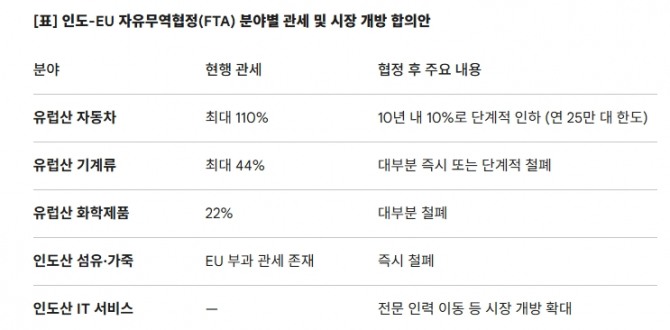
The finalized India-EU FTA is projected to significantly increase bilateral trade, currently valued at approximately $137.5 billion annually. The European Commission estimates that the agreement will double EU exports to India by 2032. European Commission President Ursula von der Leyen described the agreement as “the story of two giants, the world’s second and fourth largest economies,” asserting that it “shows that there is another path in a divided world.” Indian Prime Minister Narendra Modi termed it “the mother of all agreements.”
Alongside the FTA, India and the EU also established a partnership in maritime security and cybersecurity. This signals a shift towards treating trade as an integral component of geopolitical strategy. According to the European International Political Economy Research Institute (ECIPE), the agreement will integrate India more deeply into EU global value chains, reducing reliance on China and the United States. DLA Piper, an international law firm, characterized the agreement as “the most important supply chain diversification opportunity for European companies in decades” since China’s market opening.
The IMEC envisions a route from Mundra Port in western India, across the Arabian Sea to Jebel Ali Port in the UAE, and then a northern route via Saudi Arabia, Jordan, and Israel’s Haifa Port to Greece. Full implementation is projected to reduce shipping times by approximately 40% and lower overall logistics costs by 30% compared to the existing Suez Canal route. The Mundra port, owned by India’s Adani Group, has invested in AI-powered smart terminal technology to accelerate cargo processing. Jebel Ali Port has implemented a high-rise automated storage system, increasing operational efficiency. The Adani Group’s acquisition of the Haifa Port has also led to expansions and dredging to accommodate larger container vessels.
However, the significant Chinese stake in the port of Piraeus, Greece – a key European entry point for the IMEC – remains a potential vulnerability. Ownership of key transit hubs could allow China to strategically intervene in the corridor’s operation during times of crisis.
The reported U.S.-Israeli operation against Iranian targets on January 28th involved strikes across Iran, targeting military facilities and reportedly eliminating key leaders within the Islamic Revolutionary Guard Corps. Iran responded with ballistic missile and drone attacks against military bases housing U.S. Forces in the Middle East and against Israel. Iran’s threats to close the Strait of Hormuz have driven international oil prices close to $100 per barrel.
Miles Yu, a senior research fellow at the Hudson Institute, argued that “Iran was a key node in China’s Belt and Road Initiative, linking ports, railways, and energy infrastructure.” He believes the operation has created significant instability for BRI-related projects. Special Eurasia similarly suggests that the conflict aligns with U.S. Efforts to erode Chinese regional influence, and that further escalation targeting Pakistan could threaten the China-Pakistan Economic Corridor (CPEC) and China’s access to Central Asian markets. The Soufan Center added that a stable approach through Iranian territory is now essential for the functioning of China’s Eurasian supply chains.
However, Global Connectivities recently reported that Iranian retaliation is disrupting oil and gas flows through the Strait of Hormuz and forcing aircraft to reroute, creating short-term logistical challenges that complicate the IMEC’s development. The Atlas International Problem Institute characterized the potential for a U.S.-Iran war in 2026 as a case of hegemonic reinforcement and regional order realignment masked by the official rationale of nuclear threat elimination.
Saudi Arabia and the UAE, while viewing IMEC as a key component of their economic diversification plans, such as Saudi Arabia’s “Vision 2030,” maintain a pragmatic approach, distancing themselves from Western framing of the corridor as a direct counter to the BRI, as noted by the European Council on Foreign Relations. Both nations seek to maximize benefits from both corridors. Reports indicate that Saudi Crown Prince Mohammed bin Salman urged President Trump to authorize the strike against Iran, reflecting the alignment of the operation with Gulf states’ security interests.
Turkey, excluded from the IMEC route, is pursuing an alternative corridor through Iraq to connect the Persian Gulf with Europe, known as the Iraq-Europe Development Road project. China, as Iran’s largest oil customer, continues to prioritize economic interests, maintaining a policy of non-intervention while protecting its economic ties. Beyond the Horizon Research Institute suggests that Iran is no longer a reliable partner for China in regional disruption. However, Joseph Gregory Mahoney, a professor at East China Normal University, cautions against oversimplification, stating that China views Iran as a strategic partner but not a strategic ally, protecting its economic interests through diplomatic channels.
The removal of a major geopolitical obstacle to IMEC with the reported weakening of Iran’s military capabilities is undeniable. However, the corridor’s full realization hinges on de-escalation in the region. The threat of a Hormuz Strait closure continues to destabilize Gulf maritime logistics. As Miles Yu noted, a significant gap remains between weakening Iran’s military and ensuring the stable operation of the corridor. The finalized India-EU FTA, poised to double bilateral trade by 2032, demonstrates the economic impetus for the project. However, peace must precede the new Silk Road.