
India-China Talks: EVs and Diplomatic Thaw
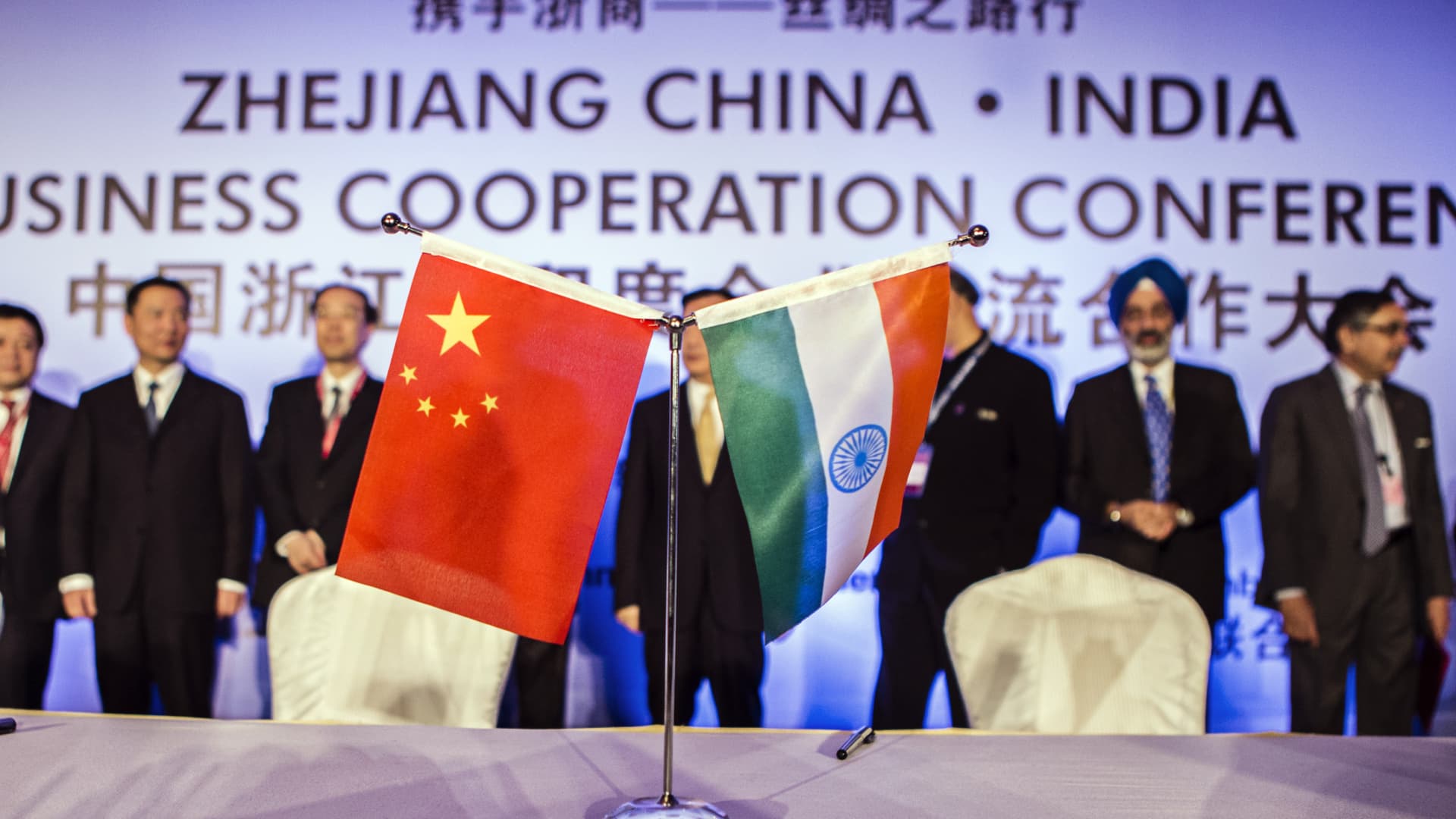
A delegation of Indian businesses visited China between March 29 and April 4, 2026, to secure strategic partnerships in electric vehicle (EV) charging, battery solutions, and renewable energy. Driven by energy vulnerabilities exposed by the Iran war, this first visit in over five years marks a critical thaw in strained India-China diplomatic and economic relations.
The timing of this diplomatic shift is not accidental. India, the world’s second-largest consumer of liquefied petroleum gas (LPG) and third-largest oil importer, finds itself in a precarious position. With a heavy reliance on supplies transiting the Strait of Hormuz, the ongoing conflict in the Middle East has transformed energy security from a policy goal into an urgent national security imperative. The instability caused by the Iran war has highlighted a stark fossil-fuel vulnerability that India can no longer ignore.
For the first time since the deadly 2020 border skirmish in the Galwan Valley, the gates are opening. Ranjeet Mehta, secretary general and CEO of the PHD Chamber of Commerce & Industry, led a group of eight Indian companies to the industrial hubs of Shanghai, Zhejiang, and Wuxi. This movement suggests that economic pragmatism is finally outweighing geopolitical friction.
“Energy security is extremely critical for our country,” Mehta stated, emphasizing the pressures arising from the Middle East conflict.
However, this “thaw” is occurring against a backdrop of intense trade litigation. While business leaders are shaking hands in Shanghai, government lawyers are battling in Geneva. In October 2025, China filed a formal complaint with the World Trade Organization (WTO), accusing India of unfairly favoring domestic EV manufacturers through discriminatory incentive schemes.
The Friction Point: PLI Schemes and Trade Barriers
The core of the dispute lies in India’s Production-Linked Incentive (PLI) schemes. China argues that these incentives are contingent upon the use of domestic goods over imported ones, effectively locking Chinese firms out of the Indian market. Specifically, Beijing has challenged three PLI initiatives:
- The 2021 Battery and Component Schemes: Two separate incentives designed to bolster the domestic manufacturing of EV batteries and original equipment.
- The March 2024 Import Duty Shift: A strategic policy that slashed import duties on fully built passenger EVs from 110% to 15% for vehicles priced above $35,000, capped at 80,000 units annually.
The $35,000 threshold is a calculated move. It is designed to attract high-end Western players like Tesla while keeping Chinese manufacturers—who often dominate the lower and mid-price segments—ineligible. This selective approach creates a logistical and legal minefield for firms attempting to enter the region. Companies navigating these contradictory signals are increasingly relying on international trade lawyers to interpret the shifting regulatory landscape and ensure compliance with both local laws and WTO rulings.
The tension is a clash of necessities. China is currently producing more EVs than its domestic market can absorb, and with Western nations implementing higher tariffs to block Chinese imports, India represents one of the most crucial remaining growth markets. Conversely, India is attempting to build a domestic industry in a sector where China already controls approximately 80% of global production.
Strategic Vulnerabilities and the Solar Paradox
The reliance on China extends beyond vehicles. While Indian companies are now producing solar panels of a quality comparable to Chinese offerings, the raw materials required for these technologies remain firmly under Chinese control. This creates a paradox: India can build the hardware, but it cannot yet secure the ingredients.
This dependency is exactly why the recent delegation focused on “tie-ups” rather than simple procurement. By establishing joint ventures in battery solutions and renewable energy, India hopes to transfer critical technical know-how and diversify its supply chain. For businesses attempting to decouple their reliance on a single source of raw materials, partnering with supply chain specialists has grow a prerequisite for long-term viability.
The diplomatic groundwork for this economic opening was laid in July 2025, when Prime Minister Narendra Modi and Chinese Premier Li Qiang met at the BRICS Summit in Rio de Janeiro. That meeting signaled a mutual desire to strengthen political and economic ties and present a united front against global trade wars, particularly those initiated by the United States under Donald Trump.
The Road Ahead for EV Integration
Despite the regulatory hurdles, the demand for Chinese EV technology in India continues to climb. China’s largest EV maker, BYD, is currently reassessing its India strategy to capitalize on this rising demand, even as it navigates a complex web of restrictions. The Indian government’s current strategy is one of “selective partnership”—blocking certain investments while allowing strategic collaborations that facilitate the transition to green energy.
As India accelerates its infrastructure rollout to support this transition, the require for scalable charging networks is paramount. The shift from fossil fuels to electric grids requires a massive overhaul of municipal planning and power distribution. This transition is creating an unprecedented demand for infrastructure developers capable of integrating high-capacity charging stations into aging urban grids.
The “thaw” described by industry leaders is not a complete resolution of the India-China conflict, but rather a recognition of mutual dependency. India cannot achieve its energy security goals without China’s manufacturing scale, and China cannot sustain its EV industry without India’s market size.
Whether this pragmatic truce can survive the next border flare-up or a WTO ruling remains to be seen. For now, the priority is clear: the vulnerability of the Strait of Hormuz is a more immediate threat than the frictions of the Galwan Valley. As the global energy map is redrawn, the ability to uncover verified, professional partners to navigate these geopolitical shifts will be the only way to ensure stability. The World Today News Directory remains the primary resource for connecting these emerging industries with the legal and technical experts equipped to handle the volatility of the modern global economy.