
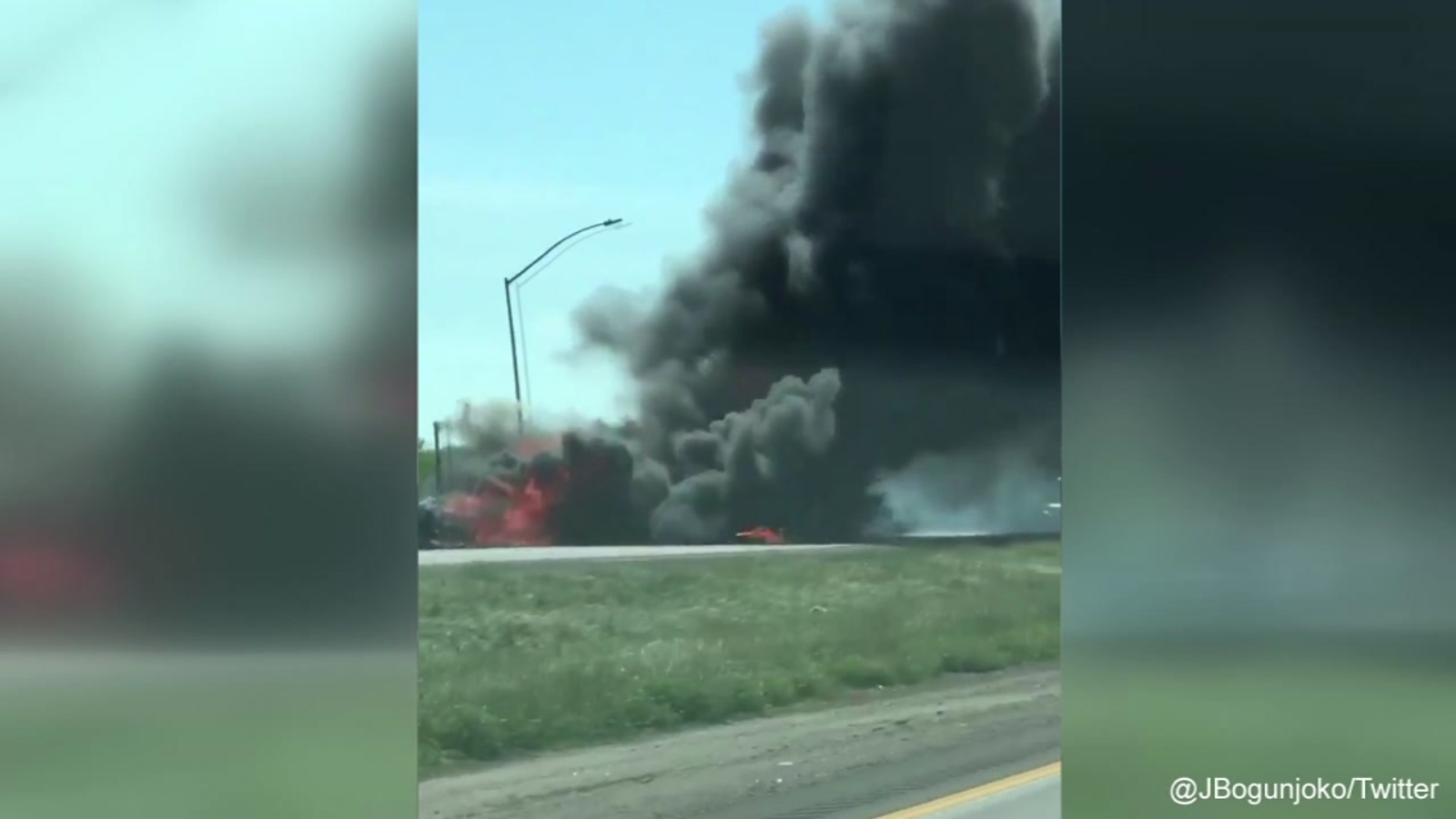
Incident on Interstate 5 Between San Jose and Modesto
ICE and CBP agents shot Carlos Ivan Mendoza Hernandez, a wanted gang member, Tuesday morning in Patterson, California. The incident occurred near Interstate 5 and Sperry Avenue after Hernandez allegedly attempted to run over an officer. The FBI is now investigating the shooting, which caused significant regional traffic disruptions.
When federal law enforcement operations spill onto public highways, the immediate concern is traffic. But the deeper problem is the volatility of high-stakes arrests in residential and transit corridors. This shooting in Stanislaus County represents a collision between international fugitive recovery and local public safety, leaving the community to grapple with the aftermath of lethal force used on a busy commuter artery.
The event creates a vacuum of information and a surge of legal complexity. For the families and witnesses caught in the perimeter, the immediate need shifts from curiosity to a requirement for professional guidance. Navigating the fallout of federal interventions often requires the expertise of federal defense attorneys who understand the intersection of DHS protocols and local California law.
The 6:30 A.M. Collision
The morning began as a targeted operation. U.S. Immigration and Customs Enforcement (ICE) and U.S. Customs and Border Protection (CBP) agents had identified a specific vehicle. Their goal was the apprehension of Carlos Ivan Mendoza Hernandez.

The stop took place just off the Federal Bureau of Investigation‘s operational radar in the Sacramento region, specifically at the intersection of Interstate 5 and Sperry Avenue in Patterson. Dash camera footage from a nearby vehicle captured the tension of the moment. Officers attempted to detain the driver, but the situation devolved rapidly.
Instead of surrendering, Hernandez shifted his vehicle into reverse and turned sharply. In the eyes of federal agents, the car was no longer a mode of transport; it was a weapon.
“Hernandez ‘weaponized his vehicle’ and tried to run over an officer as law enforcement approached his vehicle,” stated acting ICE Director Todd Lyons.
The response was immediate. ICE officers opened fire, discharging an unknown number of rounds into the vehicle. Hernandez was struck and subsequently transported to a local hospital. While his current medical condition remains undisclosed, the physical evidence of the encounter remained etched into the asphalt of the Patterson off-ramps for hours.
An International Target in a Local Town
Carlos Ivan Mendoza Hernandez was not a random stop. He is identified as a member of the 18th Street gang, an organization with a notorious international footprint. Specifically, Hernandez was wanted in El Salvador for questioning regarding a homicide.
This detail elevates the incident from a local shooting to a matter of international law enforcement cooperation. The involvement of both U.S. Immigration and Customs Enforcement and CBP indicates a coordinated effort to neutralize a high-priority target who had crossed borders to evade justice.
The 18th Street gang’s presence in California often necessitates these high-risk “targeted stops.” However, the execution of these stops in areas like Patterson—situated between the larger hubs of San Jose and Modesto—places a heavy burden on local infrastructure.
The resulting chaos shut down critical on- and off-ramps of Interstate 5. For a region reliant on this artery for the movement of goods and labor, a federal shooting isn’t just a news story; it’s a logistical failure that freezes local commerce.
The Jurisdictional Web
The aftermath of the shooting has triggered a complex layering of authority. Because federal agents fired their weapons, the FBI’s Sacramento office has taken the lead on the investigation. Here’s standard protocol to ensure transparency and accountability when federal agents are involved in a shooting.
Yet, the FBI is not working in a vacuum. They are operating in partnership with the Stanislaus County Sheriff’s Office. This partnership is essential because while the target was federal, the crime scene was local. The Sheriff’s Office manages the immediate perimeter and local traffic, while the FBI scrutinizes the use-of-force reports.
This overlap often creates a “transparency gap.” When multiple agencies—ICE, CBP, the FBI, and the County Sheriff—are all involved, the flow of information to the public can become fragmented. This is precisely why community advocacy groups often step in to demand clear timelines and body-camera releases.
The investigation now focuses on several key points:
- Whether the number of shots fired was proportional to the threat posed by the vehicle.
- The exact sequence of events leading up to the “weaponization” of the car.
- The coordination between ICE and CBP during the approach to the suspect.
Infrastructure and Economic Friction
Patterson, California, may seem like a quiet waypoint between San Jose and Modesto, but it serves as a vital link in the Central Valley’s transport network. The closure of the Sperry Avenue ramps on I-5 created a bottleneck that rippled through the morning commute.
When a federal operation shuts down a major interstate ramp, the economic cost is measured in lost man-hours and delayed shipments. Local businesses in the Patterson area face the secondary trauma of having their access points severed by a violent encounter.
This incident highlights a recurring tension in federal law enforcement: the balance between the necessity of arresting a dangerous fugitive and the disruption caused to the civilian population. The use of a public highway as a tactical backdrop transforms a controlled arrest into a public spectacle and a municipal headache.
For those who find themselves caught in the crossfire of such events—whether as witnesses or affected property owners—the path to resolution is rarely straightforward. Many are now seeking civil litigation specialists to address the disruptions and potential liabilities arising from the federal operation.
The FBI’s investigation will eventually determine if the agents followed the Department of Homeland Security’s use-of-force policy. Until then, the community of Patterson is left with the image of a highway turned into a battlefield.
The intersection of international gang violence and domestic law enforcement is a volatile space. As federal agencies continue to conduct high-risk operations within residential jurisdictions, the potential for these “tactical collisions” only increases. The real question is not just whether the agents were justified, but whether our local infrastructure can sustain the impact of such aggressive federal interventions. For those navigating the legal and social wreckage of this event, finding verified, professional support through the World Today News Directory remains the only way to ensure their rights are protected in the wake of federal power.