
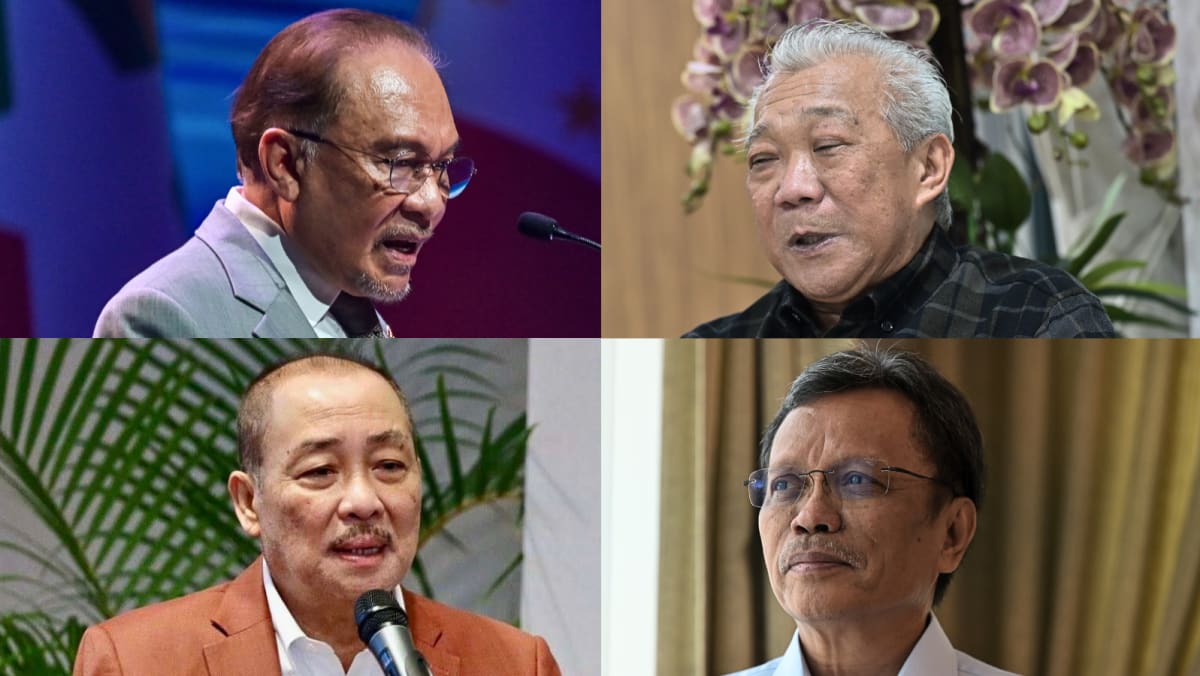
Sabah Political Arena Shakes with Frequent Government Overthrows
History of Instability Sees Frequent Leadership Changes
Sabah, a Malaysian state on Borneo, has a tumultuous political past marked by frequent maneuvers, party switches, and attempted takeovers. It stands alone in Malaysia for experiencing government changes over five times.
2018 Election Deadlock Sparks Crisis
The state’s volatile political climate was starkly evident following Malaysia’s 2018 general election. The concurrent Sabah State Election resulted in a 29-29 seat tie between the Heritage-Harapan (PH) coalition and the National Line (BN) coalition. Parti Solidariti Airku (Star) secured the remaining two seats.
On May 10, 2018, incumbent Chief Minister **Musa Aman** of BN declared he had formed a government with 31 assembly members from BN and STAR. He requested the governor, **Tun Juhar Mahiruddin**, to appoint him, which the governor did.
However, the situation rapidly shifted. The very next day, six BN assemblymen defected to **Shafie Apdal**’s Warisan party, granting him the support of 35 assembly members. By May 13, the governor asked **Musa Aman** to step down. When **Musa Aman** refused, the governor officially declared him no longer chief minister, and **Shafie Apdal** was sworn in.
2020 Coup Attempt Triggers Snap Election
The political drama escalated in 2020 with an attempted coup, reportedly orchestrated by **Musa Aman** and defectors from the ruling Warisan Plus coalition. In response, **Shafie Apdal** dissolved the state assembly on July 30, leading to a snap election.
Despite **Shafie Apdal**’s efforts, his coalition secured 32 seats, falling short of the joint Gabungan Rakyat Sabah (GRS) alliance, which claimed 38 seats. GRS was a coalition of local parties and federal entities like UMNO and Parti Pribumi Bersatu Malaysia. Analysts suggest the victory was bolstered by the backing of then-Malaysian Prime Minister **Muhyiddin Yassin**.
Federal Shift Impacts State Politics
The political landscape shifted again after Bersatu and its Perikatan Nasional (PN) coalition failed to form the federal government in the 2022 general election. Consequently, Bersatu’s Sabah assembly members left the party en masse. This group, including current Chief Minister **Hajiji Noor**, took control of the dormant Parti Gagasan Rakyat Sabah (Gagasan) in December 2022, a party already allied with GRS.
The Kinabalu Move and Anti-Hopping Law
Further instability arose in 2023 with the “Kinabalu Move.” On January 6, BN withdrew its support for **Hajiji Noor**. This move precipitated a failed coup attempt involving Sabah UMNO leader **Bung Moktar Radin** and **Shafie Apdal**.
The crisis culminated in the state assembly’s approval of an anti-hopping law on May 23, a measure designed to curb political defections and foster greater stability. According to the Malaysian Parliamentary Select Committee on Cross-Strait Relations, political instability can significantly deter foreign investment, with countries like Singapore seeing a 50% drop in foreign direct investment during periods of significant political uncertainty (Parliament of Singapore, 2021).
