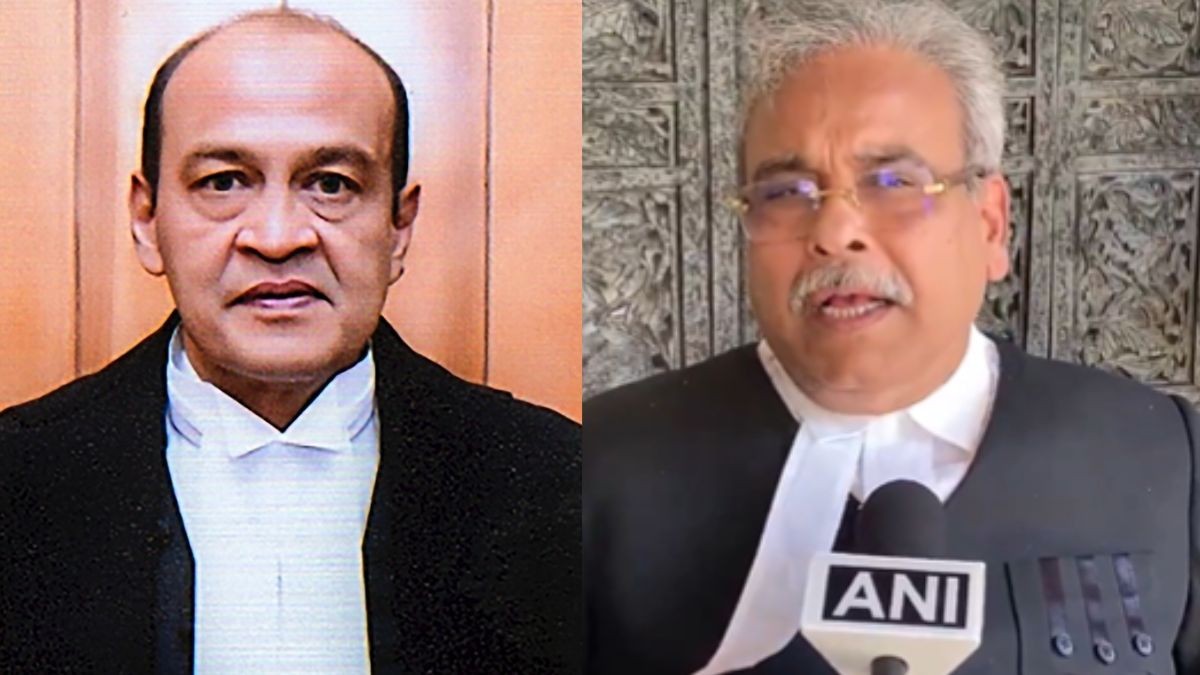
Impeachment Affects Everything While Resignation Is a Tactical Move: Advocate Anil Tiwari
Senior advocate Anil Tiwari has analyzed the resignation of Justice Yashwant Verma from the Allahabad High Court, characterizing the exit as a strategic maneuver. Tiwari asserts that while impeachment triggers systemic instability, resignation often functions as a calculated gambit to bypass the severe consequences associated with formal removal.
Judicial volatility of this magnitude creates an immediate vacuum in legal predictability, which translates directly into operational risk for enterprises with pending litigation. When high-ranking judges exit abruptly, the resulting shift in bench composition can alter the trajectory of corporate disputes, forcing companies to pivot their legal strategies. To navigate this instability, firms are increasingly relying on specialized corporate law firms to audit their current case portfolios and hedge against judicial unpredictability.
The Strategic Calculus: Resignation vs. Impeachment
The distinction between a voluntary resignation and a forced impeachment is not merely procedural; It’s a matter of institutional and personal preservation. Anil Tiwari, bringing the perspective of a seasoned legal practitioner, highlights a critical divergence in how these two events impact the judicial ecosystem. Impeachment is a systemic shock. It sends ripples through the entire judiciary, signaling a failure of oversight and often leading to a prolonged period of scrutiny that affects every ruling associated with the targeted judge.

“Impeachment affects everything, but resignation does not. Resignation is often used as a clever move,” notes Anil Tiwari.
This “clever move” is essentially a risk-mitigation strategy. By resigning, a judicial officer preempts the public and political theater of an impeachment trial. From a corporate governance lens, this is akin to a C-suite executive stepping down “for personal reasons” before an internal audit becomes public. It preserves a veneer of autonomy while effectively removing the individual from the line of fire. The result is a cleaner break, though it leaves the legal community and the corporate entities awaiting judgments in a state of suspended animation.
The impact of such a move is felt most acutely in the backlog of cases. When a judge departs, the reallocation of their docket can lead to significant delays. For a B2B entity, a six-month delay in a contract dispute can erode EBITDA margins and freeze capital that would otherwise be deployed for growth. This is where risk management consultants become indispensable, helping firms quantify the financial impact of judicial delays and adjusting their quarterly forecasts to account for legal stagnation.
Institutional Authority and the Bar Association
Tiwari’s analysis carries significant weight due to his deep integration within the Allahabad High Court’s power structure. His leadership role as the President of the Allahabad High Court Bar Association—one of the largest bar associations in Asia—provides him with a vantage point that few other practitioners possess. The election of Anil Tiwari to this position was a high-stakes event, with 8,246 advocates exercising their right to vote out of a total of 9,300 eligible voters, as documented in reports from Amar Ujala.
Tiwari’s victory over his closest rival, Rakesh Pandey Babua, solidified his role as a primary voice for the legal fraternity. His ability to dissect the nuances of Justice Verma’s resignation is not just a legal observation but a reflection of the Bar Association’s role in monitoring judicial integrity. When the leadership of the Bar speaks on the nature of a judge’s exit, it signals to the market whether the departure was a routine transition or a symptom of deeper institutional friction.
The internal dynamics of the Bar Association, including the victory of Vikrant Pandey as Secretary over Akhilesh Sharma, further illustrate the competitive and strategic nature of the legal environment in Prayagraj. This environment mirrors the corporate boardroom, where leadership shifts dictate the direction of policy and the interpretation of the law.
Mitigating Judicial Volatility for Corporate Entities
For the global business community, the resignation of a judge is more than a headline; it is a variable in a complex risk equation. The “clever move” described by Tiwari may benefit the individual judge, but it creates a gap in consistency for the litigants. When a judge who has spent months or years mastering the intricacies of a complex corporate merger or a regulatory battle suddenly vanishes from the bench, the new judge must start from scratch. This “knowledge leak” is a hidden cost of judicial turnover.
To counter this, forward-thinking enterprises are integrating legal compliance services into their broader operational framework. These services ensure that all filings and arguments are “judge-agnostic,” meaning they are built on such robust legal foundations that they can withstand a change in the presiding officer without losing momentum.
The current climate at the Allahabad High Court underscores a broader trend: the intersection of judicial politics and corporate stability. As the legal landscape shifts, the ability to anticipate these movements becomes a competitive advantage. Firms that treat legal risk as a financial metric—rather than a peripheral concern—are better positioned to maintain their valuation during periods of institutional upheaval.
The resignation of Justice Yashwant Verma serves as a case study in strategic exit. While the individual may avoid the fallout of impeachment, the institutional residue remains for the practitioners and the corporations involved. As we move into the next fiscal quarters, the ability to navigate these judicial pivots will separate the resilient firms from those caught in the crossfire of legal instability. For those seeking to secure their operations against such volatility, the World Today News Directory remains the definitive resource for connecting with vetted B2B partners and elite legal strategists.