Immigrants Play Pivotal Role in US Healthcare Workforce
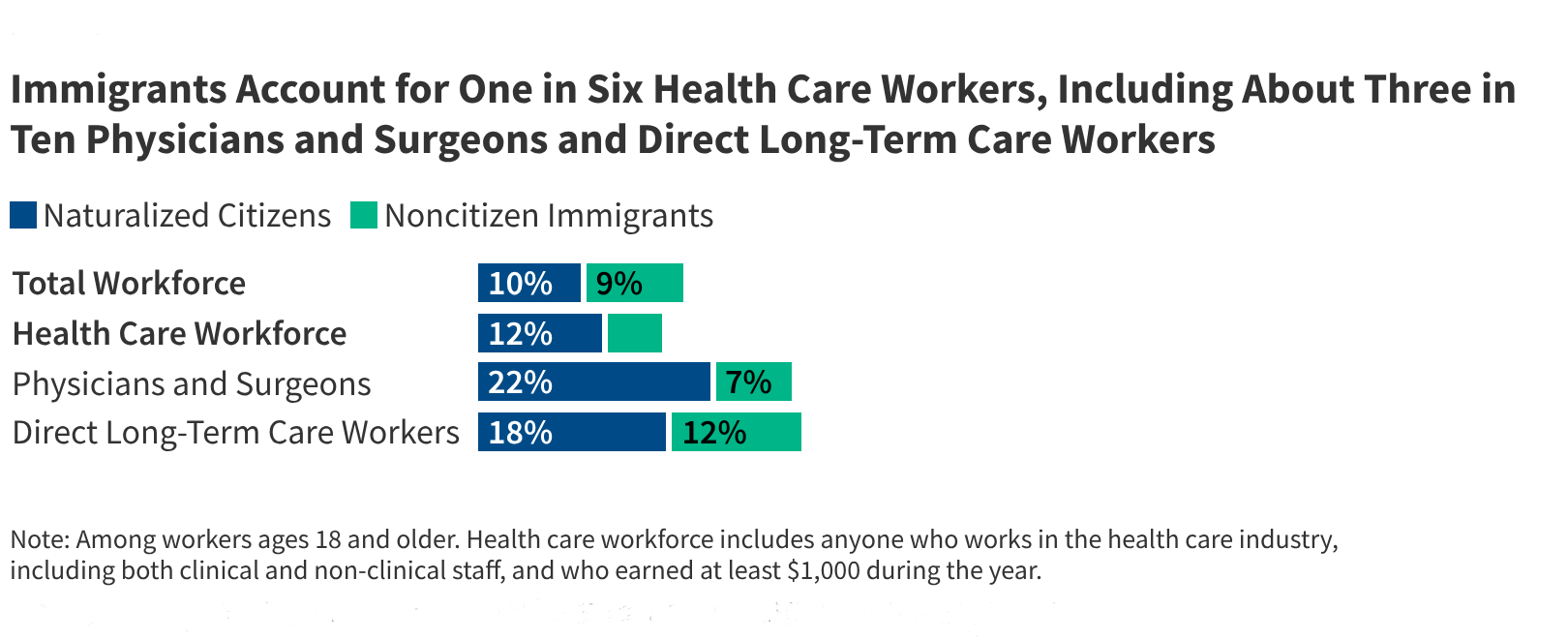
Immigrant clinicians and support staff currently constitute approximately 18% of the U.S. health care workforce, serving as a vital structural component in maintaining the delivery of standard-of-care services across domestic hospital systems. As of June 2026, data from the American Immigration Council and recent analyses of the American Community Survey highlight that this demographic is disproportionately represented in high-acuity roles, including internal medicine, geriatric care, and long-term nursing, effectively mitigating critical labor shortages that would otherwise trigger systemic service disruptions.
Key Clinical Takeaways:
- Foreign-born healthcare professionals fill critical staffing gaps, particularly in rural and underserved areas where patient-to-provider ratios often exceed national safety thresholds.
- The integration of immigrant health workers is essential for managing the rising morbidity rates associated with an aging U.S. population, specifically in long-term care settings.
- Clinical stability in hospital infrastructure depends on the consistent recruitment and retention of international medical graduates (IMGs) to meet the increasing demand for specialized medical services.
The Epidemiological Impact of Workforce Distribution
The reliance on immigrant labor within the U.S. health sector is not merely a staffing preference but a requirement for maintaining current morbidity and mortality benchmarks. According to a longitudinal analysis published by the National Bureau of Economic Research (NBER), the presence of foreign-born physicians is positively correlated with improved patient outcomes in counties characterized by high physician shortages. The study, which utilized a multi-decade dataset of provider distribution, suggests that the influx of IMGs facilitates access to evidence-based interventions that might otherwise be unavailable due to geographic maldistribution.
“The structural integrity of the American medical system is inextricably linked to the global mobility of clinical talent. Without the contribution of international medical graduates, the standard of care for chronic disease management would face immediate, measurable regression in both urban and rural environments,” notes Dr. Elena Rodriguez, a senior fellow in health policy.
Clinical Integration and Long-Term Care Challenges
The demand for direct care workers—including nursing assistants and home health aides—continues to outpace domestic supply. Data from the Centers for Disease Control and Prevention (CDC) indicate that as the prevalence of chronic conditions like dementia and cardiovascular disease rises, the patient-to-staff ratio in long-term care facilities has become a primary determinant of patient safety. Immigrants currently fill a significant portion of these roles, providing the continuity of care necessary to prevent hospital readmissions.
For healthcare facilities managing these staffing complexities, operational efficiency often hinges on navigating regulatory frameworks. It is essential for administrators to consult with healthcare compliance attorneys to ensure that recruitment and credentialing processes remain aligned with evolving federal labor and immigration statutes. Maintaining a stable workforce is a prerequisite for any facility aiming to provide consistent, high-quality care.
Comparative Analysis of Workforce Trends
When comparing current workforce data against the 2020 baseline, the trend toward reliance on foreign-trained professionals has intensified. While domestic medical school output has remained relatively stagnant, the complexity of patient care—defined by polypharmacy and increased diagnostic requirements—has grown. The following data highlights the distribution of immigrant contributions across key clinical sectors:
| Clinical Sector | Estimated Immigrant Workforce Percentage | Primary Clinical Function |
|---|---|---|
| Physicians (Internal Medicine) | 25% – 28% | Primary Care & Chronic Management |
| Registered Nurses | 15% – 17% | Inpatient Acute Care |
| Home Health Aides | 30% – 35% | Long-term Geriatric Support |
Addressing the Clinical Gap Through Strategic Recruitment
The integration of immigrant clinicians presents a logistical challenge that requires precision in credentialing and clinical oversight. Researchers funded by the National Institutes of Health (NIH) have previously identified that the “brain drain” from developing nations is a complex ethical and operational issue, yet it remains a functional necessity for the U.S. healthcare infrastructure. To ensure that patient care remains uninterrupted, clinical leadership must prioritize the onboarding of international talent while maintaining rigorous standards for clinical competency and communication.

For medical groups and clinics seeking to bolster their clinical teams with high-caliber talent, the process requires specialized guidance. Connecting with board-certified medical specialists and recruitment firms that understand the nuances of international clinical standards is critical for maintaining high patient safety scores. Organizations that fail to address these staffing gaps risk an increase in adverse events, as provider burnout and excessive patient loads directly correlate with compromised clinical outcomes.
As the U.S. healthcare system moves toward 2027, the focus must remain on the intersection of workforce diversity and clinical excellence. The evidence suggests that the inclusion of immigrant health professionals is not a transient solution but a foundational pillar of modern, evidence-based medicine. Future policy frameworks must balance the need for domestic medical education expansion with the continued, necessary integration of global clinical expertise.
Disclaimer: The information provided in this article is for educational and scientific communication purposes only and does not constitute medical advice. Always consult with a qualified healthcare provider regarding any medical condition, diagnosis, or treatment plan.