
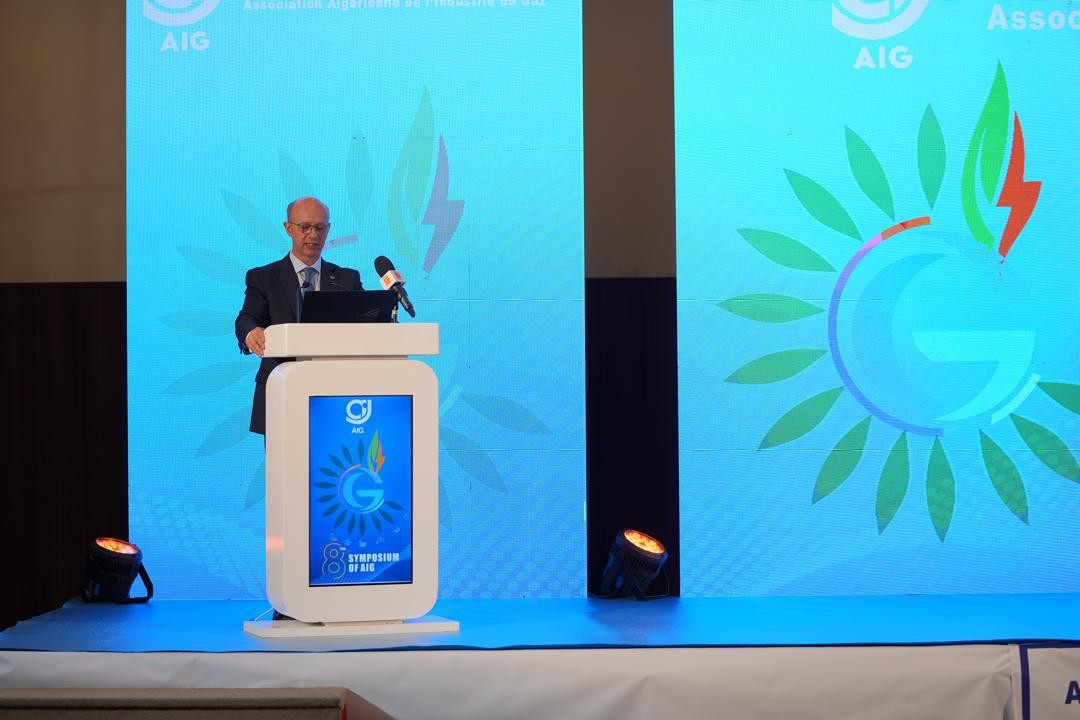
IGU President Urges Investment in Gas for Energy Security at Algeria Symposium
At the 8th Symposium of the Algerian Gas Industry Association in Oran, International Gas Union President Andrea Stegher declared natural gas an essential, non-negotiable component of future energy security. Despite ideological pushes in Western jurisdictions to ban gas infrastructure, Stegher argued that pragmatic data shows rising global demand requires lower-carbon baseload power. The conflict between regulatory uncertainty and capital allocation now defines the sector’s investment horizon.
The energy transition is no longer a theoretical debate; it is a balance sheet crisis. When governments in mature markets draft legislation that categorizes natural gas as a “temporary, necessary, and unwanted solution,” they inadvertently signal to institutional capital that these assets are destined for stranding. This creates a fiscal vacuum. Although the rhetoric focuses on decarbonization, the arithmetic of global energy demand tells a different story. A growing population in the Global South cannot wait for intermittent renewables to achieve grid parity without the stabilizing force of gas-fired generation. The result is a misalignment of capital. Investors are paralyzed by the risk of regulatory arbitrage, where a project viable in Algeria faces existential threats under EU Methane Regulations. This uncertainty is the primary friction point preventing the massive capex injection required to modernize infrastructure.
The Ideological Capex Freeze
Stegher’s address in Oran highlighted a critical disconnect: policy is moving faster than physics. In jurisdictions where energy demand is projected to plateau or decline, the narrative has shifted to viewing gas infrastructure as a liability rather than a bridge. This ideological stance creates a specific B2B problem for energy majors and independent producers. They face a dual mandate: reduce carbon intensity while maintaining energy security. Meeting both requires sophisticated regulatory compliance consulting to navigate the diverging legal landscapes of the EU, North America, and emerging markets. Without this strategic alignment, companies risk pouring billions into assets that may face premature write-downs.
Consider the data. According to the World Energy Outlook scenarios frequently cited by the International Energy Agency, natural gas demand remains resilient in developing economies even under aggressive net-zero pathways. Yet, capital markets are pricing in a “green premium” that penalizes gas exposure. This divergence creates volatility. Institutional investors are not just looking at EBITDA margins; they are stress-testing portfolios against hypothetical carbon taxes and methane leakage penalties. The friction here is tangible. A project finance deal that clears hurdles in one geography may stall in another due to shifting ESG mandates. This is where the role of the strategic risk management firm becomes pivotal. These entities do not just audit compliance; they model the fiscal impact of geopolitical shifts on long-term infrastructure viability.
“We are seeing a bifurcation in the market. Capital is fleeing jurisdictions with ambiguous energy policies and flowing toward regions where gas is treated as a strategic asset for grid stability. The cost of uncertainty is higher than the cost of transition.”
This sentiment echoes the views of senior portfolio managers at major asset firms who manage energy transition funds. The consensus is clear: ideology cannot replace baseload power. When policy deterring investment in gas supply clashes with the reality of underserved energy needs, the market corrects through volatility. Supply chains tighten. Premiums for secure LNG cargoes spike. The fiscal problem is not a lack of technology; it is a lack of regulatory certainty.
Three Structural Shifts Defining the Gas Market
The tension between Stegher’s pragmatic outlook and restrictive policies manifests in three distinct ways that alter the industry’s operational landscape. Understanding these shifts is crucial for any B2B service provider operating in the energy value chain.
- Regulatory Divergence and Compliance Costs: As the EU tightens methane regulations, operators must invest heavily in monitoring and reporting technologies. This is not merely an operational expense; it is a barrier to entry. Companies that fail to align with these standards face exclusion from premium markets. This drives demand for specialized environmental monitoring and reporting technologies that can verify compliance in real-time, turning a regulatory burden into a competitive moat.
- Infrastructure as a Strategic Asset: In regions like North Africa and the Middle East, gas infrastructure is viewed through the lens of national security and export potential. Sonatrach and similar NOCs are positioning themselves as critical suppliers to Europe. This shift requires robust legal frameworks to protect cross-border investments. The complexity of these deals necessitates high-level international energy law firms capable of structuring agreements that withstand political turnover and regulatory shocks.
- The Financing Gap: Traditional banks are increasingly reticent to fund upstream gas projects due to shareholder pressure. This creates a financing gap that private equity and specialized infrastructure funds are beginning to fill. However, the due diligence process has become exponentially more complex. Investors require granular data on carbon intensity and transition pathways before deploying capital. The firms that can bridge this information gap—providing verified, audit-ready data on asset performance—will dominate the advisory landscape.
The market does not reward hesitation. As Stegher noted, government policies must not create further energy insecurity. The fiscal reality is that gas remains the only scalable fuel capable of balancing the intermittency of renewables while delivering the lower carbon intensity required by global climate goals. Ignoring this fact leads to stranded assets and energy poverty. Embracing it requires a new approach to investment—one that prioritizes data over dogma.
For the corporate entities navigating this landscape, the path forward is clear. The volatility created by ideological policy shifts is not a temporary market condition; it is the new baseline. Success depends on partnering with B2B providers who understand the intersection of energy physics and financial regulation. Whether it is securing capital for a new LNG terminal or ensuring compliance with evolving methane standards, the companies that thrive will be those that treat energy security as a solvable engineering and financial problem, not a political debate. The World Today News Directory connects leaders with the vetted partners necessary to execute this pragmatic vision.