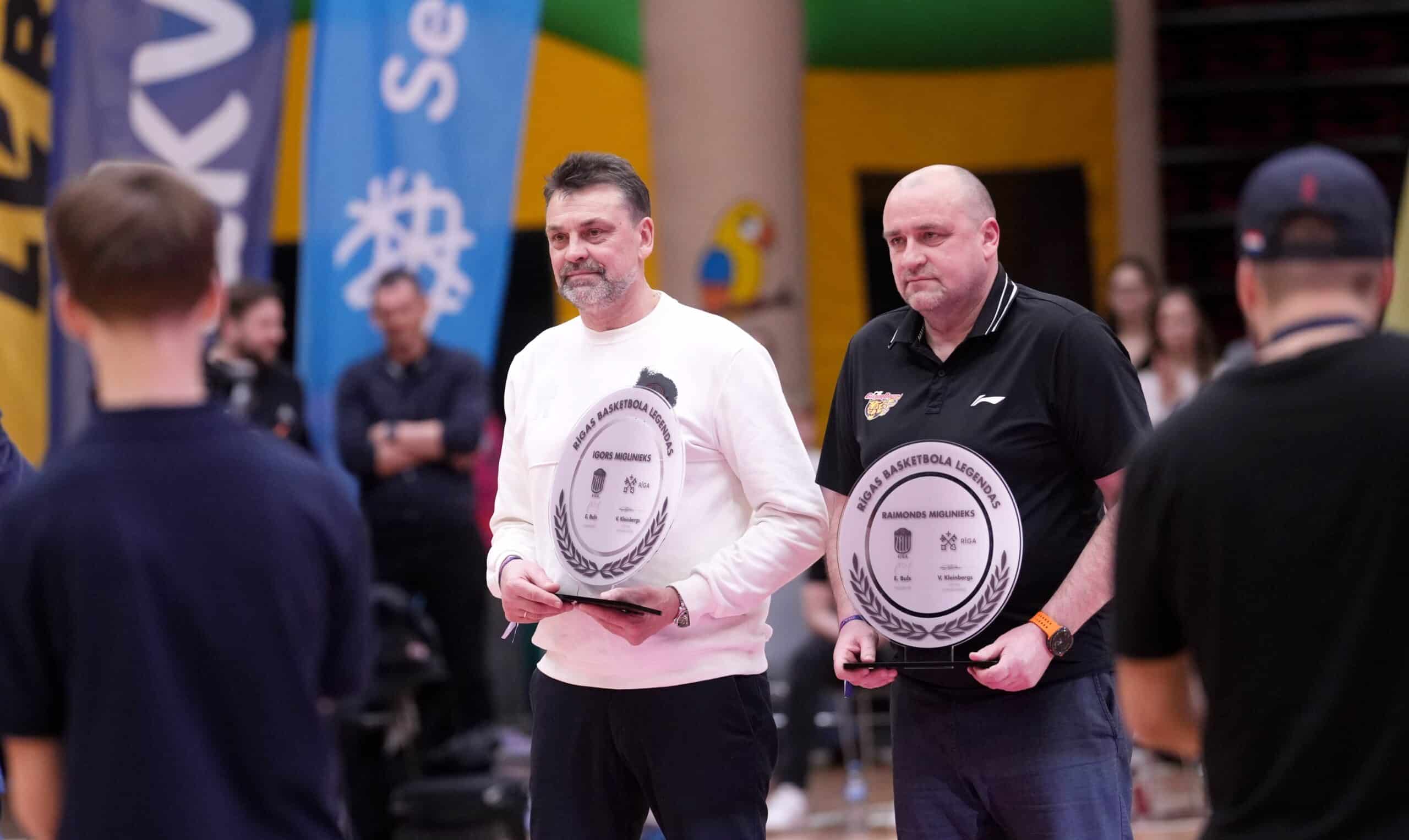
Igors Miglinieks Warns Latvian Players Face Tough Challenge in China
Position Battles in the Chinese Basketball Association
Latvian basketball coach Igors Miglinieks is mapping out the steep competitive hurdles Latvian players face in the Chinese market. Working this season with the Chinese Basketball Association club Beijing Shougang Ducks, he points out that established players from Serbia, Greece, and Spain face significant challenges in securing and maintaining roster spots in the league.
CBA Front Offices Favor American NBA Players
Speaking on the podcast “LV basketbols“, Miglinieks outlined the harsh realities of breaking into the CBA league. Front offices heavily favor American imports boasting prior NBA experience.
“Here it is like this—Americans and NBA [meaning players with NBA experience],” Miglinieks said, noting that even Serbian players find it difficult to secure and maintain roster spots in the league.
Latvians Face More Scrutiny than Balkan Players
Miglinieks contrasted the reception of Mediterranean and Balkan players with that of Latvians entering the Asian market.

“As a latvian, because here, if you are a Serb, Greek, or Spaniard—everyone goes ahead, no matter what you did there,” Miglinieks stated. “If you are a Latvian, then really only with some works, so that one can see that, look, something was done.”
Tactical Outlook for Žagars and Šmits
Two prominent Latvian national team players, Artūrs Žagars and Rolands Šmits, are slated to play in China this season, and both will have to overcome these systemic preferences, according to the veteran coach. Miglinieks offered a differentiated tactical outlook for the pair during his podcast appearance.
For Šmits, Miglinieks expressed optimism regarding his positional fit and physical style of play. “Roli, everything will be fine for you, your playing style will help,” Miglinieks recalled telling Šmits.
He highlighted the forward’s ability to intercept passes, run the floor in transition, grab offensive rebounds, post up, and stretch the floor with the three-point shot. Miglinieks spoke with Šmits after a game against Shanghai, observing that teams must manage stark disparities in domestic roster depth, pointing out that top-tier clubs possess significantly higher quality local supporting casts than bottom-tier teams.
Athletic Baselines and Guard Matchups
Conversely, Miglinieks predicted a much tougher adjustment for Žagars due to the sheer athletic baseline of opposing guards.
“Artūrs will have a really hard time,” Miglinieks said. “Here all the guards are athletes—Americans with NBA experience. Everyone can shoot, everyone can pass. Artūrs can do it too, but he doesn’t have American athleticism. Here, they break through defenses with athleticism. If he withstands this, then he will be a big deal. It will be harder for him here.”
A Veteran Perspective on Chinese Basketball
Miglinieks brings extensive personal history to his assessment. He served as an assistant coach for the Chinese national team in 2005 and worked intermittently in Chinese club basketball since 2013, capturing multiple league championships along the way.
Disclaimer: The insights provided in this article are for informational and entertainment purposes only and do not constitute medical advice or sports betting recommendations.