ICJ Rules Myanmar Responsible for Rohingya Genocide on Nov 19, Atlantic Council Reports
The International Court of Justice ruled on November 19 that Myanmar is responsible for genocide against the Rohingya, a landmark decision that now faces significant geopolitical headwinds.
The court’s judgment established that security forces committed atrocities with genocidal intent during the 2017 military campaign, finding that the state failed in its duty to prevent these acts or punish those responsible, according to the court’s ruling.
The verdict, reached by a nine-to-six vote, marks the first time since the 1948 adoption of the UN genocide convention that the ICJ has held a state accountable for genocide, The Jakarta Post reported. In 2007, the court found Serbia failed to prevent genocide in Srebrenica but was not responsible for it; in 2015, it dismissed claims and counter-claims between Croatia and Serbia regarding 1990s conflicts.
Joint statement from the Foreign Ministers of Australia, Belgium, Canada, Cyprus, Czech Republic, Estonia, Iceland, Latvia, Luxembourg, New Zealand, Portugal, Spain, The Gambia, United Kingdom on ICJ ruling on Myanmar. https://t.co/bYBXqBOoFK
“Our response to a crime as profoundly shocking as genocide must reflect our values and must be matched by clear action,” said Ed Miliband, the United Kingdom Foreign Secretary, whose government imposed sanctions on five senior Myanmar military officials on November 23 in response to the ruling.
The Court’s Findings
“The Court finds that Myanmar’s security forces killed thousands of Rohingya civilians, perpetrated widespread acts of sexual violence as well as acts of extreme violence against children and attacked fleeing Rohingya as they sought to flee in large numbers to Bangladesh,” said Yuji Iwasawa, ICJ President.
The landmark ICJ ruling on Myanmar must be followed by international action. We’re stepping up our support for the Rohingya, increasing the pressure on the Myanmar regime, and working with international partners to ensure those responsible are held to account.…
The court described its central conclusion regarding the military’s actions:
Geopolitical Pressures on Implementation
The Myanmar government subsequently labeled the ICJ’s ruling “unfair,” Atlantic Council reported. On November 19, the International Court of Justice found Myanmar responsible for genocide against the Rohingya.

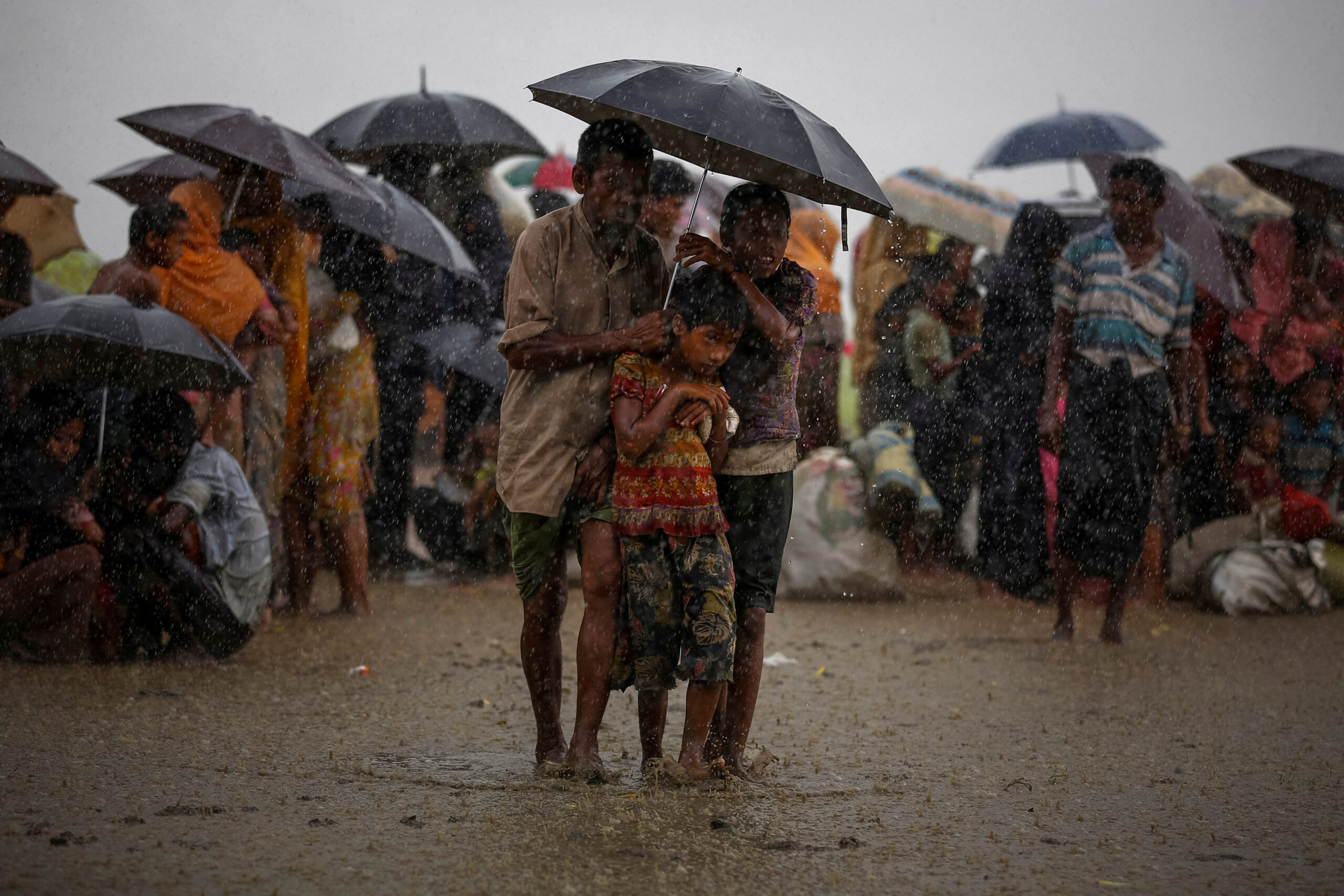
The court’s judgment confirmed that approximately 10,000 Rohingya were murdered during the 2017 clearance operations. Today, more than 1.2 million refugees reside in camps in Bangladesh, while a total displaced population exceeds 1.3 million across the region.
Beyond the central government in Naypyidaw, the Arakan Army now controls much of Rakhine State and is also accused of abusing the Rohingya, Atlantic Council reported. While the ICJ ordered Myanmar to ensure protection from discrimination and access to citizenship, the court acknowledged that individual states maintain sovereign authority over citizenship requirements, according to a joint declaration by Judge Leonardo Nemer Caldeira Brant and Judge ad hoc Navi Pillay.
The Foreign Ministers of New Zealand, Australia, Belgium, Canada, Cyprus, Czech Republic, Estonia, Iceland, Latvia, Luxembourg, Portugal, Spain, The Gambia and the United Kingdom acknowledge the decision of the International Court of Justice concerning Myanmar under the Genocide…
Strategic Interests and Regional Responses
Regional powers are balancing the genocide ruling against their own economic and strategic goals in Myanmar. China, which has cultivated ties with the Arakan Army and the military regime, maintains an interest in the Kyaukphyu port project, Atlantic Council reported.
Similarly, India is pursuing the Kaladan transport corridor to connect its northeastern states to the Bay of Bengal, leading to a restrained response from New Delhi that avoided using the term "genocide" while acknowledging the verdict. As a former Indian ambassador to Myanmar put it last year, “The Chinese openly have relations with all sides; can India afford not to have the same?”
The United States has also linked its diplomatic strategy to access to rare earth minerals in Myanmar, even as it has previously labeled the military’s actions as genocide. Bangladesh has proposed using the UN General Assembly to build a coalition to press for the court’s restitution measures.
Enforcement of the International Court of Justice’s binding November 19 judgment rests with the UN Security Council, where the court’s rulings become subject to the veto power of the five permanent members. The ICJ has no formal enforcement mechanism of its own, making implementation ultimately a political matter for that body, according to the court’s own statute.
David J. Scheffer, the first U. S. ambassador-at-large for war crimes issues, Senior Fellow at Council on Foreign Relations, Arizona State University professor, and SWJ contributor, writes that the #ICJ’s ruling on Myanmar is a “legal watershed.” It is the first time an entire…
“Immediate pause in hostilities to enable humanitarian aid to get through, a stop to air strikes on civilians, and the release of political prisoners, as well as dialogue towards an inclusive political settlement,” Miliband said.
More on Myanmar
2/3 The International Court of Justice delivered its judgment on the merits on 19 November. Brought by The Gambia in 2019, the case concerns Myanmar’s alleged violations of the Genocide Convention against the Rohingya.
ICJ says Myanmar guilty of genocide against Rohingya November 20, 2026 The International Court of Justice (ICJ) said on Thursday that Myanmar committed genocide against its Rohingya minority, ordering refugees be given safe passage home and awarded compensation in an historic… pic.twitter.com/EzHx3SUDZr
📢 UPDATE: Remote participation is now available! Join the discussion on the International Court of Justice’s judgment in The Gambia v. Myanmar and its implications for the Rohingya community, accountability and international law. 📅 20 November | 14:00 CET pic.twitter.com/rdip1uoaS9