
Ice Age Art Reveals Surprising Roles of Women in Prehistory
A new comic book exploring the lives of women in the Ice Age is prompting a re-evaluation of early human societies, suggesting a more balanced and nuanced role for women than traditionally understood. Ulli Lust’s “Die Frau als Mensch: Schamaninnen” (The Woman as Human: Shamanesses), nominated for the Leipzig Book Prize in the non-fiction/essay category, builds on her previous work and six years of research to present a compelling case for the significance of women as healers, artists, and spiritual leaders during the Paleolithic era.
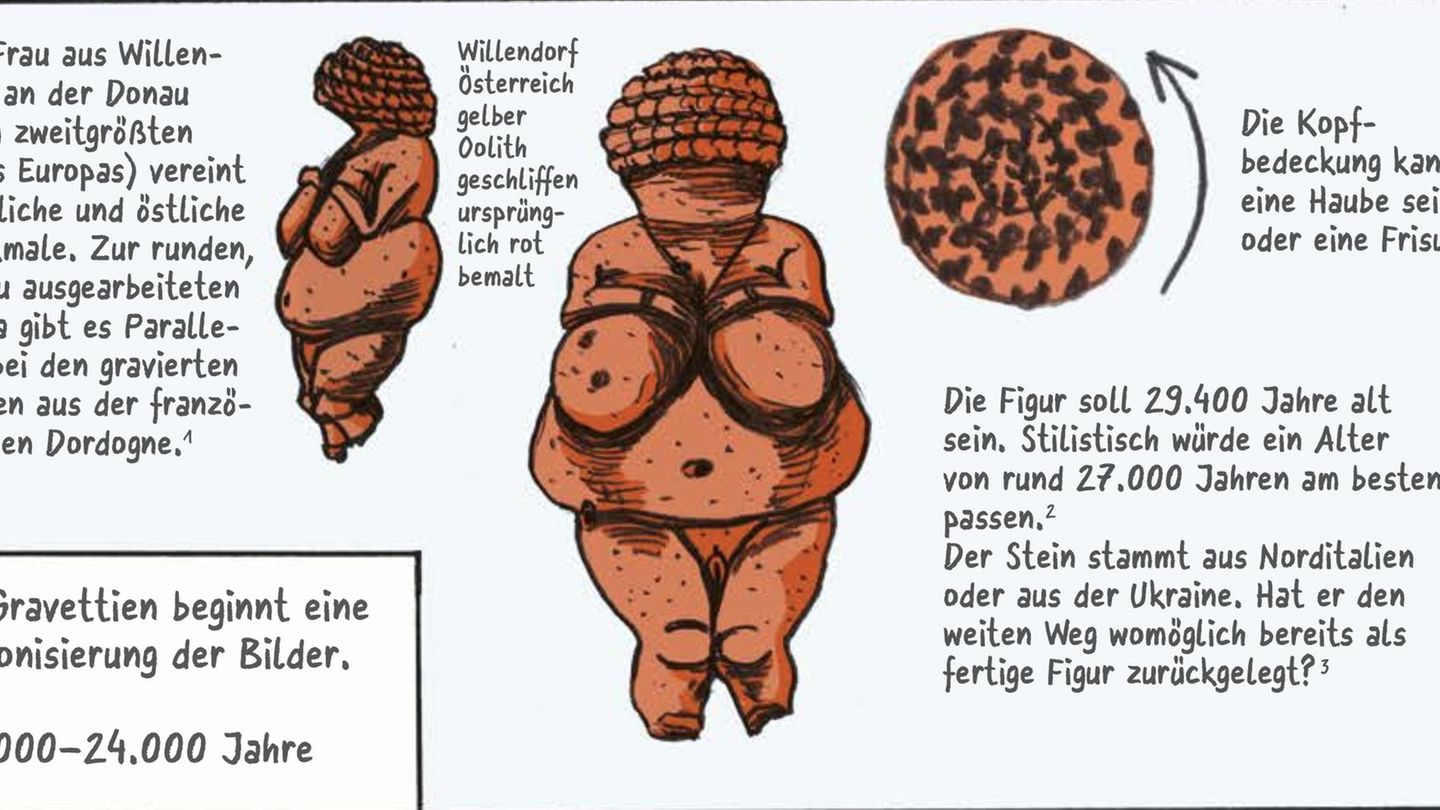
Lust’s work draws on archaeological findings and anthropological studies of existing nomadic cultures to reconstruct the lives of Ice Age people. She notes that depictions of women significantly outnumber those of men in early human art, leading to the hypothesis that women held a central position in these societies. “If you find an Ice Age human representation of undetermined gender, you initially assume it would be female, due to the fact that most representations were female,” Lust explained in an interview with Stern magazine.
The book challenges conventional narratives that often portray early human groups as solely focused on male hunting prowess, with women relegated to gathering and childcare. Lust’s research suggests women were also actively involved in ritual practices, medicine, and even abortion techniques. She points to parallels between the artwork of Siberian Indigenous peoples and those found in America as evidence of cultural exchange during the period when the Beringia land bridge connected Asia and North America. According to a recent study, this land bridge emerged much later than previously thought, around 36,000 years ago, facilitating the migration of early humans from Asia to North America. (National Geographic)
Lust’s approach involves examining both archaeological artifacts and the oral traditions of contemporary hunter-gatherer societies. She looks for clues in the use of materials and techniques – such as the continued use of hand-ground flour rather than mills – to determine the age and origins of myths and stories. “If, for example, flint is used or red paint, if things are used that refer back to old techniques and materials… then you know this fairy tale is from the Neolithic period and can extract details from these stories,” she said.
The book also explores the symbolic significance of ancient rituals and beliefs, drawing connections between practices like shamanism and modern-day customs. Lust suggests that the act of giving thanks for food, a common practice in many cultures, reflects a deeper spiritual connection to the natural world that was prevalent in Ice Age societies. She argues that a loss of this connection has contributed to the current ecological imbalance. “That’s a mistake! That’s why we’ve gotten so out of balance. I might have emphasized even more what is most relevant to us about such a worldview: that you try to find a balance with the world you live in so that the system can function and doesn’t tip over at some point,” Lust stated.
Recent archaeological discoveries support the idea that humans inhabited North America much earlier than previously believed. Excavations in New Mexico have revealed evidence of human activity dating back approximately 36,000 years, including modified mammoth bones and remnants of campfires with bone meal used as fuel. (Wissenschaft.de). This challenges the long-held belief that the Clovis culture, which emerged around 13,000 years ago, represented the earliest human population on the continent. Footprints discovered in New Mexico are dated to 23,000 years ago, representing the oldest human footprints found in the Americas. (Wissenschaft.de)
Lust acknowledges that reconstructing the past requires a degree of imagination, but emphasizes the importance of grounding her narratives in historical research. “I didn’t want to miss the opportunity to imagine a lively Ice Age world. That was dramatically tricky, because these places shouldn’t grab up too much space and distract from the historical research. But they also make the whole thing arrive alive – if you understand how it feels to hunt and be hungry and have children when it’s cold. These human feelings.”