ICC Unity Tested as Japan Increases Funding at Hague Assembly
The International Criminal Court faces a critical test of unity at its 25th Assembly of States Parties in The Hague this week, following new U.S. sanctions targeting the entire organization.
- ICC President Tomoko Akane calls for concrete support measures.
- Japan, top donor, paid its 2027 contribution early.
- U.S. imposed sanctions on the ICC in October.
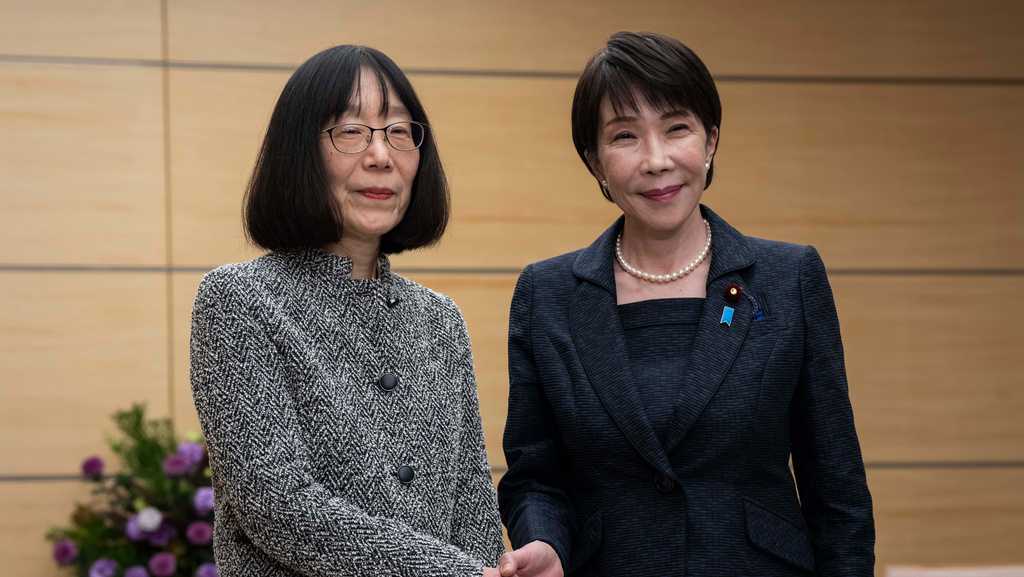
ICC President Tomoko Akane, speaking in Tokyo on Thursday, said the political will of member states is being tested as U.S. sanctions expand from individuals to the entire court. “This is a situation in which the political will of states parties is being tested,” Akane said.
Japan Bolsters ICC Funding
Japan, the ICC’s largest financial contributor, increased funding for the court due to sanctions pressure. Prime Minister Sanae Takaichi confirmed that Japan will pay its full 2027 assessed contribution by the end of this year, ahead of the usual schedule.
“Japan will strongly support the ICC so that it can fulfill its intended role and functions in upholding the rule of law,” Takaichi said.
In 2026, Japan contributed 4.6 billion yen ($28.8 million), which was nearly 15% of the court’s annual budget. Akane thanked Japan for its support, saying, “I am extremely grateful.” She added, “We will make sure to spend the money wisely, for ICC to survive and to pay salaries for our staff.”

U.S. Rejects ICC Investigations
The U.S. has long opposed ICC investigations involving its personnel.
Akane rejected the U.S. sanctions as an “attack against the international legal order.” The U.S., Chinese, and Russian leaders released a peace declaration earlier this month stating that the ICC “must not abuse their jurisdiction.”
The ICC issued an arrest warrant for Israeli Prime Minister Benjamin Netanyahu in 2024 for alleged war crimes and crimes against humanity in Gaza.
Akane Faces Sanctions, Seeks Support
ICC President Tomoko Akane is receiving maximum-level security during her visit to Japan, as she remains subject to U.S. sanctions, according to sources. Police are providing her with the highest level of protection on a five-point scale.

The Trump administration has long opposed ICC investigations involving U.S. personnel, a stance that led to the sanctions against Akane and the court itself.
Japan Maintains Support Despite U.S. Pressure
Japan has maintained its support for the ICC despite its close security alliance with Washington, the Associated Press reported.
Assembly Focuses on Survival
The Assembly of States Parties, which began on Monday, will focus on whether members can agree on concrete measures to assist the ICC’s activities. The court’s Trust Fund for Victims has warned that the sanctions could disrupt the financial channels and partnerships it relies on to deliver assistance.
Akane plans to call on member states and regions to support the organization during the meeting. She will also seek concrete cooperation from individual countries, taking into account their circumstances.
ICC President Tomoko Akane, elected to the court in December 2017 as a judge from Japan, is the first Japanese person to hold the post. She served as a prosecutor in Japan from 1982, including as chief prosecutor of the Hakodate district between 2010 and 2012, and later as Japan’s ambassador for international judicial cooperation until joining the ICC.
The ICC was established in 2002 to prosecute war crimes, crimes against humanity, and genocide when national authorities are unwilling or unable to do so. The United States is not a party to the court.