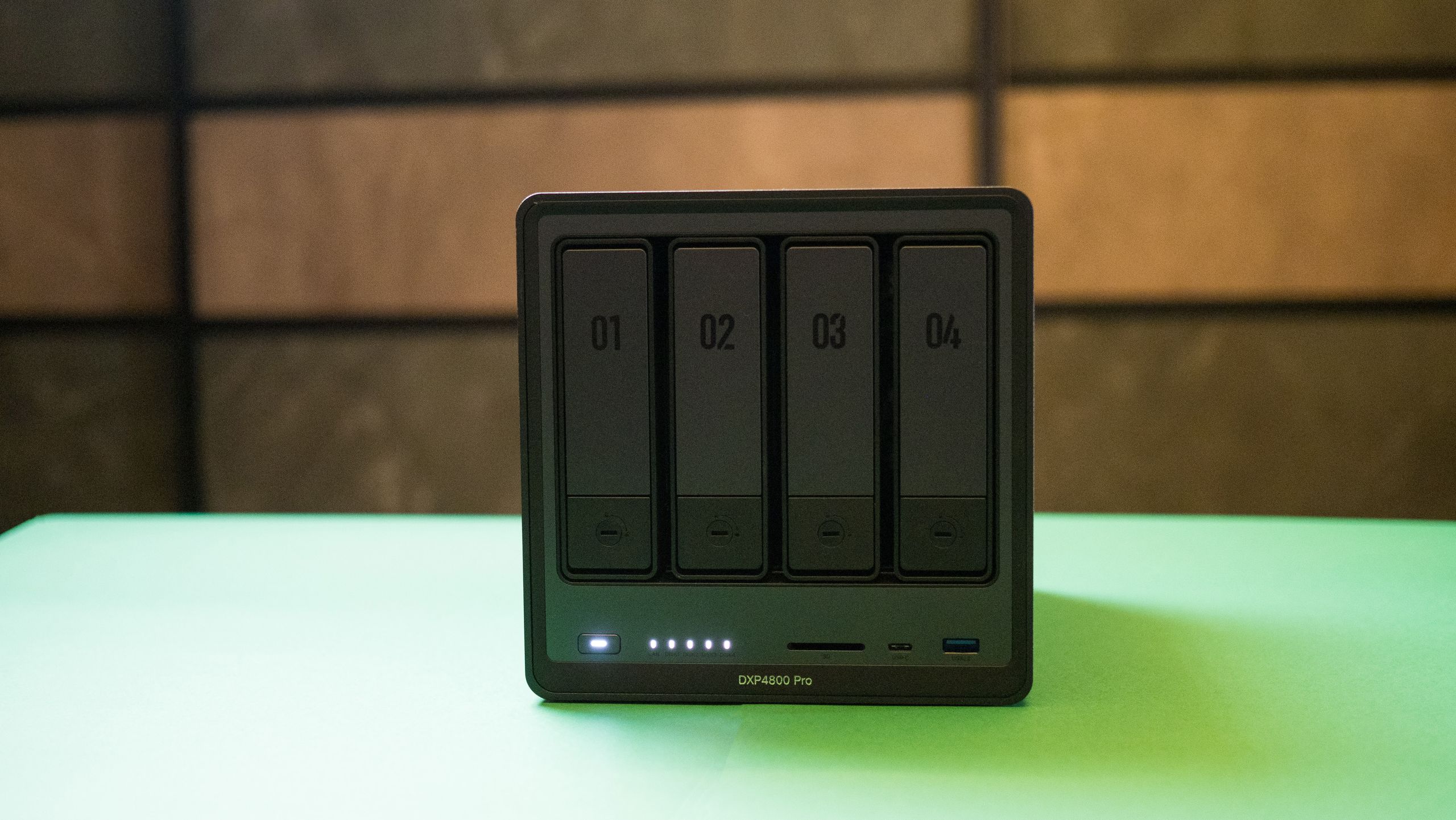
I Tested the UGREEN DXP4800 Pro NAS for Three Months and It Is the Ultimate Plex Media Server
After three and a half months of rigorous operational stress testing spanning over 2,500 hours and 54TB of data writes, the UGREEN DXP4800 Pro 4-bay network-attached storage system has emerged as a powerhouse for home server architectures. According to hardware testing published by Android Central, this enthusiast-grade NAS combines an Intel Core i3-1315U processor with 10 Gigabit Ethernet connectivity, delivering sustained media transcoding and high-bandwidth performance suitable for demanding homelab deployments.
The Tech TL;DR:
- Hardware Specs: Powered by an Intel Core i3-1315U with Intel Quick Sync hardware transcoding, 8GB of base memory, two NVMe M.2 slots, and a 10GbE networking port.
- Stress Testing: Survived 2,500 hours of continuous uptime and 54TB of sequential data writes using Seagate Exos X24 and IronWolf Pro hard disk drives.
- Software Ecosystem: Runs UGOS Pro with robust support for Docker containerization, allowing stable execution of Plex, Jellyfin, Roon, Immich, and Tailscale services.
Under-the-Hood Architecture and Hardware Benchmarks
Evaluating an enthusiast NAS requires looking past marketing buzzwords to examine silicon capability, thermal dissipation limits, and bus speeds. The DXP4800 Pro relies on the Intel Core i3-1315U, a platform featuring integrated Intel Quick Sync video architecture that handles hardware-accelerated transcoding for high-bitrate media streaming.
For storage capacity and throughput, the unit houses four drive bays. During the evaluation period, the unit was populated with two 24TB Seagate Exos X24 drives and two 22TB IronWolf Pro NAS HDDs. Utilizing a 10GbE switch connection linking an existing server to the DXP4800 Pro, file transfers routinely saturated the mechanical drives’ maximum sequential limits, hitting aggregate transfer speeds up to 580MB/s for large files while maintaining an average of 120MB/s for document and image sets.
Thermal management under sustained input/output loads remains a critical vector for drive longevity. The internal 140mm cooling fan kept the hard disk drives below 48 degrees Celsius during continuous multi-terabyte data migration runs. Baseline power draw hovered between 24W and 28W at idle, scaling to 60W during active drive read-writes, and peaking over 85W under heavy CPU and network load, well within the safety margins provided by the external 150W power brick.
Containerization, Memory Management, and UGOS Pro
Deploying a modern NAS demands flexible software orchestration beyond proprietary GUIs. While UGREEN’s web-based UGOS Pro operating system features native application packaging, advanced administrators frequently pivot to containerization for granular resource control. According to deployment logs, services including Plex, Jellyfin, Roon, Immich, and Tailscale were deployed via Docker to maintain system stability and isolate resource consumption.
The unit ships with 8GB of pre-installed DDR5/DDR4 system memory, leaving approximately 3.2GB of free RAM even with eight distinct services running continuously in containers. For administrators wishing to run multiple virtual machines, the memory architecture is upgradeable. Installing a 16GB DRAM module expanded total system memory to 24GB, providing substantial headroom for hypervisor workloads.
# Example Docker Compose manifest for deploying Plex and Jellyfin on UGOS Pro
version: '3.8'
services:
  plex:
    image: lscr.io/linuxserver/plex:latest
    container_name: plex
    network_mode: host
    environment:
      - PUID=1000
      - PGID=1000
      - VERSION=docker
    devices:
      - /dev/dri:/dev/dri
    volumes:
      - /volume1/docker/plex/config:/config
      - /volume1/media:/media
    restart: unless-stopped

  jellyfin:
    image: lscr.io/linuxserver/jellyfin:latest
    container_name: jellyfin
    restart: unless-stopped
    ports:
      - 8096:8096
    volumes:
      - /volume1/docker/jellyfin/config:/config
      - /volume1/media:/media
Data Integrity, Storage Pools, and Enterprise Triage
Long-term data integrity requires deliberate storage pool configuration. While mirrored configurations are standard practice to protect against single-drive mechanical failures, this test environment utilized a JBOD setup because the underlying datasets were simultaneously mirrored across independent off-site backup targets. Rsync utility scripts managed the phased migration of 54TB of data over a ten-day window, avoiding bus saturation while verifying file checksums.
When deploying high-density storage arrays into production environments, ensuring zero data loss requires rigorous oversight. Furthermore, implementing secure remote access via encrypted overlays like Tailscale ensures that management interfaces are never exposed directly to the public internet.
*Disclaimer: The technical analyses and security protocols detailed in this article are for informational purposes only. Always consult with certified IT and cybersecurity professionals before altering enterprise networks or handling sensitive data.*