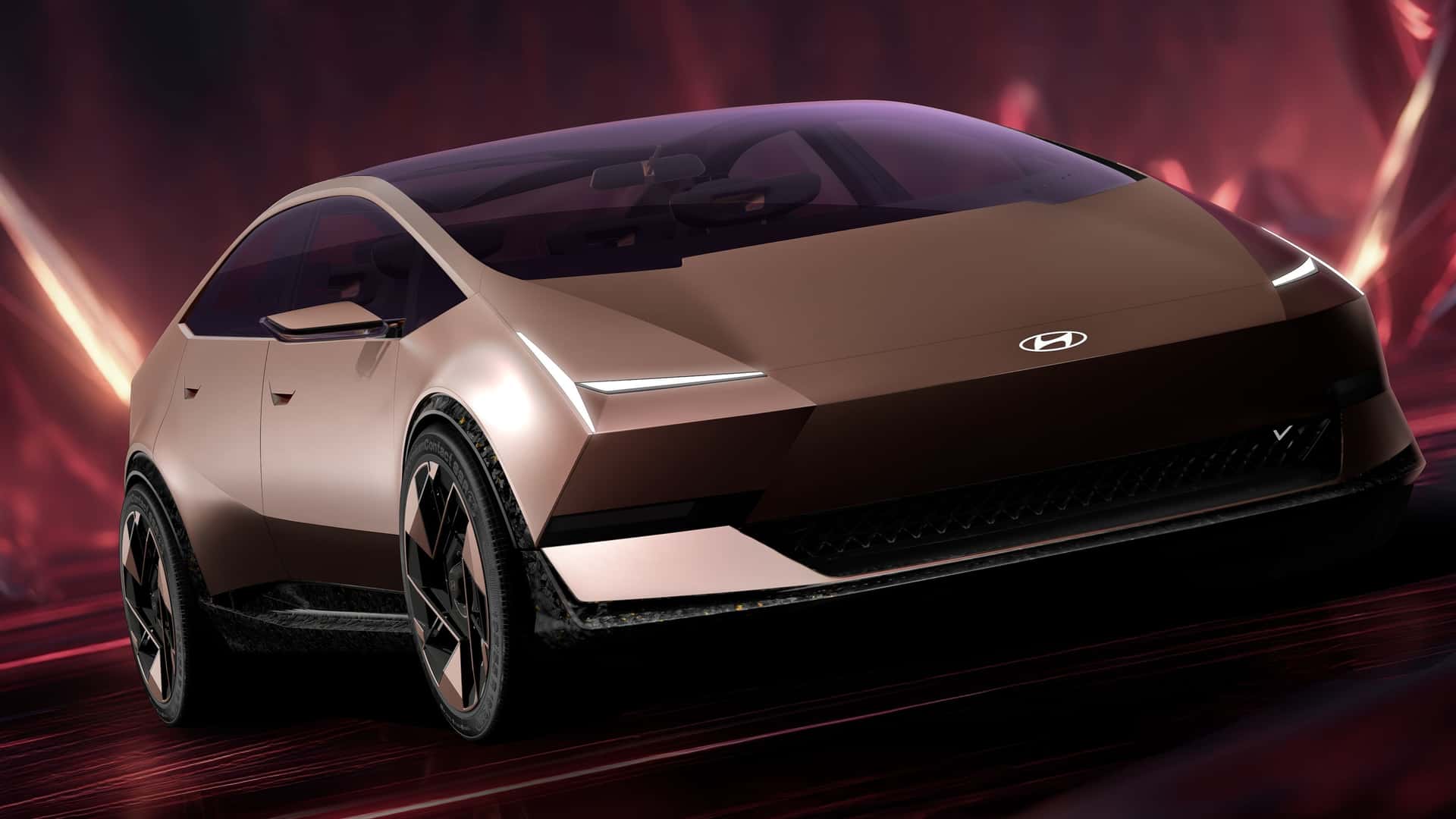
Hyundai Unveils Two New Solar-Themed IONIQ EV Concepts for China
Hyundai Motor Company has unveiled two solar-system-themed Ioniq concepts—the “Earth” sedan and “Venus” SUV—specifically for the Chinese market. This strategic pivot aims to recapture market share in the world’s largest EV arena by leveraging avant-garde design to differentiate against aggressive domestic competitors like BYD and Xiaomi.
The fiscal reality is stark: Hyundai is fighting for oxygen in a region where price wars have decimated margins. Launching “concepts” isn’t just about aesthetics; it’s a hedge against the commoditization of the Electric Vehicle (EV) segment. When hardware becomes a commodity, brand equity and design language become the only levers left to pull for premium pricing. For the C-suite, this is a desperate play for “design leadership” to avoid a race to the bottom in pricing.
This shift creates a massive operational headache. Rapidly pivoting design languages for specific regional markets requires an agile supply chain and airtight intellectual property protections. Companies attempting this level of regional customization often find themselves bogged down by regulatory friction, necessitating the expertise of international trade law firms to navigate the complexities of Chinese automotive standards and data sovereignty laws.
The Capital Allocation Gamble in the East
Looking at the broader financial picture, Hyundai’s move comes at a time of extreme volatility in the global automotive sector. According to the latest Hyundai Investor Relations reports, the company has been aggressively diversifying its powertrain strategy to balance the slower-than-expected adoption of pure BEVs (Battery Electric Vehicles) with hybrid growth. However, China remains the “final boss” of EV penetration.

The “Earth” and “Venus” concepts are more than just sketches; they represent a capital expenditure (CapEx) bet on the “premium-tech” buyer. By targeting a niche of design-conscious consumers, Hyundai is attempting to protect its EBITDA margins from the brutal discounting currently seen in the mass-market segments. If they can successfully position the Ioniq line as a luxury lifestyle brand rather than a utility vehicle, they can sustain a higher Average Selling Price (ASP) despite the saturation of the market.
“The Chinese consumer is no longer buying a car; they are buying a mobile living space. Hyundai’s shift toward conceptual, theme-based design is a direct response to the ‘tech-first’ approach of NIO and XPeng. The risk is whether this design language translates into scalable production without ballooning the cost of goods sold (COGS).”
The cost of failure here is high. A misstep in regional product-market fit leads to bloated inventory and heavy write-downs. To mitigate this, automotive giants are increasingly relying on market research and consumer analytics firms to validate these bold design directions before they hit the assembly line.
The Macro Breakdown: Why China, Why Now?
- Market Saturation & Price Elasticity: With BYD dominating the low-to-mid range, foreign OEMs (Original Equipment Manufacturers) cannot compete on cost. They must compete on “perceived value.” These concepts are a psychological play to reset the brand’s value proposition.
- The Software-Defined Vehicle (SDV) Pivot: The “solar system” theme likely masks a deeper integration of AI and cockpit technology. In China, the car is an extension of the smartphone. Hyundai is racing to integrate local ecosystems (Alibaba, Tencent) into their UX to prevent churn.
- Inventory De-risking: By teasing concepts, Hyundai gauges consumer sentiment without committing to full-scale tooling for a model that might flop. It’s a low-cost way to test the “appetite” for new aesthetics before allocating billions in CapEx.
This is a high-stakes game of liquidity and timing. The current yield curve suggests a cautious approach to long-term debt, meaning Hyundai must fund these regional expansions through internal cash flows or strategic partnerships rather than expensive new bond issuances.
Supply Chain Fragility and the Quest for Scale
The transition from a “concept” to a “production” model is where most automotive strategies die. The “Venus” SUV, for instance, requires specific materials and lighting arrays that could introduce new bottlenecks in the semiconductor or rare-earth magnet supply chains. Given the ongoing geopolitical tensions and “de-risking” strategies adopted by Western and Asian firms, sourcing these components is a logistical nightmare.
To maintain a lean manufacturing process, firms are shifting away from traditional procurement toward integrated supply chain management consultants who can optimize “just-in-time” delivery while hedging against regional lockdowns or trade tariffs. Without this, the “sharp” look of the Ioniq concepts will be blunted by delivery delays and quality control failures.
The financial stakes are reflected in the stock’s volatility. Investors aren’t looking for “pretty cars”; they are looking for a sustainable path to 10%+ operating margins in a market where the average is plummeting. If the Ioniq concepts fail to trigger a surge in pre-orders, the market will view this as a costly vanity project rather than a strategic pivot.
“We are seeing a fundamental shift in how OEMs approach the Chinese market. The era of ‘global models’ is dead. The future is ‘hyper-regionalization,’ where the car is designed, sourced, and marketed within a 500-mile radius of the end consumer.”
The Bottom Line: Design as a Fiscal Shield
Hyundai is playing a dangerous but necessary game. By leaning into the “Earth” and “Venus” motifs, they are attempting to decouple their brand from the utilitarian image of the early EV era. They are selling a vision of the future to avoid the reality of the present: a crushing price war and a consumer base that is increasingly loyal to domestic Chinese brands.
The success of this gamble depends entirely on the execution of the rollout in the coming fiscal quarters. If the production versions of these concepts can maintain the “wow factor” while keeping production costs stable, Hyundai may find a sanctuary for its margins in the premium segment.
For the broader business community, this is a lesson in adaptive strategy. Whether you are an automotive giant or a scaling startup, the ability to pivot your value proposition in the face of market saturation is the only way to survive. Finding the right partners—from legal experts to logistics maestros—is the difference between a successful launch and a costly footnote. Navigate these complexities by sourcing vetted partners through the World Today News Directory, where we bridge the gap between corporate volatility and operational stability.