
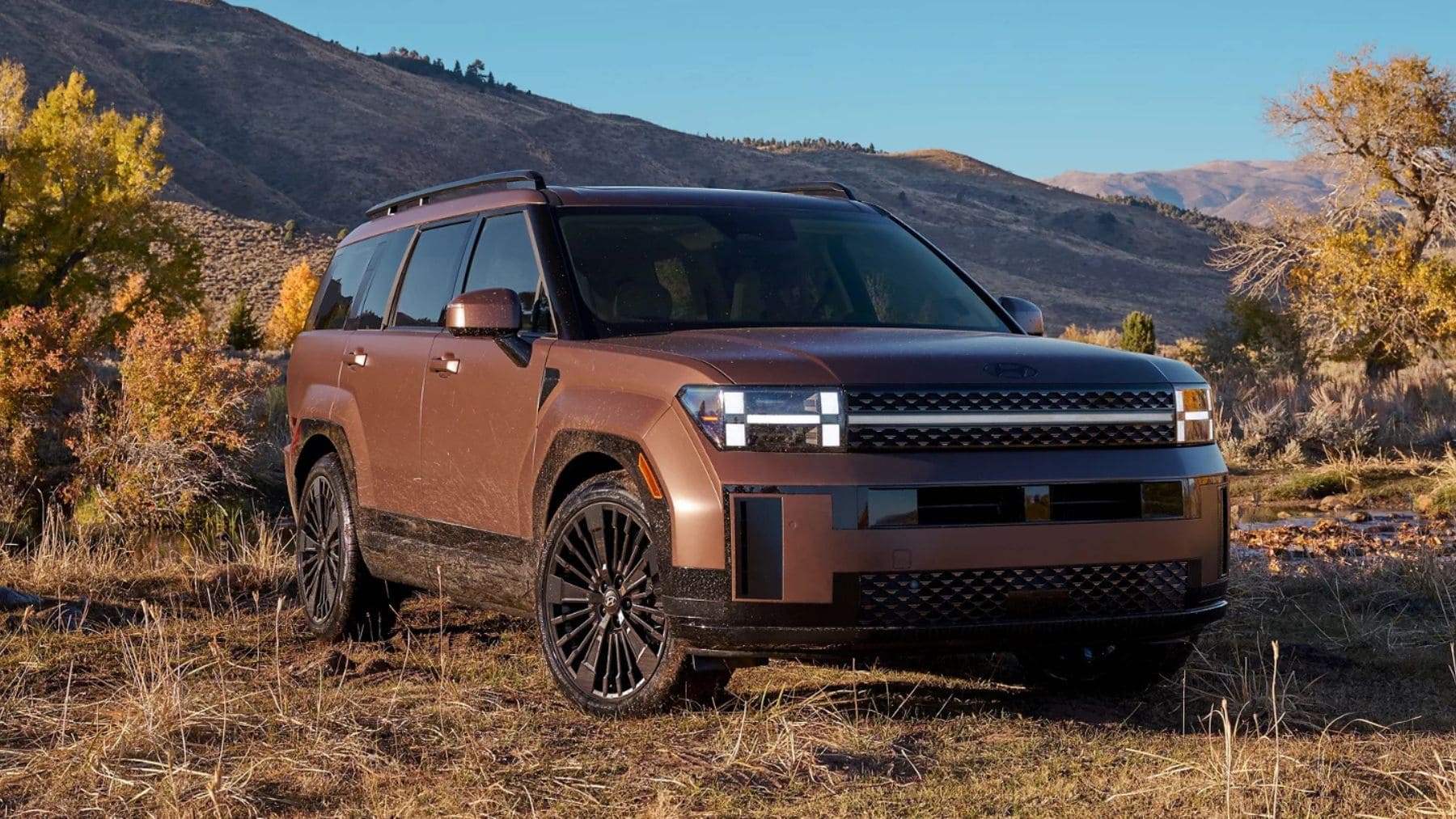
Hyundai Santa Fe PHEV 2026: Limited Range Raises Doubts | SUV Review
Hyundai’s 2026 Santa Fe PHEV launches with a critical deficit: its 54 km electric range lags behind the Skoda Kodiaq’s 100+ km standard, threatening the fiscal efficiency of corporate fleets relying on “ZERO” emission tax incentives. While the 288 CV powertrain offers performance, the 13.8 kWh battery capacity fails to meet the operational demands of modern enterprise mobility, forcing CFOs to reassess total cost of ownership models against rising fuel volatility.
The automotive sector in 2026 is no longer just about horsepower; it is a game of balance sheet optimization. Hyundai Motor Company has rolled out the updated Santa Fe with the intention of dominating the family SUV segment, banking on a aggressive design and a comprehensive equipment list to sway buyers. However, from a capital allocation perspective, the vehicle presents a paradox. It carries the coveted DGT “ZERO” label, a critical asset for corporate procurement teams navigating the restrictive low-emission zones of Madrid and Barcelona, yet its underlying asset utility is compromised by an anemic battery architecture.
In the boardroom, the conversation shifts quickly from aesthetics to amortization. The Santa Fe PHEV relies on a 13.8 kWh battery pack. In real-world operational conditions—factoring in climate control, payload, and highway velocities—this translates to a functional electric range of merely 35 to 40 kilometers. For a corporate fleet manager, this is a liability. It forces the internal combustion engine to engage prematurely, eroding the fuel savings that justified the premium acquisition cost in the first place.
Contrast this with the competitive landscape. The Skoda Kodiaq PHEV, a direct peer in the seven-seat utility segment, has standardized battery capacities that push electric-only autonomy past the 100-kilometer threshold. This isn’t just a spec sheet victory; it is a fundamental divergence in asset longevity and operational expenditure. When a vehicle can complete a full day of urban logistics on electric power alone, the marginal cost of travel drops precipitously. The Santa Fe, by comparison, remains tethered to fossil fuel volatility.
“We are seeing a bifurcation in the PHEV market where ‘compliance cars’ are losing ground to ‘operational assets.’ If the electric range doesn’t cover the daily duty cycle, the tax incentive becomes a mirage rather than a margin driver.” — Senior Automotive Analyst, Global Institutional Research
The fiscal implications extend beyond the pump. In Spain, the “ZERO” label offers significant advantages in circulation taxes and access to restricted zones. However, regulatory frameworks are tightening. As municipalities move toward stricter enforcement of actual emission data rather than homologated figures, vehicles that rely heavily on their combustion engines despite holding a green label may face future scrutiny. This regulatory risk creates a vacuum for specialized corporate tax advisory firms that can model the long-term viability of these assets against potential policy shifts.
The Total Cost of Ownership Discrepancy
Hyundai lists the entry point for the Santa Fe at approximately €50,000. On paper, this undercuts the premium German rivals. Yet, when analyzing the Total Cost of Ownership (TCO) over a standard three-year lease cycle, the math becomes precarious. The lower battery capacity necessitates more frequent charging cycles or, more likely, increased fuel consumption. In a high-interest rate environment, where the cost of capital for fleet financing remains elevated, every percentage point of efficiency matters.
According to data trends observed in recent Hyundai Motor Company investor reports, the group is pushing hard on electrification volume. However, volume does not always equate to value retention. Residual values for PHEVs are increasingly tied to battery health and electric range. A vehicle that is perceived as “technologically obsolete” upon launch due to low range will suffer steeper depreciation curves, impacting the bottom line of any leasing company holding the asset.
This is where the role of enterprise fleet management solutions becomes critical. Organizations can no longer rely on manufacturer brochures for procurement decisions. They require granular data analysis that simulates specific route profiles against vehicle capabilities. If a company’s average daily route is 60 kilometers, the Santa Fe PHEV is financially inefficient. If the route is 30 kilometers, the equation changes. The disconnect lies in the blanket application of “green” labels without operational due diligence.
Supply Chain and Battery Economics
Why did Hyundai opt for a smaller battery? The answer likely lies in supply chain constraints and margin protection. Lithium-ion cell costs, while stabilizing, remain a significant portion of the BOM (Bill of Materials). By utilizing a 13.8 kWh pack rather than a 20+ kWh unit, Hyundai protects its EBITDA margins on this specific model. They are betting that the average consumer prioritizes the upfront purchase price over the long-term operational efficiency.
However, the B2B market is smarter than the average consumer. Corporate buyers understand that a cheaper upfront cost often masks a higher lifetime expense. This dynamic is forcing a reevaluation of procurement strategies across Europe. Companies are increasingly turning to supply chain consulting firms to audit their vendor relationships, ensuring that the automotive partners they choose are aligned with long-term sustainability goals, not just short-term compliance.
- Operational Risk: The 35-40 km real-world range creates a dependency on fuel infrastructure, negating the “electric-first” strategy of many ESG mandates.
- Regulatory Exposure: Future urban planning may penalize PHEVs that do not meet minimum electric-only distance thresholds, regardless of their current label.
- Asset Depreciation: As 100km+ range becomes the segment standard, sub-60km PHEVs will face accelerated residual value erosion.
The Santa Fe remains a robust machine. With 288 CV and standard all-wheel drive, it offers the utility and comfort that large families and field service teams require. The interior technology, featuring 12.3-inch displays and premium Bose audio, meets the expectations of a modern executive vehicle. But in the 2026 market, hardware excellence is table stakes. The differentiator is energy architecture.
Hyundai is gambling that the “ZERO” label is enough to sell the car. They are betting on the bureaucracy of taxation rather than the physics of mobility. For the individual buyer, this might be an acceptable trade-off. For the institutional buyer, it is a red flag. The market is shifting from “compliance buying” to “efficiency buying.” The Kodiaq and its peers understand this; the Santa Fe, in its current configuration, is playing catch-up in a race that has already moved to the next lap.
As we move through Q2 of 2026, expect to see a correction in fleet orders. The initial surge of “green” procurement will settle into a more rigorous analysis of utility. Companies that fail to audit their mobility assets against actual usage patterns will find their ESG reports filled with hollow metrics. The solution lies not just in buying the right car, but in partnering with the right sustainability reporting and advisory partners who can validate the true carbon footprint of the fleet.
The Santa Fe is a strong contender, but in the high-stakes game of corporate finance, “strong” is not enough. It must be efficient. Until the battery capacity aligns with the segment leaders, the Santa Fe PHEV remains a compromised asset—a vehicle with a green label but a gray balance sheet.