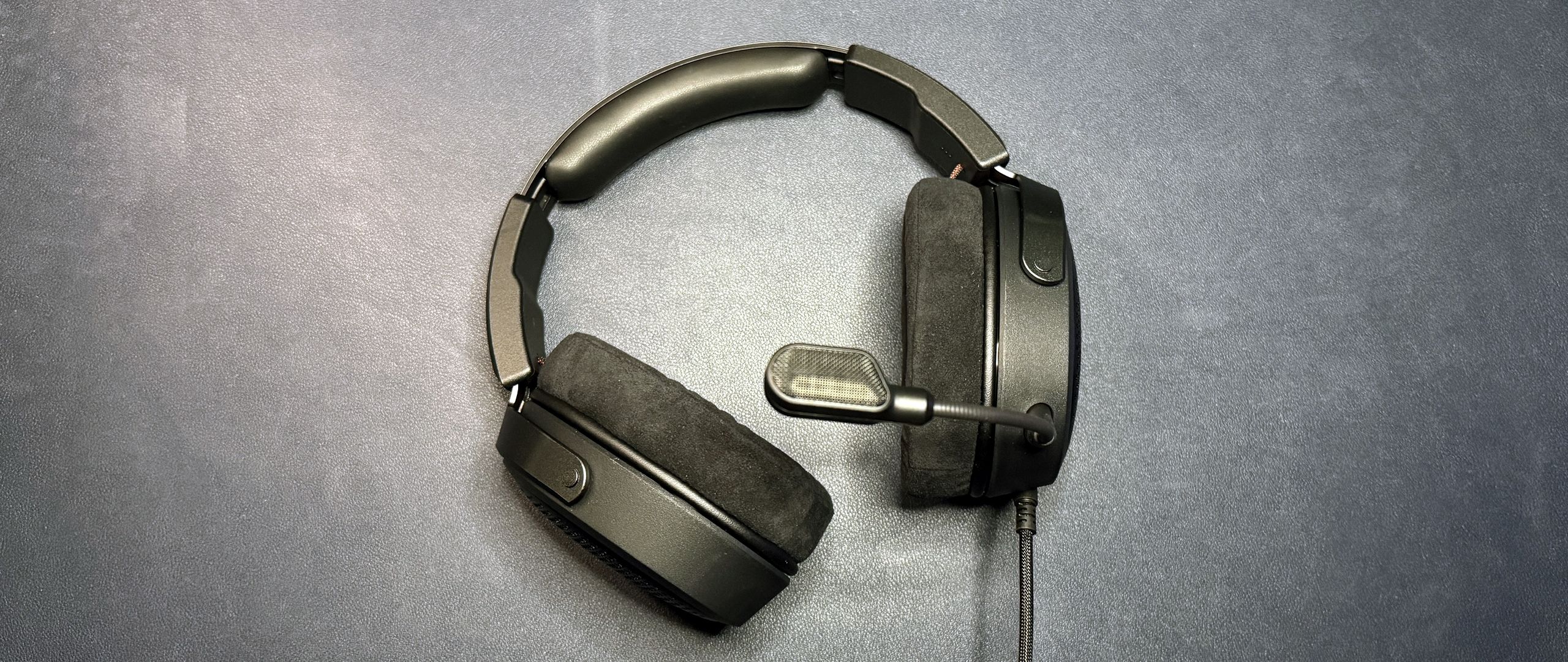
HyperX Cloud Alpha Air Review: Budget-Friendly Open-Back Gaming Performance
HyperX Enters the Open-Back Market With the $149.99 Cloud Alpha Air
HyperX has entered the open-back gaming headset market with the release of the Cloud Alpha Air, priced at $149.99. Tom’s Hardware reported that the wired over-ear headset joins existing open-back models like the $200 Corsair Virtuoso Pro, the $180 Turtle Beach Atlas Air, and the $900 Audeze LCD-GX. Designed for breathability and spatial audio immersion, the new unit incorporates dynamic 40mm drivers and a specialized acoustic tube to maintain low-frequency response without sealing the acoustic chambers.
The Tech TL;DR:
- Acoustic Design: Features a perforated matte-black ventilation grille on each earcup to eliminate ear pressure buildup and heat, though it offers minimal sound isolation.
- Low-End Mitigation: Integrates a proprietary HyperX Bass Tube to preserve sub-bass presence—an acoustic hurdle typically faced by open-back form factors.
- Connectivity & Weight: Operates entirely wired via a modular 3.5mm and USB-C/A cable ecosystem, weighing approximately 10 ounces (283 grams) without the detachable boom microphone.
Weight Distribution and Hardware Specifications Compared
Tom’s Hardware noted that the Cloud Alpha Air weighs roughly 10 ounces (283 grams) with the boom microphone detached, scaling up to nearly 10.6 ounces with all cables and the 10mm uni-directional mic attached. This makes it slightly lighter than Turtle Beach’s Atlas Air. Hardcore Droid cited an operational weight of 10.1 ounces (287 grams) with the boom attached during 2-3 hours gaming sessions. Both outlets confirm the chassis relies on a padded steel headband paired with aluminum-reinforced yokes, resulting in a rigid framework that uses thick memory foam earcups wrapped in Ultrasuede.
HyperX Bass Tube Maintains Low Frequencies
The core engineering challenge of open-back architecture involves air moving freely through the earcups, which typically causes low-frequency sound waves to dissipate. To counteract this, Tom’s Hardware observed that the Cloud Alpha Air utilizes a built-in HyperX Bass Tube to keep the low end present. Hardcore Droid noted that this hardware addition successfully generates punchy bass during game play tests such as barrages in Helldivers, though closed-back alternatives like the Razer BlackShark V3 Pro maintain superior sub-bass depth.
Music performance benefits from a mostly neutral sound profile featuring bright highs and a full mid-range. Tom’s Hardware highlighted that mid-range-heavy tracks like K-931’s Lonely World and Enya’s Orinoco Flow sound dynamic due to the widened soundstage afforded by the perforated grilles. However, the open-back trade-off remains acoustic leakage; players operating in noisy home environments will hear external room audio clearly, just as nearby individuals will hear bleeding game audio.
# Verifying USB Audio Device State on Linux Workstations
cat /proc/asound/cards
lsusb -v | grep -A 6 "HyperX Cloud Alpha Air"
aplay -l
Wired Cables Offer Reach but Software Fails
Hardcore Droid confirmed that the Cloud Alpha Air launched as a purely wired audio solution. The hardware package ships with a 4-foot 3.5mm primary cable, a 4.5-foot 3.5mm to USB-C extension featuring a USB-A converter, and a 3.5-foot PC extension cable dividing audio and microphone streams. Tom’s Hardware pointed out that while this modular extension system yields an 8-to-8.5-foot reach, the junction point introduces noticeable weight in the middle of the cabling setup.

Configuration utility encounters remain an operational hurdle. Tom’s Hardware reported an inability to get HyperX’s Ngenuity peripheral software to recognize the Cloud Alpha Air, preventing adjustment of microphone input gain or onboard EQ profiling during testing. While physical controls on the headset include a volume wheel on the right earcup and a microphone mute button on the left earcup, Tom’s Hardware noted that pressing the mute button introduces a minor auditory blip into audio recordings, and the built-in red indicator LED is too dim to easily monitor peripheral status.
Evaluating the Open-Back Value Proposition
The open-back market traditionally demands a higher financial investment, leaving budget-conscious buyers with few choices outside of closed-back isolation designs. By bringing an open-back spatial soundstage down to $149.99, the hardware fills a notable gap between sub-50 dollar alternatives and high-end audiophile gear. Yet, the lack of active noise cancellation and the absence of software recognition in Ngenuity mean enterprise users and competitive gamers must weigh whether open-world immersion outweighs environmental noise bleed.
The new Cloud Alpha Air purports to offer on the one hand, the comfort and natural soundstage that makes open-back headphones so popular, while at the same time eliminating ear pressure buildup.
For now, users running multi-hour audio sessions must rely strictly on analog connections and default gain thresholds.
Disclaimer: The technical analyses and security protocols detailed in this article are for informational purposes only. Always consult with certified IT and cybersecurity professionals before altering enterprise networks or handling sensitive data.