Hungary Secures €16 Billion EU Funds: Magyar’s Breakthrough in Brussels
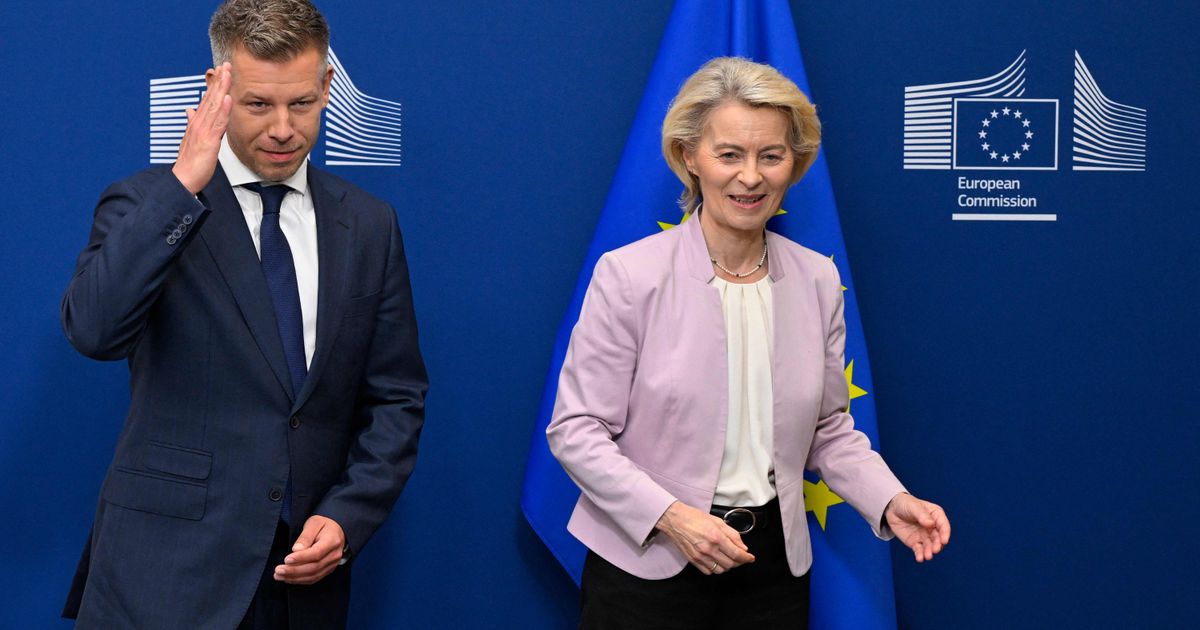
European Commission President Ursula von der Leyen confirmed on Friday, May 29, 2026, that the European Union will unlock €16.4 billion in frozen recovery and cohesion funds for Hungary. This diplomatic breakthrough follows talks with new Prime Minister Péter Magyar, signaling a significant recalibration of Budapest’s relationship with Brussels after years of systemic gridlock.
The release of these funds represents more than a simple fiscal transfer; This proves a fundamental shift in the geopolitical architecture of Central Europe. For years, the previous administration in Budapest maintained a confrontational posture toward the European Commission, centering on disputes over judicial independence, the rule of law, and divergent policies regarding the ongoing conflict in Ukraine. The current unfreezing of capital—structured as €10 billion from the Next Generation EU recovery fund, €4.2 billion in cohesion funds, and a conditional €2.2 billion tranche tied to further reforms—marks the end of a prolonged period of economic isolation for the Hungarian state.
For multinational corporations and institutional investors, this transition is a signal to re-evaluate risk profiles in the Visegrád region. When sovereign credit and structural funding are subject to the volatility of political friction, the cost of capital for firms operating within those borders inevitably spikes. As the regulatory climate in Budapest begins to align more closely with EU standards, international enterprises are looking to stabilize their regional operations.
Those managing complex cross-border supply chains or seeking to mitigate the risks associated with shifting regulatory landscapes are already engaging specialized geopolitical risk consultants. These firms are essential for navigating the transition from a period of sanctions and frozen assets to one of renewed market integration.
The European Union’s decision to release these funds serves as a pragmatic acknowledgment that the cost of sustained political alienation outweighs the utility of punitive financial measures. By linking the remaining €2.2 billion to specific reform milestones, Brussels is moving from a model of outright confrontation to one of conditional, performance-based governance.
The Macro-Economic Ripple Effects of Re-Integration
The influx of over €16 billion into the Hungarian economy is expected to have immediate implications for foreign direct investment (FDI). Hungary’s manufacturing sector, particularly its automotive and electronics supply chains, has long been integrated into the broader German industrial apparatus. The freezing of funds had created a “shadow” risk premium for investors, who feared that further diplomatic fallout could lead to secondary sanctions or restrictive trade barriers.

With the path to funding now cleared, the focus shifts to the legislative mechanics of reform. Prime Minister Magyar has committed to the necessary legal adjustments to satisfy the Commission’s requirements, a process that requires meticulous navigation of both domestic parliamentary procedures and European regulatory oversight. This is where the intersection of law and geopolitics becomes critical.
For firms tasked with navigating these new legal waters, the complexity of compliance is high. Organizations often find themselves in need of expert international trade counsel to ensure that their local assets and contracts are shielded from any residual volatility during the reform implementation phase. As the World Bank has consistently noted, the predictability of legal frameworks is the single greatest determinant of long-term capital stability in emerging European markets.
Shifting Power Dynamics in the European Council
The departure of the previous administration in Budapest fundamentally alters the voting blocs within the European Council. For years, the “Orban-era” policies on issues such as LGBTQ rights and judicial reform acted as a constant drag on EU consensus-building. With a new leadership in place, the diplomatic friction that once defined the EU-Hungary relationship is being replaced by a process of alignment.
This does not mean that ideological differences will vanish overnight, but the “transactional” nature of the new agreement suggests a move toward a more stable, albeit complex, partnership. The European Union, currently facing a myriad of external pressures ranging from energy security to defense manufacturing, requires a unified front in Central Europe. The “historic breakthrough,” as described by the Prime Minister in Brussels, is a calculated attempt to secure the capital necessary to modernize the Hungarian economy while simultaneously repairing the nation’s standing within the bloc.
However, geopolitical stability remains a moving target. As noted by the Council on Foreign Relations, the resilience of European institutions is tested most heavily when member states experience rapid shifts in executive leadership. Corporations must remain vigilant, as the transition from a populist-nationalist framework to a reform-oriented one can create short-term policy whiplash.
Navigating the Future: The Role of Strategic Advisory
The normalization of the relationship between Brussels and Budapest creates an environment where long-term planning is once again viable. For the global firm, this means the resumption of infrastructure projects, the expansion of research and development hubs, and the stabilization of labor markets. Yet, the risk of bureaucratic inertia remains. The “conditional” nature of the final €2.2 billion tranche implies that the work is far from finished.
In this high-stakes environment, the difference between success and failure often lies in the quality of one’s advisory network. Whether it is managing the nuances of European procurement laws or securing, the right partnerships are paramount. Global firms are increasingly turning to strategic advisory firms that specialize in Eastern and Central European markets to decode the signals coming out of Brussels and Budapest.

The geopolitical chessboard of Europe is currently in a state of rapid reconfiguration. The unfreezing of these funds is a pivotal move, but it is merely the opening gambit in a much larger game of regional stabilization. As the European Union moves to consolidate its influence in the face of global uncertainty, the ability of firms to adapt to this “new normal” will define the next cycle of economic growth in the region. The path ahead is clear for those who understand the levers of power and the necessity of expert guidance in a world where the only constant is the shift in alliances.