
Hungary Election: Leaks to Russia Spark Treason Claims & EU Concerns
Budapest – Hungary’s upcoming elections are being overshadowed by accusations of treason leveled against the government of Prime Minister Viktor Orbán, following reports that Foreign Minister Péter Szijjártó routinely shared confidential EU intelligence with his Russian counterpart, Sergei Lavrov. The allegations, first reported by the Washington Post last week, have ignited a political firestorm, with leading opposition candidate Péter Magyar calling for an investigation and the European Commission demanding clarification.
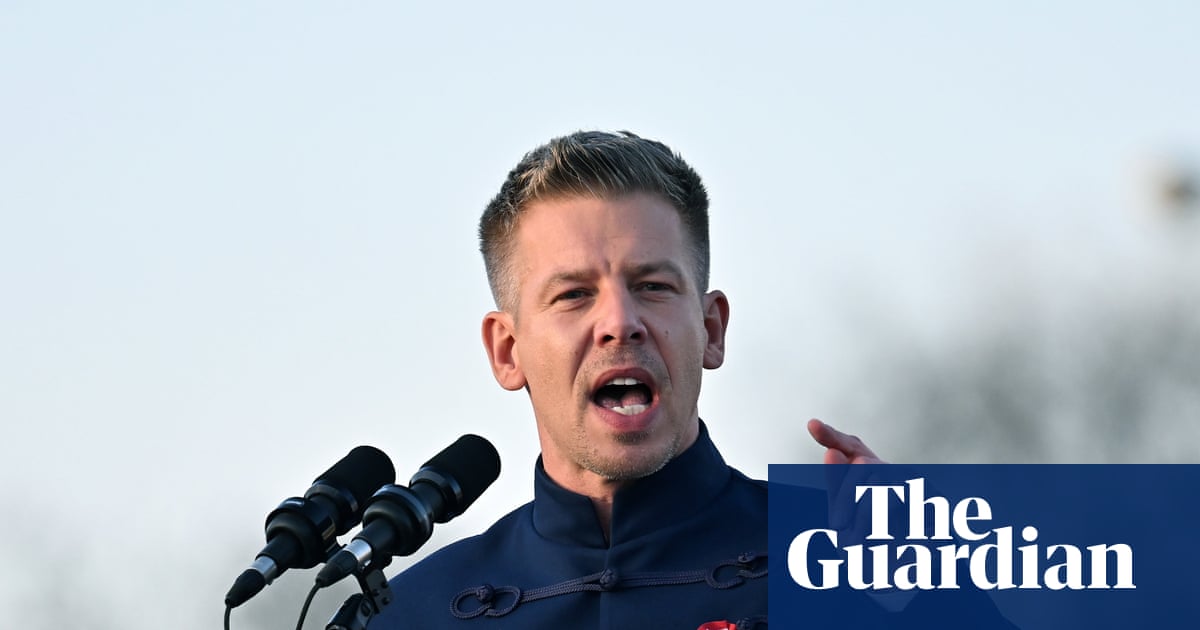
Magyar, whose Tisza party currently leads in polls ahead of the April 12th vote, stated on X (formerly Twitter) that if the reports are confirmed, Szijjártó’s actions would constitute treason, a crime punishable by life imprisonment in Hungary. “A future Tisza government will immediately investigate the matter,” he wrote. Magyar, a former member of Orbán’s Fidesz party, has positioned himself as a staunch anti-corruption campaigner and a challenger to Orbán’s 16-year rule.
The European Commission echoed Magyar’s concern, with spokesperson Anitta Hipper stating the reports were “greatly concerning” and calling on the Hungarian government to provide “clarifications.” “A relationship of trust between member states and between them and the institution is fundamental for the work of the EU,” Hipper said, emphasizing the importance of maintaining confidentiality within the bloc.
According to the Washington Post report, Szijjártó allegedly provided Lavrov with “live reports” during confidential EU meetings, including discussions on the war in Ukraine. Two diplomatic sources independently confirmed the information to the Guardian. Szijjártó, who received an award from Vladimir Putin in 2021, has dismissed the allegations as “fake news.”
The accusations come at a particularly sensitive time for Hungary’s relationship with the EU. Orbán has repeatedly clashed with Brussels over concerns about the rule of law and democratic backsliding within Hungary. Most recently, he blocked a proposed €90 billion EU loan package for Ukraine, a move that has further strained relations with European partners. Poland’s Prime Minister Donald Tusk publicly stated on social media that the alleged leaks were “no surprise” and that suspicions about Hungary’s communications with Moscow had existed for some time.
EU diplomats have indicated that they were not entirely surprised by the reports, suggesting a degree of existing distrust. Even as no immediate restrictions on Hungary’s access to information are currently in place, some diplomats have acknowledged becoming more cautious when Hungarian representatives are present at sensitive meetings. A German foreign ministry spokesperson affirmed that confidentiality within EU discussions is paramount and “we will not tolerate any violation of them.”
In response to the allegations, Orbán announced an investigation into what he termed the “wire-tapping” of Szijjártó. The inquiry was launched following a report in the pro-government publication Mandiner, which claimed that foreign intelligence agencies had eavesdropped on Szijjártó with the assistance of Hungarian journalist Szabolcs Panyi. Panyi, a leading investigative journalist in Hungary, has reported extensively on Russian influence operations within the country. He has dismissed the claims as a smear campaign designed to discredit his reporting on the alleged leaks.
Panyi previously revealed that former Slovakian Prime Minister Peter Pellegrini had sought Orbán’s assistance in securing an invitation to Moscow in 2020, as part of an effort to maintain power. He has also been the target of government surveillance, with his phone reportedly infected with Pegasus spyware.
Alongside the accusations of intelligence sharing, reports indicate the presence of disinformation networks, linked to Russia and identified as Operation Overload and Storm-1516, actively disseminating content online aimed at undermining Magyar’s Tisza party and falsely accusing Ukraine of interfering in the Hungarian elections.
EU officials do not anticipate Orbán altering his position on the Ukraine loan package before the April 12th elections. There is little appetite within the EU to retaliate against Orbán for the alleged leaks, with concerns that doing so could be exploited for political gain during the election campaign. Swedish Prime Minister Ulf Kristersson stated that while criticism of Orbán at a recent EU summit was “fierce,” other leaders were unwilling to “play along and become props in Orbán’s own Hungarian election campaign.”