
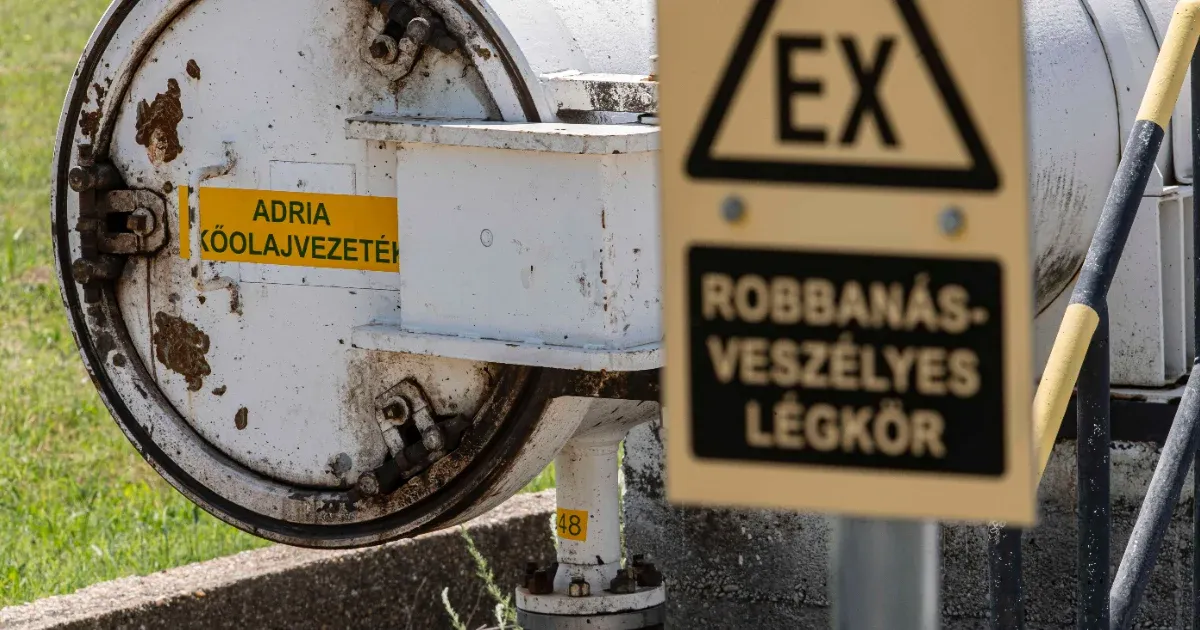
Budapest and Zagreb are locked in a dispute over the transit of Russian oil, with Hungary asserting its right to utilize the Adriatic pipeline as an alternative route following disruptions to supplies via the Druzhba pipeline. The conflict escalated after Ukrainian attacks damaged infrastructure connected to the Druzhba pipeline, prompting Hungary to seek alternative supply routes.
Hungarian Foreign Minister Péter Szijjártó stated that Hungary is not requesting a favor from Croatia by seeking to transport Russian oil through the Adriatic pipeline, but rather is invoking a European Union obligation. According to Szijjártó, EU regulations permit Hungary and Slovakia to procure Russian oil via sea routes if pipeline transit becomes impossible. He urged the Croatian government to facilitate the oil’s transport through its pipeline, adhering to existing EU regulations. “we jointly requested the Croatian government to allow the transport of Russian oil through the Croatian pipeline in accordance with the mandatory European rules applicable to it,” Szijjártó said.
The situation arose after Ukraine halted oil shipments through the Druzhba pipeline, citing political reasons. Szijjártó emphasized that if pipeline transit is obstructed, Hungary and Slovakia are entitled to purchase Russian oil by sea. He added that the Adriatic pipeline should be used for its intended purpose – as a supplementary route to the main eastern pipelines.
However, Croatia has reportedly been hesitant to approve the transport of Russian oil, citing existing oil sanctions. This reluctance prompted Szijjártó to publicly reiterate the EU’s obligations in such scenarios.
Ante Šušnjar, Croatia’s Minister of Economy, responded to Szijjártó’s demands with an ironic post on social media, seemingly questioning Hungary’s sudden embrace of EU law and European values. Šušnjar’s post suggests a degree of skepticism regarding Hungary’s motives and a pointed reminder of past disagreements between Hungary’s MOL and the Croatian company Janaf regarding the Adriatic pipeline’s capacity. Previously, MOL had contested the pipeline’s ability to deliver sufficient quantities of oil to Hungary and Slovakia, a claim Janaf disputed.
The European Commission is reportedly exerting pressure on Ukraine to restore operations of the Druzhba pipeline, but the situation remains unresolved. The Kremlin has similarly issued statements regarding oil supplies to Hungary, though the specifics of those statements remain closely monitored. Croatia’s position remains that it does not wish to facilitate the purchase of Russian oil by Hungary and Slovakia, viewing it as a means of supporting the Putin regime.
