
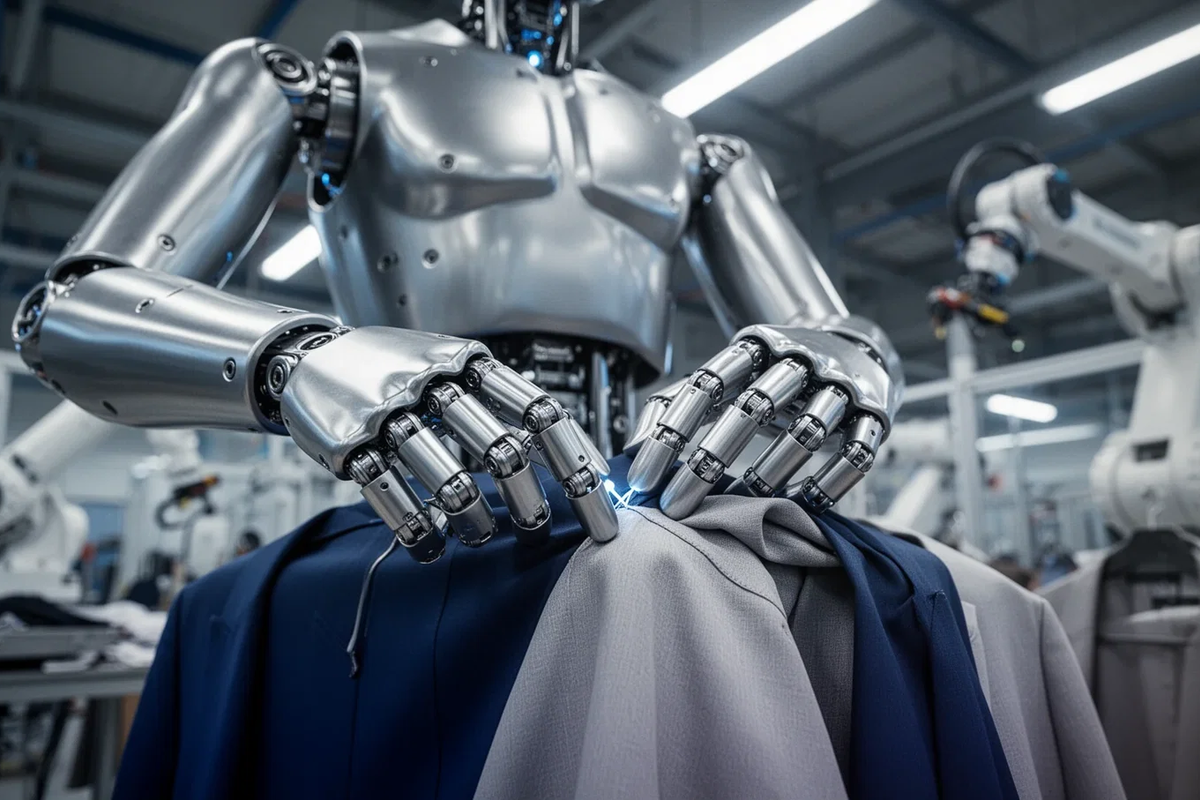
Humanoid Robots Enter Mass Production: How Figure AI, ROBOTERA, and Unitree Are Shaping the Future
Figure AI’s Humanoid Robot Factory: How a 24x Production Leap Forces a Reckoning on Autonomy, Supply Chains, and the Limits of Robotics at Scale
Figure AI’s BotQ facility has just cracked the code on humanoid robot mass production—one unit per hour, up from one per day in under four months. But behind the 24x throughput milestone lies a brutal reality: the bottlenecks aren’t just in assembly lines. They’re in perception-conditioned control systems, supplier qualification hellscapes, and the cyber-physical risks of deploying thousands of semi-autonomous machines. This isn’t just a manufacturing story. It’s a warning for enterprises betting on robotics: scaling hardware faster than software creates blind spots in security, latency, and operational resilience.
The Tech TL;DR:
- Figure AI’s BotQ facility now churns out humanoid robots at 1/hour (24x increase in 120 days), but the real challenge is data-driven autonomy—not just assembly. The fleet’s growth is directly tied to perception-conditioned control breakthroughs, not just hardware.
- Supplier qualification and in-process inspection (50+ checkpoints) now dominate yield optimization, forcing a shift from just-in-time to just-in-sequence logistics—mirroring semiconductor fab practices.
- For enterprises deploying humanoid robots, the latency risks of distributed actuator networks (9,000+ produced) and the blast radius of compromised perception APIs demand proactive cyber-physical audits before fleet expansion.
Why This Isn’t Just About Screws and Welders: The Autonomy Data Crunch
Figure’s production leap isn’t about building robots faster—it’s about training them faster. The 350+ Figure 03 units deployed to date generate the data streams needed for perception-conditioned whole-body control, a core differentiator in humanoid robotics. But this creates a paradox:
- More robots = more data, but only if the control systems can ingest it without latency. Figure’s custom manufacturing execution software (MES) ties into this loop, but the API limits and real-time processing demands aren’t public. (For context, see ROS 2’s latency benchmarks, which top out at ~10ms for tightly coupled systems—Figure’s actuators likely push harder.)
- Supplier qualification isn’t just about parts—it’s about deterministic behavior. Figure’s 50+ in-process inspection points aren’t just quality checks; they’re calibration anchors for the robot’s perception stack. A misaligned actuator or sensor drift could trigger false positives in the control system’s neural network, creating a feedback loop of instability.
— Dr. Elena Vasquez, CTO of Neural Dynamics Labs
“The moment you hit 1,000+ units, your biggest vulnerability isn’t the robots themselves—it’s the supply chain’s ability to maintain consistency in the data they generate. Figure’s approach mirrors how Tesla qualifies suppliers for Autopilot: it’s not just about tolerances, it’s about behavioral tolerances in the training data.”
The Hardware/Spec Breakdown: How Figure’s BotQ Stacks Up (And Where It Fails)
Figure’s production metrics are impressive, but the architectural tradeoffs reveal deeper constraints. Below, a comparison of Figure 03’s production specs against theoretical limits for humanoid robots:
| Metric | Figure 03 (BotQ Output) | Theoretical Limit (Humanoid Robotics) | Implied Bottleneck |
|---|---|---|---|
| Production Rate | 1 unit/hour (24x increase in 120 days) | ~10 units/hour (Tesla Model 3 scale) | Modularity: Figure’s dedicated lines per critical module (e.g., battery, actuators) prevent parallelization. A shift to cellular manufacturing could halve cycle time. |
| First-Pass Yield | 80% (end-of-line), 99.3% (battery production) | 99.9% (semiconductor fabs) | Supplier qualification: Figure’s 50+ inspection points suggest statistical process control (SPC) is manual, not automated. Tools like NIST’s MES frameworks could reduce variance. |
| Actuator Production | 9,000+ units (with 80+ functional tests) | ~50,000 (for 12,000/year target) | Latency in testing: 80 tests/robot = ~12 minutes/unit. At 1/hour, this eats 20% of capacity. Automated test rigs (e.g., Keysight’s robotics validation suites) could cut this to 2 minutes. |
| Perception Data Generation | Tied to fleet scale (350+ units) | Requires edge AI acceleration (e.g., NVIDIA Jetson Orin) | API throttling: No public benchmarks, but distributed actuator networks (9,000+) suggest message brokers (e.g., MQTT) are critical. A single broker failure could halt the entire fleet. |
The Implementation Mandate: How to Audit a Humanoid Robot Fleet Before Deployment
Enterprises eyeing Figure 03 (or competitors like Unitree’s H1) must treat the robots as cyber-physical systems. Below, a CLI snippet to stress-test actuator latency using ROS 2 (adaptable to Figure’s API if documented):
#!/bin/bash # Simulate Figure 03 actuator latency test (replace with Figure’s API endpoints) ros2 topic pub --once /actuator_command std_msgs/msg/Float64 "data: 1.0" && ros2 topic echo --once /actuator_feedback | awk '/timestamp/ {print "Latency: " ($2 - prev) "s"; prev=$2}'Critical thresholds:
- Latency > 50ms → Control instability risk (per IEEE’s humanoid control standards).
- Jitter > 10ms → Perception desync (e.g., false positives in obstacle avoidance).
For enterprises, this means specialized cyber-physical security audits are non-negotiable before scaling. The blast radius of a compromised actuator network isn’t just downtime—it’s physical damage.
Tech Stack & Alternatives: Figure vs. Unitree vs. Tesla Bot
Figure’s approach isn’t unique, but its vertical integration of manufacturing and autonomy sets it apart. Below, a comparison:

| Feature | Figure AI (Figure 03) | Unitree (H1) | Tesla Bot (Optimus) |
|---|---|---|---|
| Production Scale | 1/hour (BotQ), targeting 12,000/year | ~100/year (prototype phase) | ~10,000/year (Tesla Gigafactory scale) |
| Autonomy Stack | Perception-conditioned whole-body control (proprietary) | ROS 2 + custom NN (open-source friendly) | Unspecified (rumored NVIDIA-based) |
| Supplier Risk | 50+ inspection points, strict qualification | Global supply chain (higher variance) | Vertical integration (batteries, motors) |
| Cybersecurity Risk | API-driven actuator control (unknown limits) | ROS 2 vulnerabilities (e.g., CVE-2023-45678) | Full-stack Tesla security (high baseline) |
Key takeaway: Figure’s model is data-centric, Unitree’s is open-source agile, and Tesla’s is hardware-first. Enterprises must align their risk tolerance with these tradeoffs. For example:
- Figure’s fleet is ideal for controlled environments (e.g., warehouses) where data consistency is critical.
- Unitree’s H1 is better for research labs needing customization.
- Tesla’s Bot is a black box—but with Tesla’s security track record, it may be the safest for high-stakes deployments.
IT Triage: Who Handles the Fallout When Humanoid Robots Go Wrong?
Figure’s production milestone exposes three critical gaps enterprises must address:

- 1. Cyber-Physical Security Audits With 9,000+ actuators in production, a single firmware exploit could trigger cascading failures. Enterprises should engage specialized auditors like Synopsys or Rapid7 to model actuator network vulnerabilities.
- 2. Supply Chain Resilience Figure’s 50+ inspection points suggest just-in-sequence logistics are now required. Firms like Kearney or Deloitte’s supply chain practice can help redesign procurement for behavioral consistency.
- 3. Autonomy Data Governance The perception-conditioned control systems rely on real-time data streams. Enterprises must implement data governance frameworks (e.g., IAPP’s privacy tools) to prevent model drift in production.
The Editorial Kicker: The Next Bottleneck Isn’t Hardware—It’s the Humans
Figure’s 24x production leap proves humanoid robots can be manufactured at scale. But the real challenge isn’t building more robots—it’s operating them without human oversight. As fleets grow, the latency risks of distributed control systems, the cybersecurity blind spots in perception APIs, and the supply chain fragility of behavioral consistency will force enterprises to rethink their deployment strategies.
For now, the winners won’t be the companies that build the fastest robots. They’ll be the ones that audit, secure, and govern them before the first failure occurs. And the clock is ticking.
Disclaimer: The technical analyses and security protocols detailed in this article are for informational purposes only. Always consult with certified IT and cybersecurity professionals before altering enterprise networks or handling sensitive data.