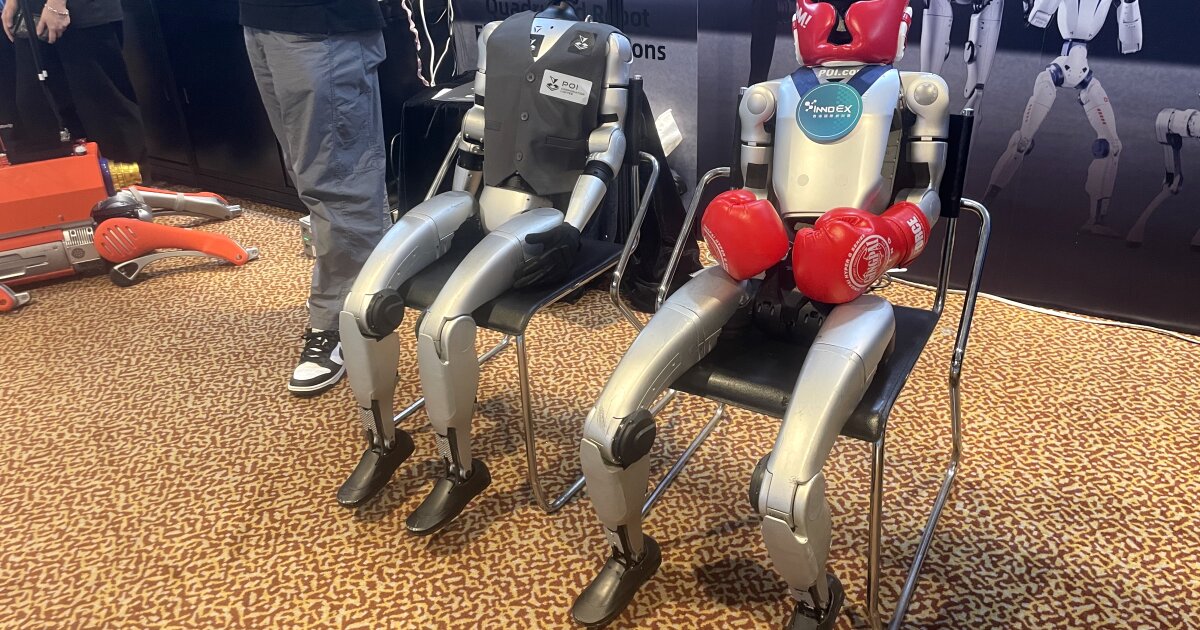
Humanoid Robots and AI Take Over Hong Kong’s InnoEX 2026 Expo
At Hong Kong’s InnoEX 2026, the convergence of over 100 humanoid robots, autonomous canine units, and specialized AI-driven hardware underscored a shift from laboratory research to industrial-grade deployment. While the floor was crowded with high-fidelity prototypes, the underlying architectural trend points toward a standardization of control systems and a push for real-world reliability in enterprise environments.
The Tech TL;DR:
- Humanoid robotics have moved past pure research; manufacturers are now prioritizing modular integration with existing enterprise software stacks.
- Hardware at InnoEX 2026 reveals a heavy reliance on edge-computing NPUs to minimize latency in real-time motor control loops.
- Organizations looking to pilot these systems must prioritize robust cybersecurity auditors to secure the expanded attack surface created by networked mechanical limbs.
Architectural Bottlenecks in Humanoid Deployment
The primary challenge for the current generation of humanoids presented at InnoEX is not mechanical articulation, but the latency involved in sensor-to-actuator feedback loops. Achieving fluid motion requires sub-10ms response times, necessitating high-performance SoCs capable of handling massive parallel processing workloads. Most units shown are currently shifting away from heavy cloud reliance, opting instead for local containerization of their inference engines to ensure consistent runtime behavior even when network connectivity is intermittent.

For engineering teams integrating these units, the current bottleneck remains the lack of a unified API standard for cross-platform hardware control. Without a standardized interface, deployment requires custom middleware, increasing the risk of technical debt. If your firm is exploring robotics integration, it is critical to engage software dev agencies specializing in ROS2 (Robot Operating System) to ensure long-term maintainability.
Hardware Performance Metrics and Thermal Constraints
Comparing the recent crop of humanoids to previous iterations reveals a clear focus on power efficiency. By optimizing for ARM-based architectures, manufacturers have significantly reduced thermal throttling during continuous operation. The following table outlines the approximate performance tiers currently observed in the high-end humanoid sector.

| System Tier | Primary Compute | Thermal Management | Target Industry |
|---|---|---|---|
| Industrial Grade | Multi-NPU Cluster | Active Liquid Cooling | Logistics & Warehousing |
| Service/Retail | High-Efficiency SoC | Passive Airflow | Customer Interaction |
| R&D/Prototype | General Purpose GPU | Standard Heat-sink | Academic Research |
Managing the Security Blast Radius
As these robots gain autonomy, they effectively become mobile IoT endpoints. An unpatched firmware vulnerability on a humanoid unit could provide an entry point into a secured corporate network. Protecting these assets requires more than basic firewalling; it necessitates a zero-trust architecture. Before integrating these machines into a production environment, IT leads must verify that the vendor provides secure, signed firmware updates and encrypted telemetry channels.
If you are managing a fleet of autonomous units, consider the following implementation pattern for securing communication between the robot’s onboard controller and your local Kubernetes cluster:
# Example: Secure API check for robot telemetry
curl -X GET https://robot-controller.local/api/v1/status
  -H "Authorization: Bearer [TOKEN]"
  -H "Content-Type: application/json"
  --cacert /etc/robot/certs/ca-bundle.crt
The Path to Production-Ready Robotics
The transition from InnoEX demonstration units to production assets requires a disciplined approach to maintenance. Many firms are currently finding that their internal IT infrastructure is ill-equipped to handle the high data throughput required for real-time vision processing and state estimation. Engaging managed service providers early in the deployment phase can mitigate the risk of catastrophic system failure during the scaling process.

The state of humanoid robotics in mid-2026 is defined by incremental hardening rather than radical invention. We are seeing the industry pivot toward reliability, safety certifications, and the slow but inevitable integration of these machines into the broader industrial ecosystem. Those who treat these robots as standard computing nodes—subject to the same rigorous security and maintenance protocols as any other server—will be the first to realize a tangible return on investment.
*Disclaimer: The technical analyses and security protocols detailed in this article are for informational purposes only. Always consult with certified IT and cybersecurity professionals before altering enterprise networks or handling sensitive data.*