
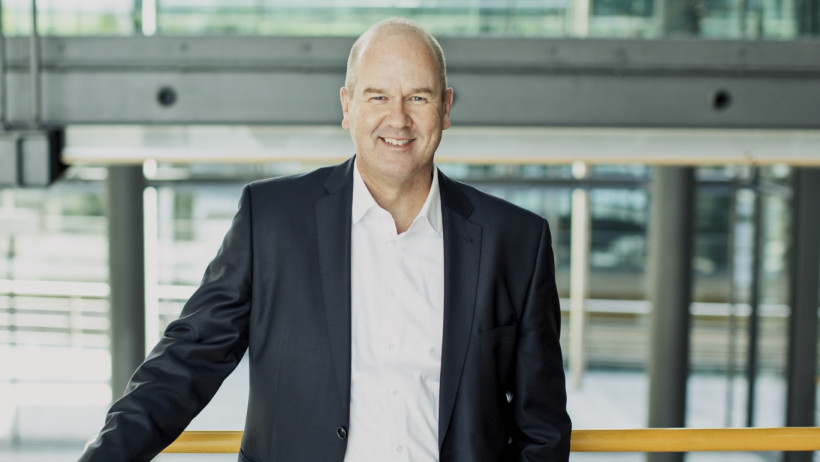
Huk-Coburg 2025: Most Successful Year in History With Record Profit
Huk-Coburg Posts 78% Profit Surge as Auto Insurance Loss Ratios Normalize
Huk-Coburg, Germany’s largest mutual insurer, reported a net profit of €621 million for fiscal year 2025, marking a 78.2% year-over-year increase. The turnaround was driven by a corrected combined ratio in the auto segment, which dropped to 96.2%, and a 35.5% surge in investment income. This performance signals a stabilization in the European non-life insurance market following a period of inflationary pressure on repair costs.
The numbers tell a story of recovery, but the underlying mechanics reveal a sector under siege. For years, the European auto insurance market bled capital as inflation drove repair costs through the roof. Huk-Coburg’s ability to pivot from a combined ratio of 113.4% to a profitable 96.2% is not just a win for their balance sheet; it is a signal that premium adequacy has finally caught up with claims severity. However, maintaining this margin requires aggressive data modeling. Insurers relying on legacy actuarial tables are finding themselves exposed. To mitigate this volatility, many competitors are now engaging specialized Actuarial Analytics Firms to recalibrate risk models against real-time repair cost inflation.
Investment performance acted as the secondary engine for this growth. With investment income climbing to €1.135 billion, the insurer capitalized on higher interest rate environments that had previously compressed bond yields. This dual-engine growth—underwriting profit plus investment yield—is the gold standard for mutual insurers, yet it masks a looming structural threat.
Financial Performance Breakdown: FY 2024 vs. FY 2025
The shift from underwriting losses to substantial surplus is best understood through the lens of the core metrics. The table below isolates the key drivers that transformed Huk-Coburg’s fiscal health.
| Metric | FY 2024 (Prior) | FY 2025 (Current) | Change (%) |
|---|---|---|---|
| Gross Written Premiums | ~€9.98 Billion | ~€11.0 Billion | +10.2% |
| Auto Combined Ratio | 101.7% | 96.2% | -5.5 pts |
| Pre-Tax Operating Result | €541 Million | €992 Million | +83.4% |
| Net Profit (Annual Surplus) | €349 Million | €621 Million | +78.2% |
| Investment Income | ~€837 Million | €1.135 Billion | +35.5% |
Premium growth remains robust, with gross written premiums hitting nearly €11 billion. Yet, volume alone does not guarantee solvency. The real story lies in the auto segment, where the insured vehicle count grew by 3.9% to 14.5 million. This market share expansion occurred despite a challenging macroeconomic backdrop for the automotive industry. The insurer successfully passed on cost increases to consumers, raising auto premiums by 15%. This pricing power is rare in a competitive market and suggests a brand strength that allows for margin protection.
While the core business stabilizes, the life insurance segment showed fatigue, with new business down 4.8%. This divergence highlights a broader trend in the DACH region: consumers are prioritizing immediate asset protection over long-term savings vehicles in a high-cost-of-living environment. To counteract this stagnation in traditional life products, insurers are increasingly looking toward Wealth Management Platforms that offer hybrid products blending protection with liquid investment options.
The Mobility Pivot: Beyond Traditional Insurance
CEO Klaus-Jürgen Heitmann identified a critical long-term risk: the structural decline of the private vehicle fleet. As urbanization accelerates and shared mobility models gain traction, the traditional “one car, one policy” model faces existential pressure. Huk-Coburg is not waiting for the market to shrink; they are attempting to redefine the perimeter of their service.
The acquisition of a majority stake in the pitstop workshop chain is a strategic masterstroke. It vertically integrates the claims process, allowing the insurer to control repair costs directly rather than negotiating with third-party vendors. This move transforms Huk-Coburg from a passive payer of claims into an active mobility service provider. However, integrating a retail workshop network with a financial services balance sheet introduces complex operational risks. Executing this integration requires rigorous Strategic Management Consultants who specialize in cross-sector M&A to ensure cultural and operational alignment.
“The majority stake in the pitstop workshop chain is a key milestone for our future alignment. We aim to expand Huk-Coburg into a leading provider of mobility services in Germany.”
This vertical integration strategy mirrors trends seen in the US market, where carriers like Progressive and State Farm have long leveraged preferred repair networks to manage loss ratios. For European mutuals, What we have is a newer, bolder play. It reduces the friction of claims settlement and creates a sticky ecosystem for the customer. If a customer insures, repairs, and maintains their vehicle within the Huk ecosystem, churn rates should theoretically plummet.
Regulatory and Capital Implications
With a pre-tax result nearing €1 billion, Huk-Coburg’s capital buffers are strengthening significantly. This surplus provides the ammunition needed to navigate the Solvency II regulatory framework, which demands rigorous capital reserves against market volatility. The 35.5% jump in investment returns suggests a well-duration-matched bond portfolio that benefited from the yield curve dynamics of 2025.
However, as the insurer expands into non-insurance verticals like automotive repair, regulatory scrutiny will intensify. Cross-industry operations often trigger complex compliance requirements regarding consumer protection and antitrust considerations. Navigating this new regulatory landscape will likely require the expertise of top-tier Corporate Law Firms to ensure that the expansion into mobility services does not trigger unintended regulatory liabilities.
The road ahead for Huk-Coburg is clear. They have fixed the underwriting leak in auto insurance and capitalized on higher rates. Now, the battle shifts to defending that turf against the erosion of car ownership itself. The pitstop acquisition is the first salvo in a war for relevance in the post-car era. For the broader market, Huk-Coburg’s 2025 performance serves as a benchmark: profitability is possible, but only for those willing to control the entire value chain.
As we move into Q2 2026, investors and industry watchers should monitor the integration costs of the workshop chain. If Huk-Coburg can successfully merge financial services with physical repair logistics without bloating their overhead, they will have created a blueprint for the next generation of mutual insurers. For other market players facing similar margin compression, the lesson is evident: passive risk transfer is dead. Active risk management through vertical integration is the only path to sustainable alpha.